Generative Artificial Intelligence (AI) models have gained significant attention in recent years for their ability to create new and realistic images. With advancements in deep learning and neural networks, it has become easier to build and train generative AI models for image synthesis. In this article, we will explore the key steps involved in building such models.
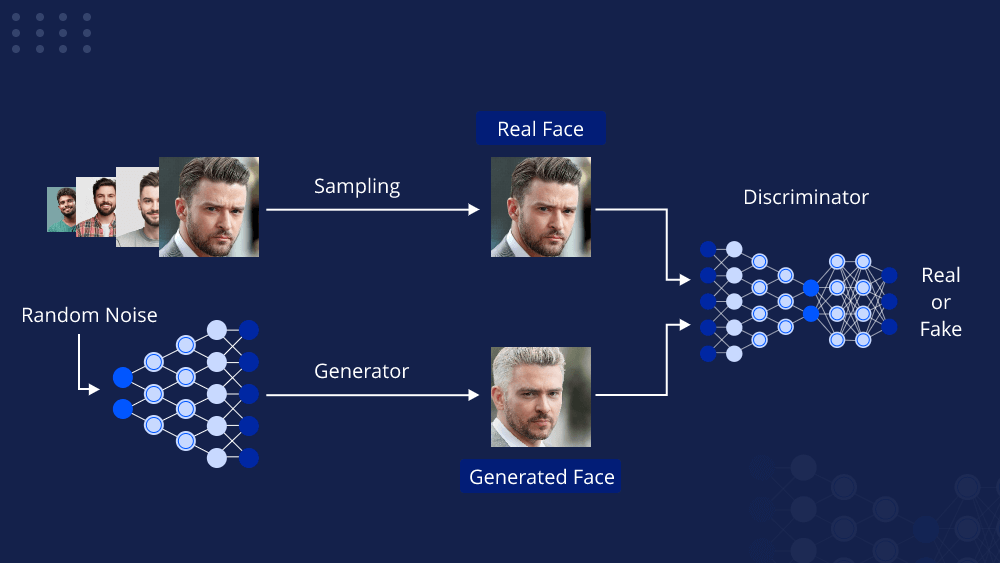
- Define the Problem: The first step is to clearly define the problem statement for image synthesis. This could involve generating realistic human faces, creating new artworks, or even transforming images from one style to another. Defining the problem helps in selecting the appropriate model architecture and dataset.
- Gather and Preprocess Data: To train a generative AI model, you need a diverse dataset of images. Collect a large number of images that represent the desired output. It is essential to preprocess the data by normalizing pixel values, resizing images to a consistent size, and augmenting the dataset to increase its variability.
- Choose a Model Architecture: There are various generative AI models suitable for image synthesis, such as Generative Adversarial Networks (GANs), Variational Autoencoders (VAEs), and Autoregressive Models. Each model has its advantages and limitations. GANs are particularly popular due to their ability to produce highly realistic images.
- Train the Model: Training a generative AI model involves feeding the dataset into the chosen architecture and optimizing its parameters. The model learns to generate images by iteratively adjusting its internal weights based on the provided data. This process requires substantial computational resources and can take several hours or even days, depending on the complexity of the model and the size of the dataset.
- Evaluate and Fine-tune: After training, it is crucial to evaluate the performance of the model. Common evaluation metrics include image quality, diversity, and similarity to the target distribution. If the results are unsatisfactory, fine-tuning the model by adjusting hyperparameters or adding regularization techniques can help improve the image synthesis output.
- Generate New Images: Once the model is trained and fine-tuned, you can start generating new images. By providing random noise or a latent vector as input to the model, it will produce a synthesized image that fits the learned distribution. You can experiment with different inputs to explore the creativity of the model and generate a wide range of images.
- Post-process and Refine: The generated images might require post-processing and refinement to enhance their quality. Techniques such as image filtering, color correction, and image blending can be applied to make the images more visually appealing and coherent.
- Ethical Considerations: When building generative AI models, it is important to consider ethical implications. Ensure that the model does not generate harmful or offensive content. Avoid using copyrighted images or violating privacy rights. Be mindful of biases in the training data that could result in biased outputs.
- Continual Learning: Building generative AI models is an iterative process. Continually improve the model by incorporating feedback from users and refining the training process. Monitor the model’s performance and retrain it periodically with updated datasets to keep up with changing trends and improve its image synthesis capabilities.
- Share and Collaborate: Lastly, share your generative AI models and findings with the AI community. Collaborate with researchers and developers to push the boundaries of image synthesis. Sharing knowledge and experiences can lead to further advancements in the field.
In conclusion, building generative AI models for image synthesis involves a series of steps, including problem definition, data collection, model selection, training, evaluation, and fine-tuning. With careful implementation and consideration of ethical implications, these models have the potential to generate realistic and creative images across various domains.
To Learn More:- https://www.leewayhertz.com/a-guide-on-generative-ai-models-for-image-synthesis/

 Jasper's Tech world