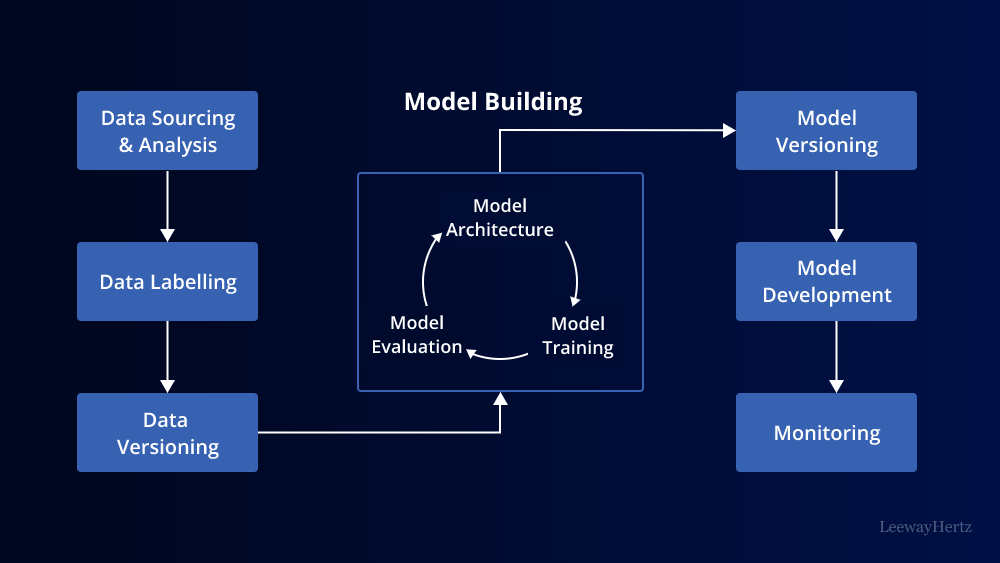
Machine Learning Operations, or MLOps, is a crucial practice that streamlines the development, deployment, and management of machine learning (ML) models. In recent years, MLOps has gained prominence as organizations increasingly recognize the value of ML in their operations. By combining DevOps principles with ML, MLOps ensures that ML models are delivered efficiently and effectively. In this article, we’ll explore the steps to implement MLOps in your organization:
1. Define Clear Objectives:
Identify the specific goals you want to achieve with MLOps. Whether it’s improving model performance, reducing deployment time, or enhancing collaboration among teams, having a clear vision helps in the successful implementation of MLOps.
2. Build a Cross-Functional Team:
Form a team that includes data scientists, engineers, operations personnel, and domain experts. Collaboration among different stakeholders is essential for effective MLOps implementation.
3. Version Control for Data and Models:
Adopt version control systems like Git to track changes in data, code, and models. This ensures reproducibility and provides a history of model development.
4. Automated Testing:
Implement automated testing for ML models to verify their accuracy and stability. Unit tests, integration tests, and performance tests are essential to identify issues early in the development process.
5. Continuous Integration and Continuous Deployment (CI/CD):
Adopt CI/CD practices to automate the model development, testing, and deployment processes. This streamlines the workflow, reduces manual errors, and accelerates the deployment cycle.
6. Model Registry:
Maintain a model registry to store and manage trained models. It acts as a central repository for different model versions, making it easier to track and compare performance.
7. Monitoring and Logging:
Integrate monitoring and logging tools into your ML pipeline to keep track of model performance, data drift, and system behavior. This enables proactive identification of issues and improves model reliability.
8. Infrastructure Orchestration:
Use containerization technologies like Docker and Kubernetes to manage and scale ML applications. Containers ensure consistency across different environments, making deployment more manageable.
9. Governance and Security:
Implement governance policies to ensure compliance with data privacy and security regulations. Define access controls and monitor model usage to prevent unauthorized access.
10. Collaboration and Documentation:
Encourage collaboration among team members by using tools that facilitate knowledge sharing and documentation. Clear and comprehensive documentation helps in knowledge transfer and onboarding new team members.
11. Model Retraining and Update Strategy:
Define a strategy for model retraining and updates. Set up automated pipelines to retrain models periodically using new data to keep them up-to-date and accurate.
12. A/B Testing and Experimentation:
Employ A/B testing and experimentation to compare different model versions and choose the most effective one. This data-driven approach optimizes model performance and enhances user experience.
13. Feedback Loop from Production:
Establish a feedback loop from production to continuously improve models. Monitor model performance in real-world scenarios and use feedback to refine the models over time.
14. Scalability and Resource Management:
Plan for scalability and resource management to handle increasing demands for ML applications. Cloud computing services and auto-scaling mechanisms can help manage resources efficiently.
15. Training Infrastructure:
Invest in powerful and scalable training infrastructure to support the development of complex ML models. High-performance GPUs and TPUs can significantly speed up the training process.
16. Education and Training:
Provide education and training to the MLOps team members and other stakeholders to keep them updated with the latest tools, technologies, and best practices in the field.
17. Continuous Improvement:
MLOps is an evolving practice, and it’s essential to continuously seek ways to improve the ML pipeline, deployment processes, and team collaboration.
In conclusion, implementing MLOps is critical for organizations that rely on ML models to drive decision-making and enhance business operations. By following the steps mentioned above, organizations can ensure efficient model development, deployment, and management while fostering collaboration and continuous improvement within the team. Embracing MLOps empowers organizations to harness the full potential of machine learning and stay ahead in this data-driven world.
To Learn More:- https://www.leewayhertz.com/mlops-pipeline/

 Jasper's Tech world