In today’s rapidly evolving technological landscape, Artificial Intelligence (AI) has emerged as a game-changing force, revolutionizing industries and redefining the way businesses operate. One of the remarkable developments in this domain is the concept of AI as a Service (AIaaS). AIaaS offers a novel approach that empowers organizations to harness the power of AI without significant upfront investments, thereby democratizing access to cutting-edge AI capabilities. This article delves into the key facets of AIaaS and its profound impact on various sectors.
1. Introduction to AI as a Service (AIaaS)
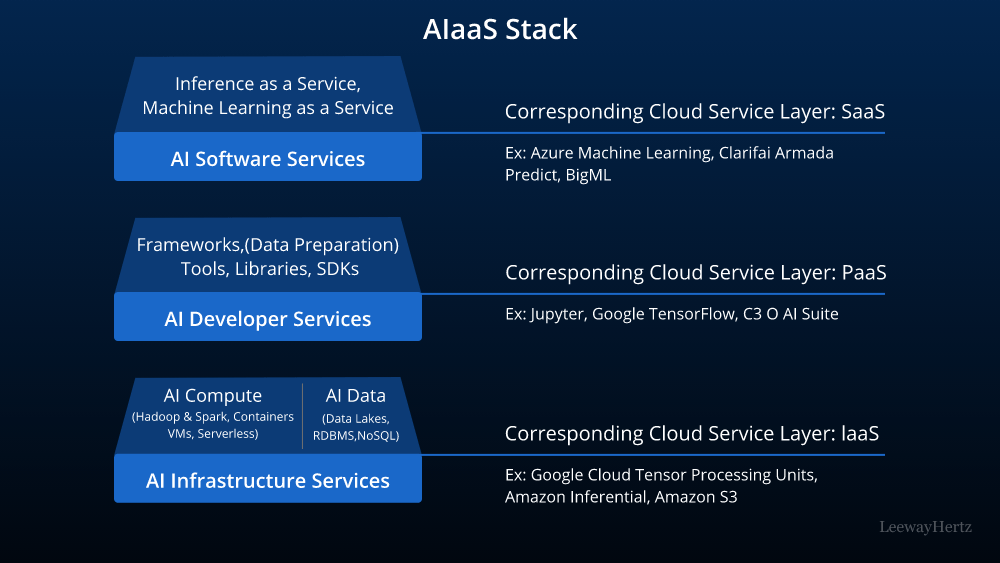
AIaaS represents a paradigm shift by providing AI solutions on a cloud-based, pay-as-you-go model. Just like Software as a Service (SaaS) transformed the software industry, AIaaS is disrupting traditional models of AI implementation. With AIaaS, businesses can access a wide array of AI tools, algorithms, and infrastructure without the need to develop these resources in-house.
2. Advantages of AIaaS
- Cost Efficiency: AI projects often demand substantial investments in hardware, software, and expertise. AIaaS eliminates these upfront costs by offering a subscription-based model, making it affordable for organizations of all sizes.
- Scalability: AIaaS platforms allow businesses to scale their AI initiatives effortlessly. Whether an organization needs to analyze a small dataset or perform complex computations on massive datasets, AIaaS resources can be scaled up or down as required.
- Faster Deployment: Traditional AI implementation can be time-consuming, from data preprocessing to model training. AIaaS platforms provide pre-built models and tools, significantly reducing deployment time.
- Access to Expertise: AIaaS providers bring together a pool of AI experts and researchers. This enables organizations to tap into the knowledge of specialists who are at the forefront of AI research.
3. Diverse Applications of AIaaS
- Healthcare: AIaaS is making significant strides in medical imaging analysis, drug discovery, and personalized treatment plans. Healthcare institutions can leverage AIaaS to analyze medical images, detect anomalies, and predict patient outcomes.
- Finance: AI-powered algorithms can be utilized for fraud detection, algorithmic trading, and risk assessment. AIaaS platforms enable financial institutions to incorporate these algorithms without the need for extensive AI knowledge.
- Manufacturing: AIaaS facilitates predictive maintenance, optimizing supply chains, and enhancing quality control. Manufacturers can harness AI for predictive analysis, ensuring timely maintenance and reducing downtime.
- Retail: Personalized shopping experiences, demand forecasting, and inventory management benefit from AI-powered insights. Retailers can leverage AIaaS to better understand consumer behavior and preferences.
4. Challenges and Considerations
- Data Privacy: Outsourcing AI to third-party providers raises concerns about data privacy and security. Organizations must ensure that sensitive data remains protected throughout the AI process.
- Integration Complexity: Integrating AIaaS solutions into existing workflows might be complex, demanding seamless compatibility between AI systems and legacy software.
- Dependency Concerns: Relying heavily on AIaaS vendors could lead to vendor lock-in, limiting an organization’s flexibility in the long run.
5. Leading AIaaS Providers
- Amazon Web Services (AWS): AWS offers a comprehensive suite of AI services, including image and speech recognition, language processing, and recommendation systems.
- Microsoft Azure: Azure’s AI offerings encompass natural language understanding, computer vision, and anomaly detection, making AI adoption accessible to a wide range of industries.
- Google Cloud AI: Google Cloud AI provides tools for machine learning, data analysis, and AI model deployment, enabling businesses to build and deploy AI applications quickly.
6. The Future of AIaaS
As AI continues to advance, AIaaS is poised to play an even more significant role in shaping industries. The integration of AI with the Internet of Things (IoT) and 5G networks will pave the way for real-time data analysis and decision-making, driving innovation in fields such as smart cities and autonomous vehicles. Moreover, AIaaS providers are likely to focus on enhancing interpretability and transparency of AI models, addressing concerns about bias and ethics.
Conclusion
AI as a Service (AIaaS) is a transformative concept that democratizes access to AI capabilities, enabling organizations to leverage AI without prohibitive costs and expertise barriers. With its cost-effectiveness, scalability, and rapid deployment advantages, AIaaS has emerged as a key enabler across various sectors. While challenges persist, the future of AIaaS holds immense promise, propelling industries toward a new era of innovation and efficiency.

 Jasper's Tech world