In the ever-evolving landscape of artificial intelligence, one innovation stands out as a beacon of promise in the realm of decision-making: the Decision Transformer. This cutting-edge technology, inspired by the success of Transformer models in natural language processing tasks, is poised to revolutionize the way we make decisions, from healthcare to finance and beyond.
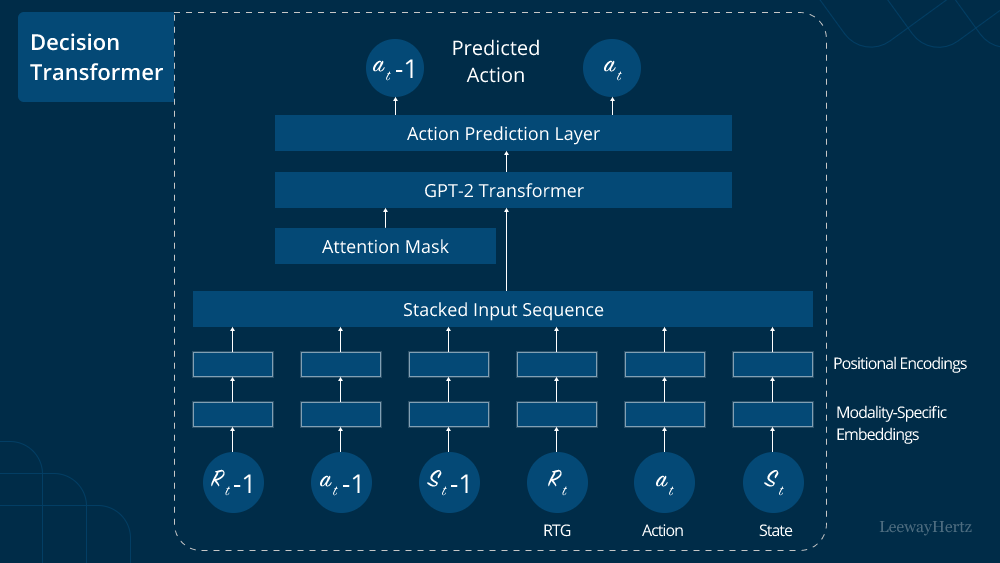
The Birth of Decision Transformers
To understand the significance of Decision Transformers, we must first delve into their origin. The groundwork for these transformers was laid by the monumental success of models like GPT-3 in natural language understanding and generation. Researchers soon realized that the attention mechanisms and self-attention layers, which are at the core of these models, could be adapted to other domains.
Decision Transformers, in essence, are an extension of this idea. They employ the same underlying architecture as their linguistic counterparts but are fine-tuned for decision-making tasks. This groundbreaking approach allows Decision Transformers to process and analyze complex decision-related data, making them a game-changer in fields where optimal choices are paramount.
A New Dawn for Healthcare
One of the most promising applications of Decision Transformers is in the healthcare sector. Medical diagnoses and treatment plans often involve sifting through vast amounts of patient data, medical literature, and clinical guidelines. Human experts can be overwhelmed by the sheer volume of information, leading to errors or suboptimal decisions.
Decision Transformers excel in this scenario by efficiently processing diverse data sources. They can extract valuable insights from patient histories, lab results, imaging data, and research papers. With their ability to understand the context and nuances of medical information, Decision Transformers assist doctors in making more accurate diagnoses and recommending personalized treatment plans. This not only improves patient outcomes but also reduces the burden on healthcare professionals.
Financial Wizardry
In the world of finance, where decisions made in split seconds can have far-reaching consequences, Decision Transformers are becoming indispensable. Traders and investment analysts rely on vast datasets and market trends to make informed decisions. The volatility of financial markets demands an agile and accurate decision-making process.
Decision Transformers, with their ability to analyze real-time market data and historical trends, can predict market movements more effectively than traditional models. Their adaptability and scalability allow them to process immense data streams swiftly, helping financial institutions optimize trading strategies, manage risk, and make investment decisions with greater confidence.
Navigating the Ethical Landscape
While Decision Transformers hold immense promise, their deployment is not without ethical considerations. The power they wield in decision-making processes raises questions about accountability and transparency. Just as with any AI technology, there is a need for robust ethical frameworks to govern their use.
Ensuring that Decision Transformers make decisions that align with human values and do not perpetuate biases is a crucial challenge. Continuous monitoring and auditing of these models are necessary to prevent harmful decisions and maintain public trust.
Education and Training
To harness the potential of Decision Transformers, there is a pressing need for skilled professionals who can develop, implement, and monitor these models. Universities and institutions around the world are recognizing this demand and are introducing programs and courses dedicated to AI decision-making.
These educational initiatives aim to equip students with the knowledge and skills to work with Decision Transformers responsibly. Ethical considerations, bias mitigation, and interpretability are integral components of these programs, emphasizing the importance of using AI in decision-making conscientiously.
The Road Ahead
As Decision Transformers continue to evolve and find their way into various industries, the future of decision-making is set to undergo a profound transformation. Whether in healthcare, finance, or any other domain where decisions matter, the synergy between human expertise and AI capabilities will shape a more efficient and effective decision-making process.
Nevertheless, we must tread carefully, acknowledging the ethical responsibilities that come with this powerful technology. Decision Transformers, as a tool for decision-making, must be held accountable and guided by human values to ensure they serve society’s best interests.
In conclusion, Decision Transformers represent a new frontier in AI, one that holds great promise for optimizing decisions in numerous fields. They have the potential to augment human expertise, reduce errors, and enable more informed choices. However, their deployment should be accompanied by ethical considerations and a commitment to responsible use. With the right balance, Decision Transformers can unlock a brighter future where our decisions are not just smarter but also more compassionate and equitable.

 Jasper's Tech world