Artificial Intelligence (AI) is no longer a distant dream confined to the realms of science fiction; it’s a tangible reality that is transforming industries, influencing decision-making, and reshaping our daily lives. In this article, we embark on a journey through the history and evolution of AI development, tracing its path from a conceptual idea to a practical implementation that powers technologies and solutions we use today.
I. The Birth of AI: A Concept Takes Shape
AI’s origins can be traced back to ancient mythologies, where tales of automatons and mechanical beings hinted at humanity’s fascination with creating intelligent machines. However, the modern journey of AI development began in the mid-20th century, driven by the vision of simulating human intelligence in machines.
- Alan Turing and the Universal Machine: Alan Turing’s groundbreaking work laid the foundation for AI. His concept of a “universal machine” that could simulate any human intelligence task was a pivotal moment.
- The Dartmouth Conference (1956): The term “Artificial Intelligence” was coined at the Dartmouth Conference in 1956, marking the formal birth of the field. Pioneers like John McCarthy, Marvin Minsky, Nathaniel Rochester, and Claude Shannon converged to explore AI’s potential.
II. Early AI Milestones: A World of Symbolic Logic and Expert Systems
The early years of AI development were characterized by symbolic logic and expert systems, laying the groundwork for future AI endeavors.
- Symbolic Logic: Early AI systems were based on symbolic logic, using rules and symbols to represent knowledge and solve problems.
- Expert Systems: Explore the development of expert systems that could mimic human expertise in narrow domains, such as medical diagnosis and financial analysis.
III. The AI Winter: Periods of Stagnation and Recovery
AI’s journey has not been without setbacks. The AI community experienced “AI winters” – periods of funding cutbacks and pessimism about the field’s progress.
- AI Winter I (1970s-1980s): Discuss the factors that led to the first AI winter and how the field regrouped during this period.
- AI Winter II (1990s-early 2000s): Explore the second AI winter, caused by overhyped expectations and limited technological capabilities.
- AI’s Resurgence: Highlight how AI bounced back in the mid-2000s, driven by advances in machine learning, data availability, and computational power.
IV. Key Components of AI Development
AI development involves a diverse set of techniques and technologies. Understanding these components is crucial to appreciating the depth and breadth of AI’s capabilities.
- Machine Learning: Dive into the heart of AI development – machine learning. Explain the concepts of supervised, unsupervised, and reinforcement learning.
- Deep Learning: Explore the neural networks and deep learning algorithms that have fueled recent breakthroughs in AI, such as image recognition and natural language understanding.
- Natural Language Processing (NLP): Discuss the significance of NLP in enabling AI systems to understand and generate human language, powering applications like chatbots and language translation.
V. The Impact of AI on Industries and Society
AI’s influence extends far beyond the realm of academia and research labs. It is driving significant changes across various industries and shaping our society.
- Healthcare: Delve into how AI is revolutionizing healthcare by improving diagnostics, drug discovery, and patient care.
- Finance: Explore AI’s role in financial services, including risk assessment, fraud detection, and algorithmic trading.
- Retail: Discuss AI’s impact on retail, from personalized shopping experiences to supply chain optimization.
- Transportation: Highlight AI’s role in autonomous vehicles and traffic management systems.
- Education: Examine the potential of AI in personalized learning and educational assistance.
VI. Ethical and Societal Implications of AI Development
While AI offers immense promise, it also raises ethical and societal concerns that demand attention and thoughtful solutions.
- Bias and Fairness: Explore the issue of bias in AI algorithms and the imperative of building fair and transparent AI systems.
- Privacy: Discuss how AI can infringe on privacy and the need for robust data protection regulations.
- Job Disruption: Analyze the impact of AI on employment and the importance of reskilling and upskilling.
VII. The Future of AI Development
As we look ahead, AI is a field in constant evolution, offering both exciting opportunities and challenges.
- AI and Artificial General Intelligence (AGI): Discuss the quest for Artificial General Intelligence and the pursuit of machines with human-like reasoning abilities.
- AI Ethics and Regulation: Explore the growing emphasis on AI ethics and the role of governments and organizations in regulating AI development.
- AI and Creativity: Delve into AI’s potential to augment human creativity in fields like art, music, and literature.
Unlocking the Potential of AI Consulting Services
In today’s rapidly evolving business landscape, artificial intelligence (AI) has emerged as a transformative force. Organizations across industries are looking to harness the power of AI to gain a competitive edge, enhance decision-making, and drive innovation. However, navigating the complex world of AI can be daunting. This is where AI consulting services play a pivotal role. In this article, we will explore the significance of AI consulting services, their various offerings, and how they can help businesses unlock the full potential of AI.
I. The Need for AI Consulting Services
- Complexity of AI Implementation: The adoption of AI technologies involves intricate processes, from data collection to model development and deployment. AI consulting services offer expertise to navigate this complexity.
- Strategic Alignment: Discuss the importance of aligning AI initiatives with an organization’s broader business goals and how consulting services can facilitate this alignment.
II. Types of AI Consulting Services
AI consulting services encompass a wide range of offerings tailored to meet the unique needs of businesses.
- Strategy Development: Explain how AI consultants assist in creating a comprehensive AI strategy, including defining objectives, selecting technologies, and formulating a roadmap.
- Data Assessment and Preparation: Discuss the critical role of data in AI and how consulting services help organizations assess their data readiness and implement data management strategies.
- Model Development: Explore how AI consultants can assist in building and fine-tuning machine learning and deep learning models to suit specific use cases.
- Deployment and Integration: Highlight the importance of a seamless integration of AI solutions into existing systems and processes, with the support of consulting services.
III. The Benefits of AI Consulting Services
AI consulting services offer several key benefits that organizations can leverage:
- Accelerated Implementation: Explain how consultants can expedite AI project implementation, reducing time-to-market and maximizing returns on investment.
- Cost Efficiency: Discuss how consulting services can help organizations avoid costly mistakes and ensure optimal resource allocation.
- Access to Expertise: Emphasize the role of consultants in providing access to specialized AI knowledge and experience that may not be available in-house.
IV. Real-World Case Studies
Illustrate the impact of AI consulting services through real-world case studies from various industries. These examples can include:
- Healthcare: Showcase how AI consulting services helped a healthcare provider optimize patient care using predictive analytics.
- Retail: Highlight a retail company’s success story in personalizing customer experiences and increasing sales with AI-driven recommendations.
- Finance: Describe how a financial institution leveraged AI consulting to enhance fraud detection and risk assessment.
V. Selecting the Right AI Consulting Partner
Choosing the right AI consulting partner is crucial for a successful AI journey. Provide guidance on the criteria organizations should consider when selecting a consulting firm, including:
- Experience and Expertise: Assessing the firm’s track record in AI projects and the expertise of its consultants.
- Alignment with Business Goals: Ensuring that the consulting firm understands and aligns with the organization’s strategic objectives.
- Client References: The importance of checking references and seeking feedback from previous clients.
VI. Challenges and Ethical Considerations
Acknowledge the challenges that organizations may encounter when working with AI consulting services, such as:
- Data Privacy and Security: Address the ethical considerations related to data privacy and security in AI projects and how consulting services should handle them.
- Transparency: Discuss the need for transparency in AI decision-making and how consulting services can contribute to ethical AI development.
Unlocking the Potential of AI Consulting Services
Artificial Intelligence (AI) has become an integral part of today’s business landscape, offering transformative possibilities across various industries. However, for many organizations, implementing AI solutions can be a daunting task, requiring specialized knowledge and resources. This is where AI consulting services step in to bridge the gap, providing expertise, guidance, and support for businesses looking to leverage AI effectively. In this article, we will explore the role and significance of AI consulting services, highlighting their value proposition and how they can help organizations harness the power of AI.

I. The Need for AI Consulting Services
- Navigating Complexity: AI is a multifaceted field with a rapidly evolving landscape. Consulting services help businesses understand the complexity of AI technologies and the implications for their operations.
- Strategic Alignment: Discuss how AI consulting services assist organizations in aligning AI strategies with their overarching business goals and objectives.
- Resource Constraints: Many businesses lack in-house AI expertise or resources. Consulting services provide access to AI specialists without the need for full-time hires.
II. Types of AI Consulting Services
- Strategy Development: Explore how consultants work with organizations to create AI strategies tailored to their specific needs and goals. This includes assessing current capabilities, market research, and roadmap development.
- AI Implementation: Discuss the hands-on role consultants play in implementing AI solutions, from data collection and model development to deployment and monitoring.
- AI Ethics and Compliance: Highlight the growing importance of ethical considerations in AI. Consultants guide businesses in ensuring their AI projects adhere to ethical and regulatory standards.
III. The Benefits of AI Consulting Services
- Expertise and Experience: Emphasize the value of working with professionals who have extensive experience in AI development and deployment.
- Cost Efficiency: Explain how consulting services can be a cost-effective alternative to building an in-house AI team, especially for small and medium-sized enterprises.
- Faster Time-to-Value: Discuss how consultants can expedite AI project timelines, helping businesses realize the benefits of AI more quickly.
IV. Real-World Success Stories
- Healthcare: Provide examples of how AI consulting services have helped healthcare organizations improve patient outcomes through predictive analytics and image recognition.
- Finance: Showcase instances where AI consultants have enhanced fraud detection, risk assessment, and customer service in the financial sector.
- Retail: Illustrate how retail businesses have leveraged AI consulting to optimize supply chain management, enhance customer personalization, and increase sales.
V. Selecting the Right AI Consulting Partner
- Assessment Criteria: Offer guidance on the criteria organizations should consider when choosing an AI consulting partner. This may include expertise, track record, industry-specific knowledge, and cultural fit.
- Collaboration and Communication: Stress the importance of clear communication and collaboration between the consulting team and the organization’s internal stakeholders.
- Long-Term Vision: Discuss the need for a partner who can provide ongoing support and adapt to changing AI trends and technologies.
VI. The Future of AI Consulting Services
- AI Continues to Evolve: Explain how AI consulting services will adapt to advancements in AI, including the growth of AI ethics, AI as a service, and AI democratization.
- Global Reach: Discuss the potential for AI consulting services to become increasingly global, serving businesses worldwide.
The Role of Generative AI Consulting in Creative Industries
In an era defined by technological advancements, the influence of Artificial Intelligence (AI) has permeated virtually every sector of our lives. Among its myriad applications, generative AI has emerged as a groundbreaking force, especially within creative industries. This article explores the transformative impact of generative AI consulting in creative sectors such as art, design, and content creation, shedding light on how AI is pushing the boundaries of human creativity.

I. Generative AI: Unleashing Creative Possibilities
- Understanding Generative AI: Begin by explaining the core principles of generative AI, focusing on Generative Adversarial Networks (GANs) and other generative models.
- The Creative Power of Generative AI: Discuss how generative AI empowers creatives by automating tasks like image generation, text-to-image synthesis, and music composition.
II. Revolutionizing Art and Design
- Art Generation: Explore how generative AI is used in art, from creating unique pieces to generating art in various styles and eras.
- Design Automation: Discuss the role of generative AI in automating design processes, such as web design, graphic design, and architecture.
- Personalization and Customization: Highlight how generative AI can cater to individual preferences by generating personalized designs and art.
III. Transforming Content Creation
- Content Generation: Explain how generative AI is being used to create written content, including articles, stories, and marketing materials.
- Video and Animation: Discuss the role of generative AI in video and animation production, from generating scenes to enhancing visual effects.
IV. Case Studies and Success Stories
- AI in the Art World: Showcase examples of renowned artists and their collaborations with generative AI systems to create unique artworks.
- Design Innovations: Highlight case studies from industries like fashion, architecture, and product design, showcasing how generative AI is pushing creative boundaries.
- Content Marketing: Provide examples of companies using generative AI to automate content production and personalize marketing campaigns.
V. The Role of Generative AI Consulting Services
- Navigating the Complex Landscape: Explain the challenges creative professionals face when integrating generative AI into their workflows.
- Benefits of Generative AI Consulting: Discuss how generative AI consulting services help creative professionals harness the full potential of AI while overcoming technical and creative hurdles.
VI. The Future of Generative AI in Creativity
- AI-Enhanced Creativity: Explore the idea of AI as a creative collaborator rather than a replacement, emphasizing the synergy between human and machine creativity.
- Ethical Considerations: Address the ethical implications of AI-generated content, including issues of ownership, copyright, and authenticity.
Strategic Integration of Enterprise AI Services
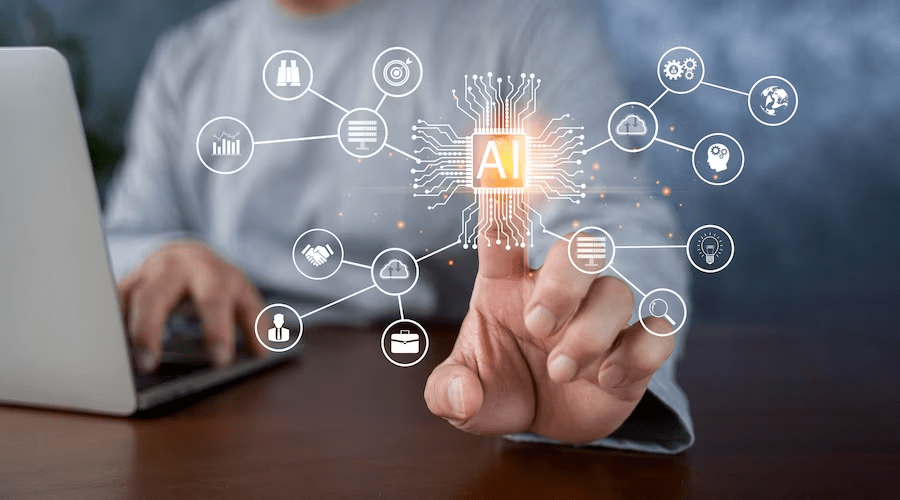
As the world embraces the transformative power of Artificial Intelligence (AI), enterprises are increasingly turning to AI services to gain a competitive edge, optimize operations, and enhance customer experiences. In this article, we will explore the strategic integration of enterprise AI services and how they are reshaping industries across the globe. We’ll delve into the various types of AI services available, their impact on business processes, and best practices for successful implementation.
I. The Pervasive Influence of AI in Enterprises
AI has ceased to be a futuristic concept; it’s now a fundamental tool for businesses seeking to innovate and stay ahead. This section provides an overview of AI’s growing influence across industries.
- AI-Powered Automation: Discuss how AI-driven automation is streamlining routine tasks, reducing costs, and improving efficiency.
- Data-Driven Decision Making: Explore how AI services are empowering data-driven decision-making processes, allowing businesses to gain valuable insights from vast datasets.
- Enhancing Customer Experiences: Highlight how AI is revolutionizing customer service through chatbots, personalization, and recommendation engines.
II. Types of Enterprise AI Services
Not all AI services are created equal. In this section, we’ll categorize and explain the different types of AI services available to enterprises.
- AI for Data Analytics: Delve into AI-powered data analytics services, including predictive analytics, anomaly detection, and natural language processing for data insights.
- AI for Customer Engagement: Explore AI services that enhance customer engagement, such as chatbots, virtual assistants, and sentiment analysis tools.
- AI for Process Automation: Discuss how AI can automate complex business processes, from supply chain management to human resources.
- AI for Security: Highlight the role of AI in bolstering cybersecurity through threat detection and response systems.
III. The Benefits of Strategic AI Integration
Strategically integrating AI services into an organization’s operations can yield a range of benefits. This section elaborates on the advantages that enterprises can expect.
- Cost Reduction: Discuss how automation and optimization through AI can lead to cost savings in various aspects of business operations.
- Improved Decision Making: Highlight how AI-driven insights enable quicker and more accurate decision-making processes.
- Competitive Advantage: Explain how embracing AI can give businesses a competitive edge in rapidly changing markets.
- Enhanced Customer Satisfaction: Showcase how personalized customer experiences powered by AI lead to increased customer satisfaction and loyalty.
IV. Overcoming Challenges in AI Integration
While the benefits of AI integration are evident, challenges can arise during implementation. Addressing these challenges is essential for a successful AI strategy.
- Data Privacy and Ethics: Discuss the ethical considerations of AI, data privacy concerns, and the importance of responsible AI development and usage.
- Skills Gap: Highlight the need for AI talent and strategies for bridging the skills gap within organizations.
- Integration Complexity: Explain how integrating AI into existing systems can be complex and the importance of robust integration strategies.
- Regulatory Compliance: Address the regulatory landscape surrounding AI in different industries and regions.
V. Case Studies: Successful AI Integration Stories
Real-world examples illustrate the transformative potential of AI integration. In this section, we present case studies of organizations that have successfully integrated AI services into their operations.
- Retail: Personalized Shopping Experiences: Explore how a retail giant leveraged AI to enhance customer shopping experiences through personalized recommendations.
- Manufacturing: Predictive Maintenance: Discuss how a manufacturing company used AI to predict machine failures, reducing downtime and maintenance costs.
- Finance: Fraud Detection: Highlight a financial institution’s success in using AI to detect and prevent fraudulent transactions.
VI. Best Practices for Effective AI Integration
To conclude, we provide a set of best practices that enterprises should consider when embarking on their AI integration journey.
- Define Clear Objectives: Emphasize the importance of aligning AI initiatives with specific business goals and objectives.
- Invest in Talent: Discuss the need to hire or upskill AI talent to ensure a smooth integration process.
- Data Quality: Stress the significance of data quality and data governance for AI success.
- Iterative Approach: Recommend adopting an iterative approach to AI integration, allowing for adjustments and improvements over time.
Hiring and Building a Team of Generative AI Engineers
In the rapidly evolving field of Artificial Intelligence (AI), generative AI has emerged as a transformative force, enabling machines to create content, art, and even human-like text. As businesses and organizations seek to harness the power of generative AI, the demand for skilled generative AI engineers has surged. In this article, we will explore the intricacies of hiring and building a team of generative AI engineers, discussing the skills required, recruitment strategies, and creating an environment that fosters innovation.

I. The Rise of Generative AI and the Need for Skilled Engineers
- Understanding Generative AI: A brief overview of generative AI, its applications, and its growing importance in various industries.
- Why Generative AI Engineers Are in High Demand: Explore the specific skills and expertise that make generative AI engineers essential assets for organizations.
II. Essential Skills and Expertise for Generative AI Engineers
To build a proficient generative AI team, it’s crucial to understand the core skills required:
- Machine Learning and Deep Learning Expertise: Discuss the importance of a strong foundation in machine learning, deep learning, and neural networks.
- Natural Language Processing (NLP) Skills: Explain the significance of NLP for text generation tasks and language modeling.
- Programming Proficiency: Highlight the importance of programming languages like Python and specialized libraries and frameworks.
- Data Handling and Preprocessing: Address the need for data collection, cleaning, and preprocessing skills.
- Creativity and Domain Knowledge: Emphasize the role of creativity and domain-specific knowledge in generative AI projects.
III. Recruitment Strategies for Generative AI Engineers
Recruiting top talent in generative AI engineering can be competitive. Explore effective strategies for identifying and attracting skilled professionals:
- Networking and Industry Involvement: Encourage active participation in AI communities and networking events.
- Crafting Compelling Job Descriptions: Discuss how to create job listings that resonate with generative AI engineers.
- Evaluating Portfolios and Projects: Highlight the importance of reviewing candidates’ past work and projects.
- Technical Interviews and Challenges: Explore the use of technical interviews and challenges to assess candidates’ skills.
IV. Building a Collaborative and Innovative Environment
Once you’ve assembled a team of generative AI engineers, it’s essential to create a work environment that nurtures innovation:
- Support for Continuing Education: Discuss the importance of ongoing learning and training opportunities.
- Cross-Functional Collaboration: Highlight the benefits of collaboration between generative AI engineers and other teams.
- Access to Computational Resources: Address the need for access to powerful computing resources, GPUs, and cloud platforms.
- Ethics and Responsible AI Development: Emphasize the importance of ethical considerations in generative AI projects.
V. Challenges and Ethical Considerations
While hiring generative AI engineers is an exciting endeavor, it also comes with challenges and ethical considerations:
- Data Privacy and Security: Discuss the importance of data privacy and security, especially in generative AI projects that deal with sensitive information.
- Bias and Fairness: Explore the potential for bias in generative AI models and the need for fairness and accountability.
- Regulatory Compliance: Address the regulatory landscape and compliance requirements associated with AI development.
VI. The Future of Generative AI Engineering
In conclusion, look ahead to the future of generative AI engineering:
- Advancements in Generative AI: Discuss emerging trends and advancements that will shape the field.
- New Applications: Explore potential new applications and industries that generative AI engineers may venture into.
In conclusion, the journey through the landscape of AI development, generative AI, consulting services, enterprise applications, and hiring generative AI engineers reveals the profound impact of AI on industries and society. As organizations navigate this transformative era, understanding the essential skills, fostering innovation, and addressing ethical considerations are key. By building proficient teams of generative AI engineers, we can shape a future where AI fuels innovation and creativity across diverse domains.

 Jasper's Tech world