In the ever-evolving landscape of artificial intelligence, Decision Transformer Models have emerged as a groundbreaking technology that promises to redefine how machines make decisions. These models, inspired by their sibling, the Transformer model, bring a new level of sophistication and precision to decision-making tasks, spanning from natural language processing to autonomous systems. In this article, we will delve into the world of Decision Transformer Models, exploring their architecture, applications, and the transformative impact they are having on various industries.
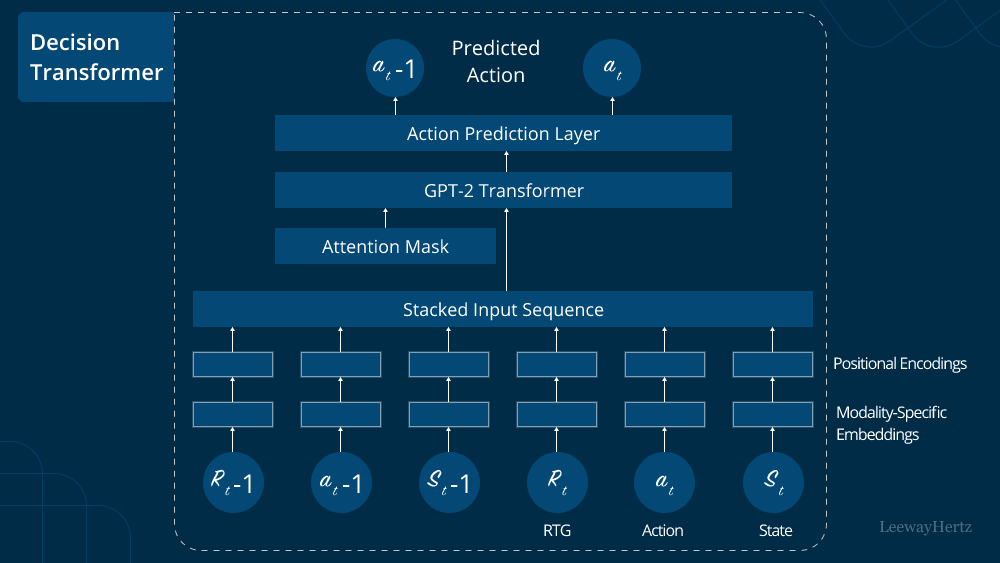
Understanding the Decision Transformer Model
Decision Transformer Models, or DTM for short, are an evolution of the Transformer architecture, which has revolutionized the field of deep learning, especially in natural language understanding and generation. The Transformer architecture introduced the self-attention mechanism, allowing models to process and understand sequences of data effectively. Decision Transformers take this a step further by enhancing the architecture with decision-making capabilities.
At the core of Decision Transformer Models lies the capacity to take sequences of information and generate decisions based on them. These decisions can be binary choices, multi-class classifications, or even more complex actions in autonomous systems. The ability to process information and decide on the most appropriate course of action enables DTM to excel in a wide range of applications.
Applications of Decision Transformer Models
Natural Language Processing
One of the most notable applications of Decision Transformer Models is in the field of natural language processing (NLP). These models can analyze vast amounts of text data, understand context, and make decisions based on the information provided. For instance, in sentiment analysis, a Decision Transformer can determine whether a given piece of text conveys a positive or negative sentiment, which is valuable for businesses seeking to gauge customer feedback or review sentiment.
Autonomous Systems
Decision Transformer Models also play a pivotal role in autonomous systems, such as self-driving cars and drones. They can process sensor data, environmental cues, and historical information to make real-time decisions about navigation, obstacle avoidance, and even complex tasks like route planning.
In the context of self-driving cars, a Decision Transformer might consider factors like traffic conditions, weather, and the vehicle’s speed to make critical decisions, ensuring the safety of passengers and pedestrians.
Healthcare
In the healthcare industry, Decision Transformers are employed for diagnostic and treatment decision support. These models can analyze patient data, medical records, and the latest research to assist healthcare professionals in making informed decisions about patient care. For instance, they can help in the early detection of diseases by processing medical images and identifying anomalies.
Financial Services
Decision Transformer Models have also found a home in the world of finance. They are used to analyze market data, assess risk, and make investment decisions. These models can factor in a multitude of variables, such as economic indicators, geopolitical events, and market sentiment, to make investment recommendations that are both data-driven and dynamic.
Architectural Insights
Decision Transformers inherit much of the architecture from their predecessor, the Transformer model. They consist of layers of multi-head self-attention mechanisms, feedforward neural networks, and positional encodings. However, the distinctive feature of Decision Transformers lies in their ability to incorporate decision heads.
A decision head in a DTM is a module that processes the information from the self-attention layers and generates decisions. The decision head can be tailored to the specific task at hand. For instance, in a language translation task, the decision head might decide on the most appropriate translation of a sentence, while in a medical diagnosis task, it could determine the most likely diagnosis based on patient data.
The multi-head attention mechanism in Decision Transformers allows them to capture dependencies and relationships within the input data efficiently. This feature makes them particularly adept at tasks that involve understanding context and making decisions based on it.
The Transformative Impact
Decision Transformer Models are rapidly transforming industries by offering more sophisticated and context-aware decision-making capabilities. These models are enabling machines to interact with humans more intelligently and autonomously. This evolution has numerous practical benefits, such as:
Improved Accuracy
The ability to consider a broader context and relationships within the data leads to improved decision accuracy. Whether it’s in diagnosing diseases or recommending personalized content, Decision Transformers excel in delivering precise and relevant outcomes.
Enhanced Autonomy
Autonomous systems, powered by Decision Transformers, are becoming more independent and capable of handling complex tasks without human intervention. This is a significant advancement in fields like autonomous vehicles, robotics, and industrial automation.
Time and Cost Efficiency
Decision Transformer Models can process vast amounts of data swiftly and make real-time decisions. This results in significant time and cost savings across various industries, where swift decisions are crucial.
Personalization
In marketing and e-commerce, Decision Transformers are used to provide highly personalized recommendations to customers. By considering a user’s browsing and purchase history, these models can offer product suggestions that align with individual preferences.
Challenges and Ethical Considerations
While Decision Transformer Models hold immense promise, they also pose challenges and raise ethical concerns. These include:
Data Bias
Decision Transformers can be sensitive to biases present in their training data, potentially leading to biased decisions. Addressing this challenge requires careful curation of training data and robust fairness evaluations.
Accountability
When autonomous systems make decisions, it can be challenging to determine accountability in case of unexpected outcomes or errors. This raises important questions about liability and responsibility in the context of AI-driven decisions.
Transparency
The decision-making process of Decision Transformers can be highly complex, making it difficult for humans to understand and interpret their decisions. Ensuring transparency and explainability is crucial, especially in applications with significant consequences.
Conclusion
Decision Transformer Models represent a significant step forward in the realm of artificial intelligence. They are poised to revolutionize industries across the board, from healthcare to finance and autonomous systems. With their capacity to make context-aware decisions, they offer improved accuracy, efficiency, and autonomy. However, it is imperative that we address the challenges and ethical considerations associated with these models to ensure responsible and safe deployment. As we continue to advance the field of AI, Decision Transformers are set to play a pivotal role in shaping the future of technology and decision-making.

 Jasper's Tech world