In the ever-evolving landscape of artificial intelligence and natural language processing, one name has been making waves – the Action Transformer Model. This cutting-edge approach to language understanding is poised to revolutionize the way machines comprehend and interact with human language. In this article, we will delve into the intricacies of the Action Transformer Model, exploring its architecture, applications, and potential impact on various industries.
The Birth of the Action Transformer Model
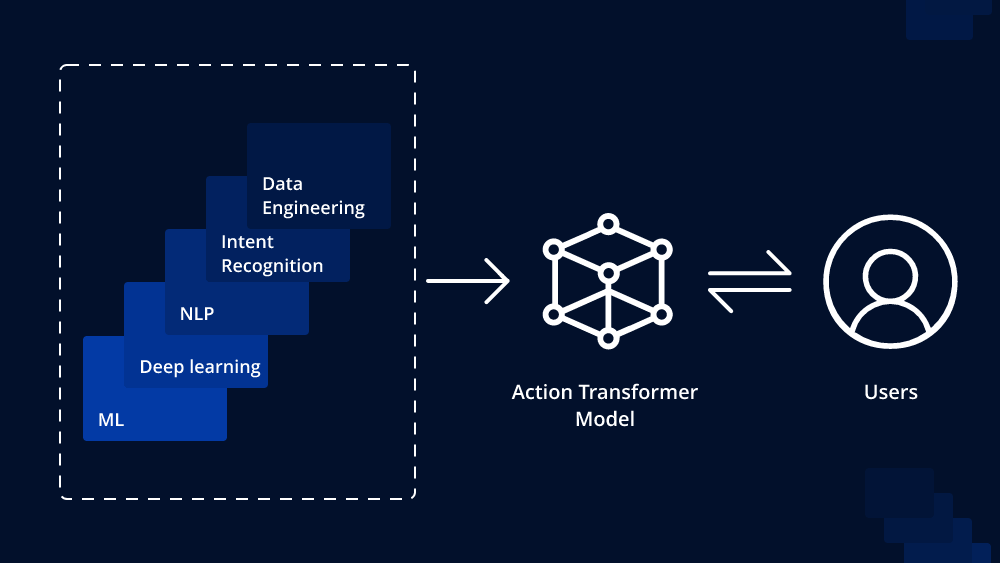
The Action Transformer Model, or ATM, is a natural progression from the Transformer architecture, which gained prominence with models like BERT and GPT. The Transformer architecture introduced the concept of self-attention mechanisms, allowing models to weigh the importance of different words in a sentence contextually. The ATM takes this a step further by incorporating actions into the equation.
At its core, the ATM is designed to understand not just the meaning of words but also the actions they imply. It achieves this by considering not only the input text but also a predefined set of actions associated with it. This novel approach opens up a plethora of possibilities for machines to understand and generate text that is not only contextually relevant but also action-aware.
Understanding the Architecture
The Action Transformer Model’s architecture comprises three key components: the encoder, the action module, and the decoder. Let’s break down each of these components:
- Encoder: Similar to traditional Transformers, the encoder processes the input text, capturing its contextual information. It identifies the salient features of the text and prepares it for action-aware comprehension.
- Action Module: This is where the magic happens. The action module incorporates a predefined set of actions that the model can choose from while processing the input text. These actions serve as guidance for the model, helping it understand the implied actions in the text.
- Decoder: The decoder takes the encoded input text and the selected action and generates coherent and contextually relevant output text. This is where the ATM’s ability to understand and generate action-aware text truly shines.
Applications Across Industries
The Action Transformer Model has a wide range of applications, making it a versatile tool for various industries:
- Chatbots and Virtual Assistants: In the realm of customer service and support, ATM-equipped chatbots and virtual assistants can better understand and respond to user queries. They can provide more personalized and action-oriented assistance, improving user satisfaction.
- Content Generation: Content creation, whether for marketing or journalism, stands to benefit from the ATM. It can help generate articles, product descriptions, or advertisements that are not just informative but also action-driven, driving user engagement.
- Healthcare: In healthcare, where understanding patient records and medical documents is crucial, the ATM can assist in summarizing and extracting actionable insights from voluminous data, aiding healthcare professionals in making informed decisions.
- Legal Industry: Legal documents are notorious for their complexity. The ATM can simplify legal language, making contracts and agreements more understandable and highlighting critical actions and obligations.
- Finance and Trading: In the world of finance, precise and timely action is essential. The ATM can help financial analysts by providing insights into market data, news articles, and reports, enabling them to make informed investment decisions.
- Language Translation: Traditional machine translation models can sometimes produce translations that lack context. The ATM can enhance translation quality by considering the actions implied in the source text, leading to more accurate and contextually appropriate translations.
Challenges and Future Directions
While the Action Transformer Model holds tremendous promise, it also faces challenges that need to be addressed. One of the primary challenges is the creation of comprehensive action sets for various domains and languages. Developing these sets requires considerable effort and expertise.
Additionally, fine-tuning the model for specific tasks and domains is essential for optimal performance. This process involves extensive data annotation and domain-specific training.
In the future, we can expect to see advancements in action-aware pretraining, enabling the ATM to understand a broader range of actions and contexts. Moreover, model efficiency and scalability will be areas of continuous research, ensuring that ATM can be applied to real-time, large-scale applications.
Conclusion
The Action Transformer Model represents a significant leap forward in natural language understanding. By incorporating actions into its architecture, ATM has the potential to revolutionize various industries, from healthcare and finance to content generation and customer service. While challenges remain, ongoing research and development are poised to unlock the full potential of this transformative technology. As the ATM continues to evolve, it promises to reshape the way machines comprehend and interact with human language, ushering in a new era of action-aware AI.

 Jasper's Tech world