In recent years, artificial intelligence (AI) has made remarkable strides in the field of image synthesis, thanks in large part to generative AI models. These models have revolutionized the way we create and manipulate images, enabling us to generate highly realistic and creative visuals with unprecedented ease. In this article, we will explore the fascinating world of generative AI models for image synthesis and delve into their applications, advancements, and future prospects.
Understanding Generative AI Models
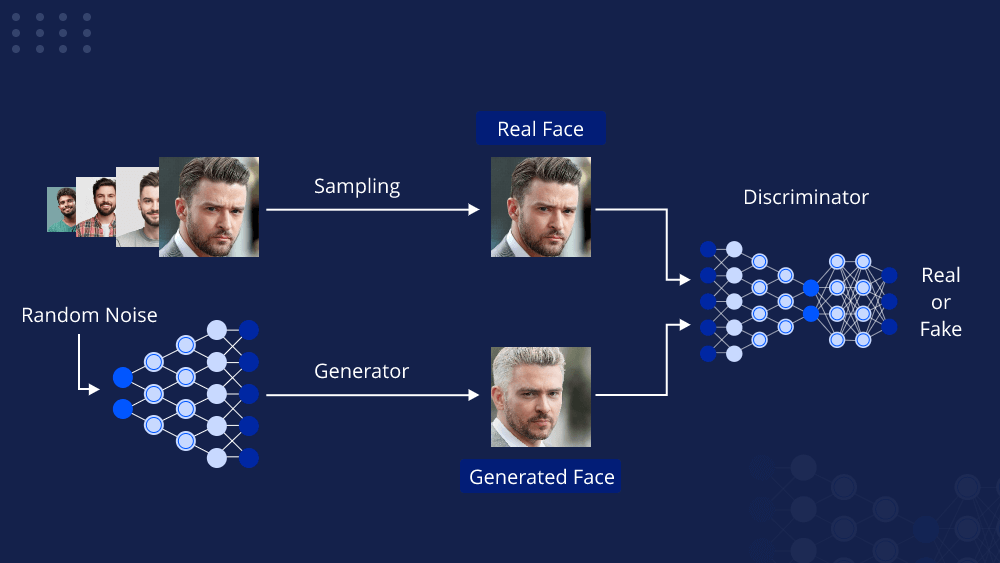
Generative AI models are a subset of machine learning algorithms designed to generate data that resembles real-world examples. In the context of image synthesis, these models are trained to create images that are visually similar to those found in a given dataset. They achieve this by learning the underlying patterns, structures, and features present in the training data and then using this knowledge to generate new, coherent images.
One of the pioneering generative AI models for image synthesis is the Generative Adversarial Network (GAN). GANs consist of two neural networks, the generator and the discriminator, which engage in a constant battle. The generator attempts to create realistic images, while the discriminator evaluates them. Through this adversarial process, GANs become increasingly adept at producing convincing images.
Applications of Generative AI Models in Image Synthesis
Generative AI models have found applications across a wide range of fields, unlocking new possibilities in image synthesis:
- Art and Creativity: Artists and designers are using generative AI models to spark creativity and explore new artistic styles. These models can generate unique artworks, providing a fresh perspective on traditional art forms.
- Photorealistic Rendering: In the gaming and entertainment industry, generative AI models are used to create photorealistic environments and characters, enhancing the immersive experience for users.
- Medical Imaging: Generative models are employed to generate synthetic medical images, aiding in research, training, and diagnostic tasks. They can simulate various medical conditions and help improve the accuracy of medical imaging systems.
- Data Augmentation: In machine learning, generative AI models are utilized to augment training datasets. They can generate additional labeled data, helping improve the performance of machine learning models.
- Style Transfer: These models enable the transfer of artistic styles from one image to another, allowing for the creation of visually striking images with distinct aesthetics.
Advancements in Generative AI Models
Over the years, generative AI models have seen remarkable advancements, leading to significant improvements in image synthesis:
- Progressive GANs: Progressive GANs introduced a training approach that gradually increased the resolution of generated images, resulting in sharper and more detailed visuals.
- Conditional GANs: Conditional GANs allow users to control the characteristics of generated images, such as style, content, and attributes, making them highly versatile for specific applications.
- StyleGAN: StyleGAN improved the generation of highly realistic faces, enabling the creation of synthetic human portraits that are virtually indistinguishable from real photographs.
- BigGAN and BigGAN-deep: These models increased the scale of GANs, allowing for the generation of high-resolution images and fostering creativity in various domains.
- Hybrid Models: Some generative AI models combine GANs with other AI techniques, such as reinforcement learning, to generate more diverse and contextually relevant images.
Future Prospects
The future of generative AI models for image synthesis holds exciting possibilities:
- Unlimited Creativity: As these models continue to advance, they will enable artists, designers, and creators to push the boundaries of creativity, leading to new forms of artistic expression.
- Realistic Simulation: Generative AI will be increasingly used for realistic simulations in fields like training autonomous vehicles, testing aircraft, and simulating natural disasters.
- Personalization: Generative models could revolutionize content personalization, allowing for the creation of highly tailored visual content for individuals in various applications, from entertainment to advertising.
- Ethical Considerations: As generative AI becomes more powerful, ethical concerns about its misuse, such as deepfakes and misinformation, will require robust safeguards and regulations.
In conclusion, generative AI models have transformed image synthesis, offering unprecedented capabilities for creativity and problem-solving. From art and entertainment to healthcare and research, these models have a profound impact on various sectors. With ongoing advancements and responsible usage, the future promises even more exciting developments in the realm of generative AI for image synthesis, opening up a world of infinite possibilities for visual storytelling and innovation.


