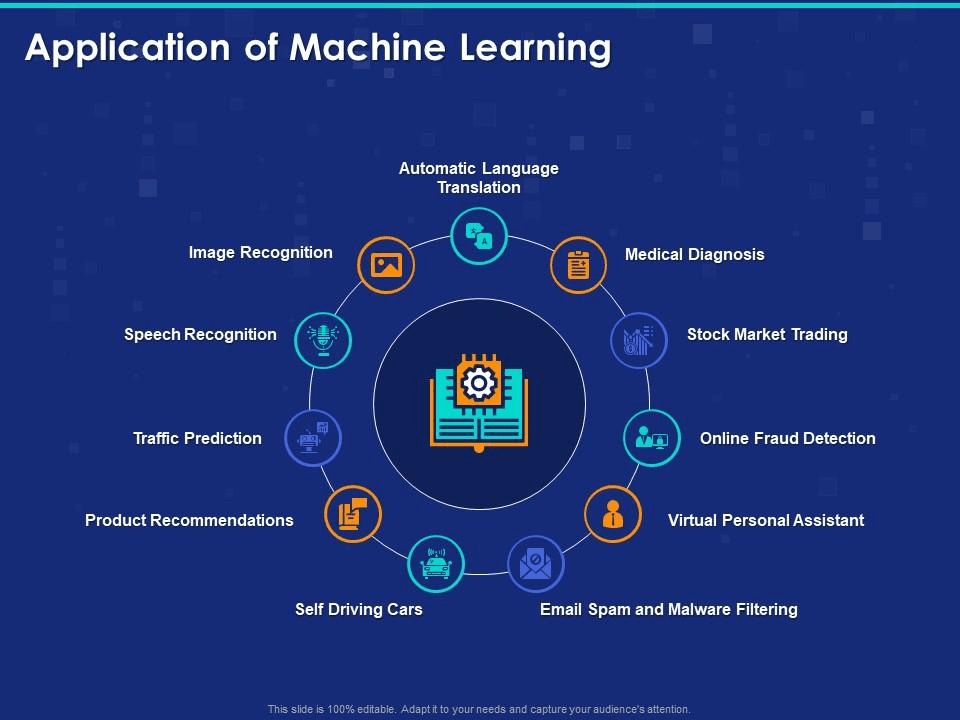
Machine learning has revolutionized the way we interact with technology. From recommendation systems on streaming platforms to autonomous vehicles, machine learning apps are powering innovations across various industries. If you’re eager to dive into the world of machine learning app development, this step-by-step guide will help you get started.
1. Define Your Problem and Data
Every successful machine learning app starts with a clear problem statement. Define the problem you want to solve and determine whether machine learning is the right approach. Then, gather and preprocess the data necessary for training and testing your model. Data quality and quantity play a crucial role in the success of your machine learning application.
2. Choose the Right Machine Learning Algorithm
Selecting the appropriate machine learning algorithm depends on your problem type. For classification tasks, consider algorithms like logistic regression or support vector machines. For regression tasks, linear regression or decision trees may be suitable. Deep learning models like convolutional neural networks (CNNs) and recurrent neural networks (RNNs) excel in tasks involving images, text, or sequences. Research and experimentation will help you identify the best algorithm for your application.
3. Data Splitting and Preprocessing
Divide your dataset into training, validation, and test sets. Training data is used to teach your model, while validation data helps you tune hyperparameters and monitor training progress. The test set is crucial for evaluating the final model’s performance. Additionally, preprocess your data to handle missing values, scale features, and encode categorical variables. Proper data preprocessing ensures that your model learns effectively.
4. Model Building and Training
Now it’s time to create your machine learning model. Using a framework like TensorFlow or PyTorch, design the architecture of your model, including layers, activation functions, and loss functions. Train your model on the training data using an appropriate optimization algorithm. Experiment with different hyperparameters to improve model performance. Regularly monitor metrics like accuracy, loss, and validation scores to gauge your model’s progress.
5. Model Evaluation
After training your model, evaluate its performance on the test dataset. Use metrics relevant to your problem, such as accuracy, precision, recall, or mean squared error. Analyze the results to identify areas where your model excels and where it may need improvement. Iteratively refine your model by tweaking hyperparameters, adjusting the architecture, or collecting more data if necessary.
6. Deployment
Once you’re satisfied with your machine learning model’s performance, it’s time to deploy it as part of an application. You can choose between cloud-based solutions like Amazon Web Services (AWS) or Microsoft Azure, or on-premises deployment. Ensure that your model is integrated seamlessly into your application’s architecture and that it can handle real-time predictions.
7. User Interface Design
Design an intuitive and user-friendly interface for your machine learning app. Consider the user experience (UX) and ensure that users can interact with your app effortlessly. Tools like React, Angular, or Vue.js can help you create dynamic web interfaces, while frameworks like Flutter or React Native are suitable for mobile app development.
8. Integration with Backend
Develop the backend of your machine learning app, which serves as the bridge between the user interface and the machine learning model. Use server-side programming languages like Python (using frameworks like Flask or Django), Node.js, or Ruby on Rails to create APIs for communication between the frontend and the machine learning model.
9. Model Monitoring and Maintenance
Machine learning models require ongoing monitoring and maintenance. Set up monitoring tools to track the model’s performance in real-world scenarios. Regularly retrain your model with fresh data to ensure it remains accurate and up-to-date. Address any issues that arise promptly to maintain a high-quality user experience.
10. User Feedback and Improvement
Encourage user feedback and use it to enhance your machine learning app continually. User insights can help you identify areas for improvement, uncover new use cases, and refine your model further. Prioritize user satisfaction and adapt your app based on their needs and preferences.
In conclusion, building a machine learning app is a multi-faceted process that requires careful planning, data preparation, model development, and application integration. By following these steps and staying open to continuous improvement, you can create machine learning applications that deliver value to users and drive innovation in your chosen domain. Embrace the power of machine learning and start building your own intelligent applications today.
To Learn More :- https://www.leewayhertz.com/how-to-build-a-machine-learning-app/

 Jasper's Tech world