Unlocking the Power of MLOps Pipeline: Bridging the Gap Between Data Science and Deployment

In today’s data-driven world, organizations are constantly seeking ways to leverage the power of machine learning to gain a competitive edge. However, the journey from building a machine learning model to deploying it into production can be fraught with challenges. This is where MLOps (Machine Learning Operations) pipelines come into play, acting as a bridge that connects the worlds of data science and deployment, ensuring smooth and efficient model deployment and management. In this article, we will explore the concept of MLOps pipelines, their significance, and how they can revolutionize the way machine learning models are developed and deployed.
The Need for MLOps Pipeline

Traditionally, the process of developing and deploying machine learning models has been fragmented and time-consuming. Data scientists focus on building and fine-tuning models, while DevOps teams handle deployment and operational tasks. This separation often leads to communication gaps, slow deployment cycles, and challenges in monitoring and maintaining models in production.

MLOps pipelines address these issues by integrating the development and deployment processes into a single, streamlined workflow. This approach enables organizations to:

  1. Foster Collaboration: MLOps encourages collaboration between data scientists, engineers, and DevOps teams. By bringing these teams together, organizations can leverage diverse expertise to build robust and reliable machine learning solutions.
  2. Automate and Standardize: Automation is at the core of MLOps pipelines. They enable the automation of repetitive tasks such as data preprocessing, model training, and deployment, reducing human errors and increasing efficiency. Standardization ensures that the entire process adheres to best practices and compliance requirements.
  3. Accelerate Deployment: MLOps pipelines reduce the time it takes to move a model from development to production. This speed is crucial in industries where timely insights from data can lead to a competitive advantage.
  4. Enhance Monitoring and Governance: Once a model is in production, MLOps pipelines provide mechanisms for real-time monitoring, logging, and governance. This ensures that models perform as expected and are compliant with regulations.

Components of an MLOps Pipeline

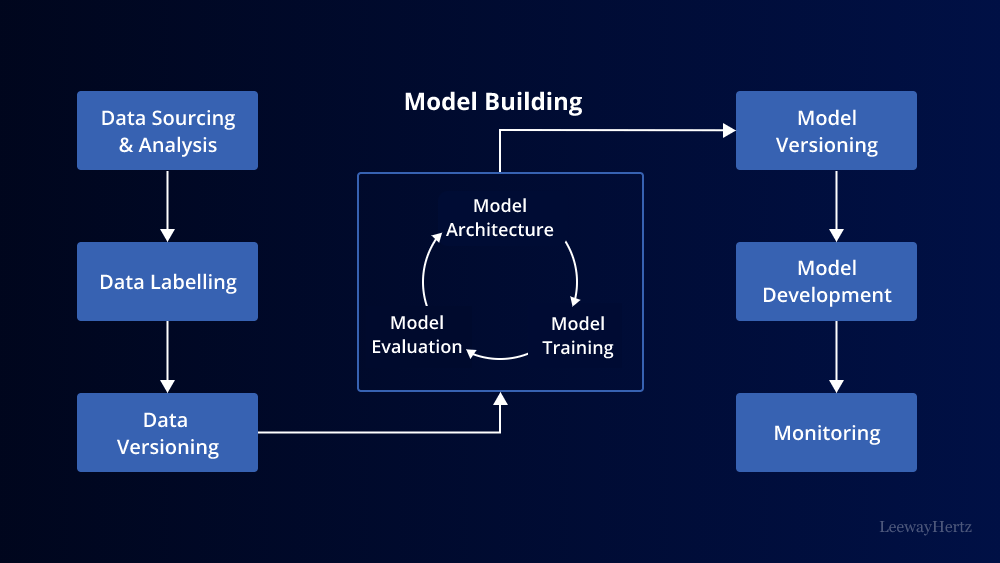
An MLOps pipeline consists of several key components:

  1. Data Ingestion: The pipeline starts with data ingestion, where raw data is collected and prepared for processing. This stage involves data cleaning, transformation, and validation.
  2. Model Development: Data scientists build and fine-tune machine learning models using the prepared data. This phase includes feature engineering, hyperparameter tuning, and model evaluation.
  3. Model Deployment: Once a model is trained and validated, it is deployed to a production environment. This stage involves containerization, scaling, and orchestration.
  4. Monitoring and Logging: Continuous monitoring of the deployed model’s performance is crucial. This component tracks metrics, logs, and alerts to detect anomalies and ensure the model operates as intended.
  5. Feedback Loop: MLOps pipelines include mechanisms for collecting feedback from the deployed model. This feedback helps data scientists improve the model over time by retraining it with new data.
  6. Governance and Compliance: Ensuring that models adhere to regulatory and compliance standards is essential. MLOps pipelines provide features for model governance and auditability.

Benefits of MLOps Pipeline

Implementing MLOps pipelines offers several benefits to organizations:

  1. Improved Efficiency: Automation reduces manual intervention, streamlining the process from data ingestion to deployment. This leads to faster model delivery and increased productivity.
  2. Consistency: MLOps pipelines enforce best practices and consistency in model development and deployment, reducing errors and ensuring reliability.
  3. Scalability: Organizations can easily scale their machine learning operations to handle larger datasets and more complex models.
  4. Cost Reduction: Automation and efficient resource allocation can lead to cost savings by optimizing infrastructure usage.
  5. Enhanced Collaboration: MLOps encourages cross-functional teams to work together, fostering a culture of collaboration and knowledge sharing.

Challenges and Considerations

While MLOps pipelines offer significant advantages, they also come with challenges. Some common considerations include:

  1. Data Quality: Garbage in, garbage out. Ensuring data quality is a fundamental concern as the pipeline heavily relies on the quality of the input data.
  2. Model Governance: Compliance and ethics in machine learning are critical. Organizations must establish robust governance processes to mitigate risks.
  3. Infrastructure Complexity: Setting up and maintaining the necessary infrastructure for MLOps can be complex and resource-intensive.
  4. Skill Gap: MLOps requires expertise in both data science and DevOps, which can be a challenge for organizations lacking such talent.

Conclusion

MLOps pipelines represent a pivotal advancement in the field of machine learning. They bridge the gap between data science and deployment, providing a structured and automated approach to developing, deploying, and managing machine learning models. By adopting MLOps practices, organizations can unlock the full potential of their data science initiatives, accelerating model deployment, improving efficiency, and ensuring compliance with regulations. As the demand for machine learning solutions continues to grow, MLOps pipelines are poised to play a central role in shaping the future of AI-driven innovation.
Unlocking the Power of Decision Transformer: Revolutionizing Choices with AI

In the ever-evolving landscape of artificial intelligence, one innovation stands out as a beacon of promise in the realm of decision-making: the Decision Transformer. This cutting-edge technology, inspired by the success of Transformer models in natural language processing tasks, is poised to revolutionize the way we make decisions, from healthcare to finance and beyond.

The Birth of Decision Transformers

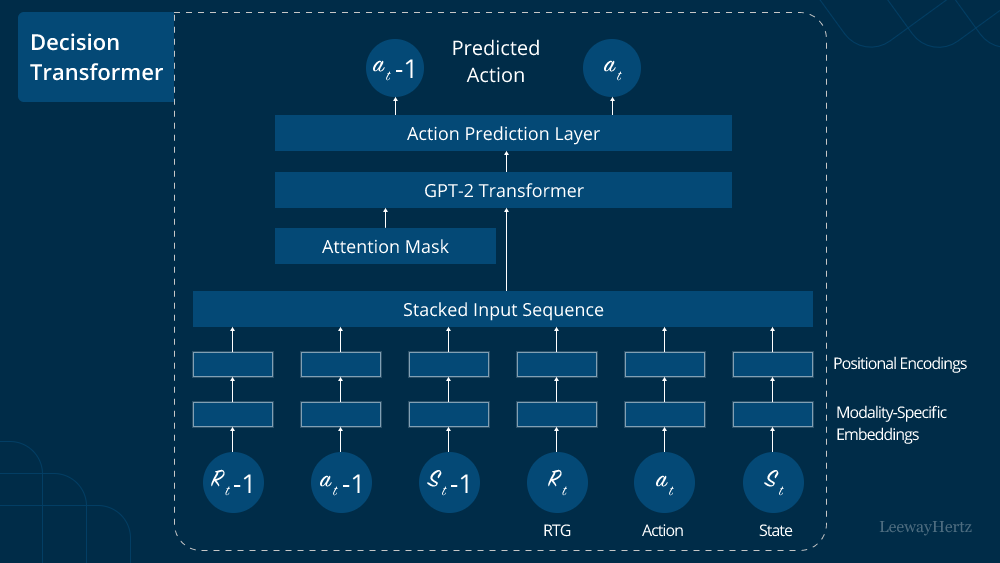
To understand the significance of Decision Transformers, we must first delve into their origin. The groundwork for these transformers was laid by the monumental success of models like GPT-3 in natural language understanding and generation. Researchers soon realized that the attention mechanisms and self-attention layers, which are at the core of these models, could be adapted to other domains.

Decision Transformers, in essence, are an extension of this idea. They employ the same underlying architecture as their linguistic counterparts but are fine-tuned for decision-making tasks. This groundbreaking approach allows Decision Transformers to process and analyze complex decision-related data, making them a game-changer in fields where optimal choices are paramount.

A New Dawn for Healthcare

One of the most promising applications of Decision Transformers is in the healthcare sector. Medical diagnoses and treatment plans often involve sifting through vast amounts of patient data, medical literature, and clinical guidelines. Human experts can be overwhelmed by the sheer volume of information, leading to errors or suboptimal decisions.

Decision Transformers excel in this scenario by efficiently processing diverse data sources. They can extract valuable insights from patient histories, lab results, imaging data, and research papers. With their ability to understand the context and nuances of medical information, Decision Transformers assist doctors in making more accurate diagnoses and recommending personalized treatment plans. This not only improves patient outcomes but also reduces the burden on healthcare professionals.

Financial Wizardry

In the world of finance, where decisions made in split seconds can have far-reaching consequences, Decision Transformers are becoming indispensable. Traders and investment analysts rely on vast datasets and market trends to make informed decisions. The volatility of financial markets demands an agile and accurate decision-making process.

Decision Transformers, with their ability to analyze real-time market data and historical trends, can predict market movements more effectively than traditional models. Their adaptability and scalability allow them to process immense data streams swiftly, helping financial institutions optimize trading strategies, manage risk, and make investment decisions with greater confidence.

Navigating the Ethical Landscape

While Decision Transformers hold immense promise, their deployment is not without ethical considerations. The power they wield in decision-making processes raises questions about accountability and transparency. Just as with any AI technology, there is a need for robust ethical frameworks to govern their use.

Ensuring that Decision Transformers make decisions that align with human values and do not perpetuate biases is a crucial challenge. Continuous monitoring and auditing of these models are necessary to prevent harmful decisions and maintain public trust.

Education and Training

To harness the potential of Decision Transformers, there is a pressing need for skilled professionals who can develop, implement, and monitor these models. Universities and institutions around the world are recognizing this demand and are introducing programs and courses dedicated to AI decision-making.

These educational initiatives aim to equip students with the knowledge and skills to work with Decision Transformers responsibly. Ethical considerations, bias mitigation, and interpretability are integral components of these programs, emphasizing the importance of using AI in decision-making conscientiously.

The Road Ahead

As Decision Transformers continue to evolve and find their way into various industries, the future of decision-making is set to undergo a profound transformation. Whether in healthcare, finance, or any other domain where decisions matter, the synergy between human expertise and AI capabilities will shape a more efficient and effective decision-making process.

Nevertheless, we must tread carefully, acknowledging the ethical responsibilities that come with this powerful technology. Decision Transformers, as a tool for decision-making, must be held accountable and guided by human values to ensure they serve society’s best interests.

In conclusion, Decision Transformers represent a new frontier in AI, one that holds great promise for optimizing decisions in numerous fields. They have the potential to augment human expertise, reduce errors, and enable more informed choices. However, their deployment should be accompanied by ethical considerations and a commitment to responsible use. With the right balance, Decision Transformers can unlock a brighter future where our decisions are not just smarter but also more compassionate and equitable.

Exploratory Data Analysis: Unveiling the Secrets Hidden in Your Data

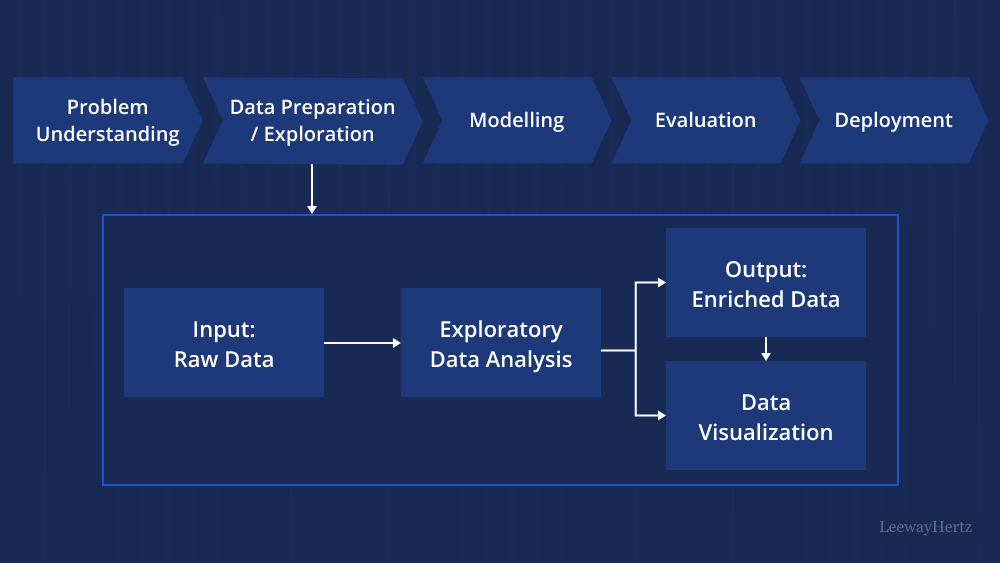
In the realm of data science, the journey begins with data exploration. It’s the initial step that sets the stage for the entire data analysis process. This crucial phase is known as Exploratory Data Analysis (EDA). EDA is like peering through a magnifying glass at a treasure map, revealing patterns, anomalies, and insights that may be concealed within your data. In this article, we will delve into the essence of EDA, its significance, techniques, and how it empowers data scientists and analysts to make informed decisions.

Understanding Exploratory Data Analysis

Exploratory Data Analysis is an investigative approach to examine data sets, seeking to summarize their main characteristics, often with the help of graphical representations and statistical techniques. It’s a crucial preliminary step before diving into more complex analysis or modeling. EDA aims to answer essential questions like:

  1. What does the data look like?
  2. Are there any notable trends or patterns?
  3. Are there any outliers or anomalies?
  4. What relationships exist between variables?

Why is EDA Important?

EDA serves multiple critical purposes in data analysis:

  1. Data Quality Assessment: It allows data scientists to identify and rectify issues like missing values, duplicates, and outliers, ensuring that the data is reliable and accurate.
  2. Pattern Recognition: EDA helps in spotting trends, correlations, and patterns that can be further explored and utilized in modeling and decision-making.
  3. Assumption Validation: It helps to validate assumptions made during the analysis and select appropriate statistical techniques.
  4. Feature Selection: EDA aids in selecting the most relevant features (variables) for modeling, which can improve model performance and reduce computational complexity.
  5. Communication: EDA often involves creating visualizations that make it easier to communicate findings and insights to non-technical stakeholders.

Techniques and Tools for EDA

Exploratory Data Analysis employs a variety of techniques and tools to unveil the hidden aspects of data. Here are some commonly used methods:

  1. Descriptive Statistics: Measures like mean, median, standard deviation, and quartiles provide a quick summary of the data’s central tendency, spread, and distribution.
  2. Data Visualization: Graphical representations such as histograms, box plots, scatter plots, and heatmaps help in visualizing patterns, relationships, and outliers.
  3. Correlation Analysis: This technique explores the relationships between variables, often using correlation coefficients to measure the strength and direction of relationships.
  4. Outlier Detection: Statistical tests and visualization techniques like the Z-score, IQR, and scatter plots help identify outliers that might skew the analysis.
  5. Dimensionality Reduction: Techniques like Principal Component Analysis (PCA) and t-Distributed Stochastic Neighbor Embedding (t-SNE) reduce the dimensionality of data while preserving its essential characteristics.
  6. Clustering and Segmentation: Unsupervised learning algorithms can be applied to group similar data points, revealing underlying structures within the data.
  7. Time Series Analysis: EDA for time series data involves analyzing trends, seasonality, and identifying potential forecasting models.
  8. Geospatial Analysis: For spatial data, EDA involves mapping, spatial autocorrelation, and hotspot analysis.
  9. Textual Analysis: When dealing with text data, EDA may include techniques like word frequency analysis, sentiment analysis, and topic modeling.

The EDA Process

The EDA process is not a one-size-fits-all approach; it varies depending on the dataset and the questions being asked. However, a typical EDA process may involve the following steps:

  1. Data Collection: Gather the dataset and relevant metadata.
  2. Data Cleaning: Address missing values, duplicates, and outliers.
  3. Data Visualization: Create visualizations to explore the data’s distribution, relationships, and patterns.
  4. Descriptive Statistics: Compute summary statistics to understand central tendencies and variabilities.
  5. Hypothesis Testing: Test hypotheses and assumptions about the data.
  6. Advanced Analysis: Apply specific techniques like clustering, regression analysis, or time series analysis as needed.
  7. Interpretation: Interpret the findings, draw conclusions, and identify actionable insights.
  8. Communication: Present the results using clear visualizations and explanations.

Conclusion

Exploratory Data Analysis is the foundation upon which data analysis and modeling rest. It’s the process of understanding the data’s nuances, uncovering hidden gems, and ensuring data quality. EDA empowers data scientists and analysts to make informed decisions, develop accurate models, and communicate insights effectively. Whether you’re exploring a new dataset or embarking on a data-driven project, remember that the journey begins with exploration, and EDA is your trusty compass on that path. So, take the time to explore, visualize, and understand your data; you might just discover the secrets it holds.

Hire Generative AI Engineers: Unleash the Power of Creative Machines

In the ever-evolving landscape of technology, the role of artificial intelligence (AI) has grown exponentially. From automating routine tasks to revolutionizing industries, AI has proven its worth. Among the many AI subfields, one that stands out for its potential to drive innovation is generative AI. Generative AI engineers are the wizards behind the curtain, creating machines that can generate content, art, music, and even solve complex problems. If you’re looking to take your organization to the next level, it’s time to consider hiring generative AI engineers. In this article, we’ll explore why these experts are in high demand and how they can transform your business.

The Rise of Generative AI

Generative AI, a subset of machine learning, is all about enabling machines to create something new. It has come a long way from basic text generation to creating realistic images, videos, and even entire stories. The driving force behind this transformation is the creativity and expertise of generative AI engineers.

These engineers work on cutting-edge models like GPT (Generative Pre-trained Transformer) and VQ-VAE (Vector Quantized Variational Autoencoder), pushing the boundaries of what AI can do. They train these models on vast datasets and fine-tune them to perform specific tasks. The result? AI systems that can generate art that’s indistinguishable from human creations, compose symphonies that resonate with the soul, and even develop new drug molecules.

The Impact of Generative AI Engineers

  1. Content Creation: Content is king in the digital age. Generative AI engineers can help your business churn out high-quality content at a rapid pace. Whether it’s generating product descriptions, creating marketing materials, or producing blog posts, AI-powered content generation can save time and resources while maintaining consistency and quality.
  2. Personalized Experiences: AI engineers can create recommendation systems that analyze user behavior and preferences to deliver personalized experiences. This is particularly valuable for e-commerce platforms, streaming services, and social media platforms, where user engagement drives revenue.
  3. Art and Design: From generating unique graphic designs to creating digital art pieces, generative AI can bring creativity to the forefront. Artists and designers can use AI as a tool to enhance their work and explore new creative avenues.
  4. Scientific Discovery: In fields like drug discovery and materials science, generative AI can accelerate research and development. AI engineers can design algorithms to generate novel molecules with desired properties, potentially revolutionizing the pharmaceutical industry.
  5. Problem Solving: Generative AI is not limited to creative tasks. It can also tackle complex problem-solving. Engineers can build AI systems that analyze data and provide solutions for optimization, resource allocation, and decision-making.

The Talent Gap: Why You Need Generative AI Engineers

While the potential of generative AI is immense, there is a significant talent gap in the field. Highly skilled generative AI engineers are in high demand but in short supply. To harness the power of generative AI, organizations need to prioritize hiring and nurturing talent in this area.

Here’s why you should consider hiring generative AI engineers:

  1. Competitive Advantage: Organizations that invest in generative AI early gain a competitive edge. AI-powered creativity can set your products and services apart in the market.
  2. Innovation: Generative AI engineers are innovators by nature. Their expertise can lead to breakthroughs and innovations that drive growth and open up new markets.
  3. Efficiency: Automation of creative tasks and problem-solving processes can significantly improve efficiency, allowing your team to focus on more strategic activities.
  4. Cost Savings: Over time, AI can reduce operational costs by automating repetitive tasks and optimizing resource allocation.
  5. Data Utilization: Generative AI engineers can help you leverage your data more effectively, extracting valuable insights and generating actionable recommendations.

How to Find and Hire Generative AI Engineers

Finding the right generative AI engineers may be a challenge, but it’s worth the effort. Here are some tips to help you identify and attract top talent:

  1. Partner with Educational Institutions: Collaborate with universities and research institutions that have strong AI programs. Offer internships and research opportunities to identify emerging talent.
  2. Network: Attend AI conferences and meetups to connect with professionals in the field. Many generative AI engineers are active in these communities.
  3. Offer Competitive Compensation: Generative AI engineers are in demand, so be prepared to offer competitive salaries and benefits packages.
  4. Provide Learning Opportunities: AI is a rapidly evolving field. Encourage continuous learning and development by providing access to resources, courses, and conferences.
  5. Emphasize Ethical AI: Highlight your organization’s commitment to ethical AI development. Many AI engineers are passionate about responsible AI practices.

In conclusion, generative AI engineers are the key to unlocking the full potential of AI in your organization. Their expertise in creating AI systems that generate content, art, and solutions can drive innovation, improve efficiency, and give you a competitive advantage. While the talent gap in this field is real, the investment in hiring and nurturing generative AI engineers is well worth it in the long run. Embrace the future of AI creativity and take your business to new heights by hiring generative AI engineers today.

The Evolution of AI Chatbots: Transforming Customer Interactions

In today’s fast-paced digital era, businesses are constantly seeking innovative ways to enhance customer experiences. One technology that has taken the customer service industry by storm is Artificial Intelligence (AI) chatbots. These virtual assistants are revolutionizing the way companies interact with their customers, offering efficiency, scalability, and personalization like never before.

The Rise of AI Chatbots

The concept of AI chatbots dates back to the early days of computing, but it is in recent years that they have truly come into their own. Thanks to advancements in machine learning and natural language processing, AI chatbots have evolved from basic scripted responses to sophisticated, context-aware virtual agents.

The primary driver behind the rise of AI chatbots is the need for businesses to provide round-the-clock customer support. Traditional customer service channels, like phone and email, have limitations in terms of availability and speed of response. AI chatbots, on the other hand, can handle customer inquiries 24/7, ensuring that customers can get assistance whenever they need it.

Enhancing Customer Service

One of the key advantages of AI chatbots is their ability to provide instant responses. Unlike human agents who may need time to research or consult with colleagues, chatbots can access vast amounts of information in milliseconds. This means customers can get answers to their questions or resolve issues almost immediately, leading to higher satisfaction levels.

Moreover, AI chatbots are highly scalable. Whether a business receives ten or ten thousand inquiries in a day, chatbots can handle the load without the need for additional human resources. This scalability is particularly crucial during peak seasons or when launching new products or services.

Personalization at Scale

AI chatbots are not just about automation; they are also about personalization. Modern chatbots can analyze user data to tailor their responses to individual preferences and needs. For instance, an e-commerce chatbot can recommend products based on a customer’s purchase history, making the shopping experience more enjoyable and relevant.

Personalized interactions foster stronger customer relationships and increase the likelihood of repeat business. Customers feel valued when a chatbot remembers their preferences, and this can lead to higher customer loyalty and retention rates.

Continuous Learning and Improvement

One of the most remarkable features of AI chatbots is their ability to learn and improve over time. Through machine learning algorithms, chatbots can analyze past interactions to identify areas where they can perform better. This continuous learning process allows chatbots to become more accurate and effective in delivering responses and solutions.

As chatbots interact with more customers, their knowledge base expands, making them even more valuable assets for businesses. This learning process also enables chatbots to handle increasingly complex inquiries and adapt to changes in customer behavior and market trends.

Challenges and Ethical Considerations

While AI chatbots offer numerous benefits, they also raise important challenges and ethical considerations. One concern is the potential for bias in chatbot responses. If not properly trained and monitored, chatbots can inadvertently perpetuate biases present in their training data, leading to discriminatory or offensive responses.

Privacy is another critical issue. Chatbots often collect and store user data to personalize interactions. Ensuring the security and ethical handling of this data is paramount to maintain customer trust.

Additionally, there is the risk of overreliance on chatbots, potentially leading to reduced human interaction and empathy in customer service. Striking the right balance between automation and human touch is essential.

The Future of AI Chatbots

As AI technology continues to advance, the future of chatbots looks promising. We can expect even more sophisticated and human-like interactions with chatbots, further blurring the line between man and machine. Chatbots may become integrated into virtual reality environments, providing immersive customer support experiences.

Moreover, chatbots are likely to play a pivotal role in industries beyond customer service. They can be used for healthcare consultations, financial advice, and even as virtual companions for mental health support.

Conclusion

AI chatbots have come a long way from their early beginnings, transforming the way businesses engage with customers. They offer efficiency, scalability, and personalization at levels that were previously unattainable. However, it’s crucial for businesses to navigate the challenges and ethical considerations associated with AI chatbots to ensure a positive and responsible use of this technology.

The future of AI chatbots is undoubtedly exciting, with endless possibilities for improving customer experiences and providing innovative solutions across various domains. As businesses continue to embrace AI chatbots, the way we interact with technology and receive assistance is destined to evolve in remarkable ways.

Demystifying the Action Transformer Model: Revolutionizing Natural Language Understanding

In the ever-evolving landscape of artificial intelligence and natural language processing, one name has been making waves – the Action Transformer Model. This cutting-edge approach to language understanding is poised to revolutionize the way machines comprehend and interact with human language. In this article, we will delve into the intricacies of the Action Transformer Model, exploring its architecture, applications, and potential impact on various industries.

The Birth of the Action Transformer Model

The Action Transformer Model, or ATM, is a natural progression from the Transformer architecture, which gained prominence with models like BERT and GPT. The Transformer architecture introduced the concept of self-attention mechanisms, allowing models to weigh the importance of different words in a sentence contextually. The ATM takes this a step further by incorporating actions into the equation.

At its core, the ATM is designed to understand not just the meaning of words but also the actions they imply. It achieves this by considering not only the input text but also a predefined set of actions associated with it. This novel approach opens up a plethora of possibilities for machines to understand and generate text that is not only contextually relevant but also action-aware.

Understanding the Architecture

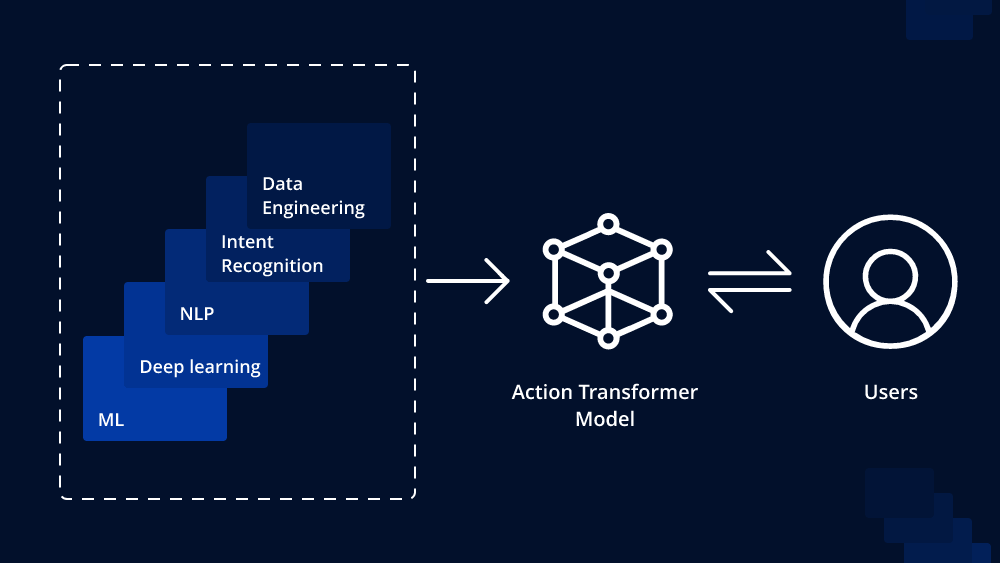
The Action Transformer Model’s architecture comprises three key components: the encoder, the action module, and the decoder. Let’s break down each of these components:

  1. Encoder: Similar to traditional Transformers, the encoder processes the input text, capturing its contextual information. It identifies the salient features of the text and prepares it for action-aware comprehension.
  2. Action Module: This is where the magic happens. The action module incorporates a predefined set of actions that the model can choose from while processing the input text. These actions serve as guidance for the model, helping it understand the implied actions in the text.
  3. Decoder: The decoder takes the encoded input text and the selected action and generates coherent and contextually relevant output text. This is where the ATM’s ability to understand and generate action-aware text truly shines.

Applications Across Industries

The Action Transformer Model has a wide range of applications, making it a versatile tool for various industries:

  1. Chatbots and Virtual Assistants: In the realm of customer service and support, ATM-equipped chatbots and virtual assistants can better understand and respond to user queries. They can provide more personalized and action-oriented assistance, improving user satisfaction.
  2. Content Generation: Content creation, whether for marketing or journalism, stands to benefit from the ATM. It can help generate articles, product descriptions, or advertisements that are not just informative but also action-driven, driving user engagement.
  3. Healthcare: In healthcare, where understanding patient records and medical documents is crucial, the ATM can assist in summarizing and extracting actionable insights from voluminous data, aiding healthcare professionals in making informed decisions.
  4. Legal Industry: Legal documents are notorious for their complexity. The ATM can simplify legal language, making contracts and agreements more understandable and highlighting critical actions and obligations.
  5. Finance and Trading: In the world of finance, precise and timely action is essential. The ATM can help financial analysts by providing insights into market data, news articles, and reports, enabling them to make informed investment decisions.
  6. Language Translation: Traditional machine translation models can sometimes produce translations that lack context. The ATM can enhance translation quality by considering the actions implied in the source text, leading to more accurate and contextually appropriate translations.

Challenges and Future Directions

While the Action Transformer Model holds tremendous promise, it also faces challenges that need to be addressed. One of the primary challenges is the creation of comprehensive action sets for various domains and languages. Developing these sets requires considerable effort and expertise.

Additionally, fine-tuning the model for specific tasks and domains is essential for optimal performance. This process involves extensive data annotation and domain-specific training.

In the future, we can expect to see advancements in action-aware pretraining, enabling the ATM to understand a broader range of actions and contexts. Moreover, model efficiency and scalability will be areas of continuous research, ensuring that ATM can be applied to real-time, large-scale applications.

Conclusion

The Action Transformer Model represents a significant leap forward in natural language understanding. By incorporating actions into its architecture, ATM has the potential to revolutionize various industries, from healthcare and finance to content generation and customer service. While challenges remain, ongoing research and development are poised to unlock the full potential of this transformative technology. As the ATM continues to evolve, it promises to reshape the way machines comprehend and interact with human language, ushering in a new era of action-aware AI.

Generative AI Models for Image Synthesis

In recent years, artificial intelligence (AI) has made remarkable strides in the field of image synthesis, thanks in large part to generative AI models. These models have revolutionized the way we create and manipulate images, enabling us to generate highly realistic and creative visuals with unprecedented ease. In this article, we will explore the fascinating world of generative AI models for image synthesis and delve into their applications, advancements, and future prospects.

Understanding Generative AI Models

Generative AI models are a subset of machine learning algorithms designed to generate data that resembles real-world examples. In the context of image synthesis, these models are trained to create images that are visually similar to those found in a given dataset. They achieve this by learning the underlying patterns, structures, and features present in the training data and then using this knowledge to generate new, coherent images.

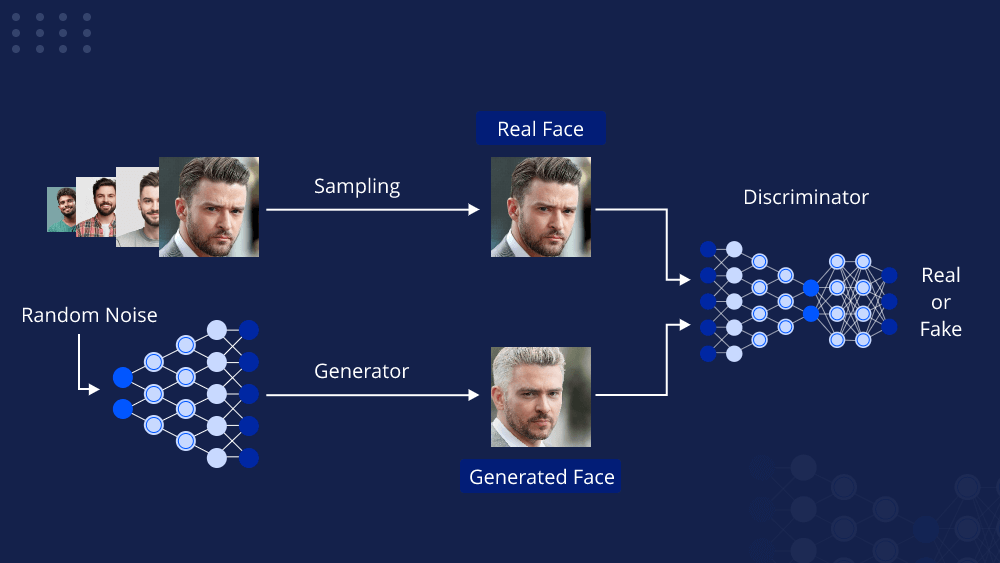
One of the pioneering generative AI models for image synthesis is the Generative Adversarial Network (GAN). GANs consist of two neural networks, the generator and the discriminator, which engage in a constant battle. The generator attempts to create realistic images, while the discriminator evaluates them. Through this adversarial process, GANs become increasingly adept at producing convincing images.

Applications of Generative AI Models in Image Synthesis

Generative AI models have found applications across a wide range of fields, unlocking new possibilities in image synthesis:

  1. Art and Creativity: Artists and designers are using generative AI models to spark creativity and explore new artistic styles. These models can generate unique artworks, providing a fresh perspective on traditional art forms.
  2. Photorealistic Rendering: In the gaming and entertainment industry, generative AI models are used to create photorealistic environments and characters, enhancing the immersive experience for users.
  3. Medical Imaging: Generative models are employed to generate synthetic medical images, aiding in research, training, and diagnostic tasks. They can simulate various medical conditions and help improve the accuracy of medical imaging systems.
  4. Data Augmentation: In machine learning, generative AI models are utilized to augment training datasets. They can generate additional labeled data, helping improve the performance of machine learning models.
  5. Style Transfer: These models enable the transfer of artistic styles from one image to another, allowing for the creation of visually striking images with distinct aesthetics.

Advancements in Generative AI Models

Over the years, generative AI models have seen remarkable advancements, leading to significant improvements in image synthesis:

  1. Progressive GANs: Progressive GANs introduced a training approach that gradually increased the resolution of generated images, resulting in sharper and more detailed visuals.
  2. Conditional GANs: Conditional GANs allow users to control the characteristics of generated images, such as style, content, and attributes, making them highly versatile for specific applications.
  3. StyleGAN: StyleGAN improved the generation of highly realistic faces, enabling the creation of synthetic human portraits that are virtually indistinguishable from real photographs.
  4. BigGAN and BigGAN-deep: These models increased the scale of GANs, allowing for the generation of high-resolution images and fostering creativity in various domains.
  5. Hybrid Models: Some generative AI models combine GANs with other AI techniques, such as reinforcement learning, to generate more diverse and contextually relevant images.

Future Prospects

The future of generative AI models for image synthesis holds exciting possibilities:

  1. Unlimited Creativity: As these models continue to advance, they will enable artists, designers, and creators to push the boundaries of creativity, leading to new forms of artistic expression.
  2. Realistic Simulation: Generative AI will be increasingly used for realistic simulations in fields like training autonomous vehicles, testing aircraft, and simulating natural disasters.
  3. Personalization: Generative models could revolutionize content personalization, allowing for the creation of highly tailored visual content for individuals in various applications, from entertainment to advertising.
  4. Ethical Considerations: As generative AI becomes more powerful, ethical concerns about its misuse, such as deepfakes and misinformation, will require robust safeguards and regulations.

In conclusion, generative AI models have transformed image synthesis, offering unprecedented capabilities for creativity and problem-solving. From art and entertainment to healthcare and research, these models have a profound impact on various sectors. With ongoing advancements and responsible usage, the future promises even more exciting developments in the realm of generative AI for image synthesis, opening up a world of infinite possibilities for visual storytelling and innovation.

How to Build a Machine Learning App: A Step-by-Step Guide

Machine learning has revolutionized the way we interact with technology. From recommendation systems on streaming platforms to autonomous vehicles, machine learning apps are powering innovations across various industries. If you’re eager to dive into the world of machine learning app development, this step-by-step guide will help you get started.

1. Define Your Problem and Data

Every successful machine learning app starts with a clear problem statement. Define the problem you want to solve and determine whether machine learning is the right approach. Then, gather and preprocess the data necessary for training and testing your model. Data quality and quantity play a crucial role in the success of your machine learning application.

2. Choose the Right Machine Learning Algorithm

Selecting the appropriate machine learning algorithm depends on your problem type. For classification tasks, consider algorithms like logistic regression or support vector machines. For regression tasks, linear regression or decision trees may be suitable. Deep learning models like convolutional neural networks (CNNs) and recurrent neural networks (RNNs) excel in tasks involving images, text, or sequences. Research and experimentation will help you identify the best algorithm for your application.

3. Data Splitting and Preprocessing

Divide your dataset into training, validation, and test sets. Training data is used to teach your model, while validation data helps you tune hyperparameters and monitor training progress. The test set is crucial for evaluating the final model’s performance. Additionally, preprocess your data to handle missing values, scale features, and encode categorical variables. Proper data preprocessing ensures that your model learns effectively.

4. Model Building and Training

Now it’s time to create your machine learning model. Using a framework like TensorFlow or PyTorch, design the architecture of your model, including layers, activation functions, and loss functions. Train your model on the training data using an appropriate optimization algorithm. Experiment with different hyperparameters to improve model performance. Regularly monitor metrics like accuracy, loss, and validation scores to gauge your model’s progress.

5. Model Evaluation

After training your model, evaluate its performance on the test dataset. Use metrics relevant to your problem, such as accuracy, precision, recall, or mean squared error. Analyze the results to identify areas where your model excels and where it may need improvement. Iteratively refine your model by tweaking hyperparameters, adjusting the architecture, or collecting more data if necessary.

6. Deployment

Once you’re satisfied with your machine learning model’s performance, it’s time to deploy it as part of an application. You can choose between cloud-based solutions like Amazon Web Services (AWS) or Microsoft Azure, or on-premises deployment. Ensure that your model is integrated seamlessly into your application’s architecture and that it can handle real-time predictions.

7. User Interface Design

Design an intuitive and user-friendly interface for your machine learning app. Consider the user experience (UX) and ensure that users can interact with your app effortlessly. Tools like React, Angular, or Vue.js can help you create dynamic web interfaces, while frameworks like Flutter or React Native are suitable for mobile app development.

8. Integration with Backend

Develop the backend of your machine learning app, which serves as the bridge between the user interface and the machine learning model. Use server-side programming languages like Python (using frameworks like Flask or Django), Node.js, or Ruby on Rails to create APIs for communication between the frontend and the machine learning model.

9. Model Monitoring and Maintenance

Machine learning models require ongoing monitoring and maintenance. Set up monitoring tools to track the model’s performance in real-world scenarios. Regularly retrain your model with fresh data to ensure it remains accurate and up-to-date. Address any issues that arise promptly to maintain a high-quality user experience.

10. User Feedback and Improvement

Encourage user feedback and use it to enhance your machine learning app continually. User insights can help you identify areas for improvement, uncover new use cases, and refine your model further. Prioritize user satisfaction and adapt your app based on their needs and preferences.

In conclusion, building a machine learning app is a multi-faceted process that requires careful planning, data preparation, model development, and application integration. By following these steps and staying open to continuous improvement, you can create machine learning applications that deliver value to users and drive innovation in your chosen domain. Embrace the power of machine learning and start building your own intelligent applications today.

To Learn More :- https://www.leewayhertz.com/how-to-build-a-machine-learning-app/

Stable Diffusion Developers: Pioneering Excellence in Software Development

In the ever-evolving landscape of software development, certain individuals and teams stand out as beacons of stability, innovation, and reliability. These are the Stable Diffusion Developers, a group of professionals who have not only embraced the dynamic nature of technology but have also consistently demonstrated their prowess in creating robust and enduring software solutions. In this article, we explore the key characteristics and contributions of these remarkable developers in the fast-paced world of programming.

1. Relentless Learning and Adaptation
Stable Diffusion Developers are driven by an unquenchable thirst for knowledge. They understand that technology never stands still and, as such, they consistently engage in continuous learning. Whether it’s a new programming language, a cutting-edge framework, or an emerging trend, these developers quickly adapt and integrate the latest tools into their skill set. This dedication to learning ensures that their software solutions remain relevant and effective in a rapidly changing environment.

2. Emphasis on Robustness and Reliability
One of the defining features of Stable Diffusion Developers is their unwavering commitment to building robust and reliable software. They understand that a glitch or crash can have significant consequences, ranging from financial losses to tarnished reputations. To combat this, these developers meticulously test their code, employ best practices, and integrate rigorous quality control measures. Their solutions are not only feature-rich but also stable and dependable, providing end-users with a seamless experience.

3. Collaboration and Communication
Stable Diffusion Developers recognize the value of effective communication and collaboration within a development team. They excel at translating complex technical concepts into understandable terms for non-technical stakeholders. By fostering a culture of open communication, these developers ensure that everyone involved in the project, from designers to project managers, is on the same page. This results in smoother development cycles and better outcomes.

4. User-Centric Design
A key trait of Stable Diffusion Developers is their dedication to creating software that addresses real-world problems and meets user needs. They actively seek user feedback and incorporate it into their development process. By prioritizing user experience and usability, they create software that not only functions well but also resonates with its intended audience.

5. Adherence to Best Practices
Stable Diffusion Developers adhere to coding standards and best practices religiously. They understand that writing maintainable and scalable code is crucial for the long-term success of any software project. Whether it’s following the SOLID principles, implementing proper version control, or documenting their code comprehensively, these developers prioritize a disciplined approach to development.

6. Innovation with Prudence
While Stable Diffusion Developers are innovative, they approach novelty with caution. They understand that adopting every new trend or technology can lead to instability and compatibility issues. Instead, they carefully evaluate the potential impact of new tools and techniques before integrating them into their projects. This balanced approach to innovation ensures that their software remains cutting-edge without compromising reliability.

7. Embracing Failure as a Learning Opportunity
No software project is without its challenges or failures. Stable Diffusion Developers view these setbacks as valuable learning opportunities rather than deterrents. They analyze failures, identify root causes, and use this knowledge to refine their future approaches. This growth mindset not only enhances their individual skills but also contributes to the overall success of their development teams.

8. Ethical and Responsible Development
In an era of increasing digitalization, Stable Diffusion Developers also prioritize ethical considerations in their work. They are conscious of the potential impact of their software on society and strive to create solutions that align with ethical principles. From data privacy to security measures, these developers ensure that their software upholds ethical standards and contributes positively to the digital ecosystem.

9. Mentorship and Knowledge Sharing
Stable Diffusion Developers are not just outstanding individual contributors; they are also enthusiastic mentors. They actively engage in knowledge sharing within their teams and communities, helping to nurture the next generation of developers. Their willingness to share insights, provide guidance, and offer constructive feedback demonstrates their commitment to the growth of the field as a whole.

In a realm where innovation and instability often go hand in hand, Stable Diffusion Developers stand out as a beacon of reliability and excellence. Their commitment to learning, emphasis on robustness, collaborative spirit, and ethical considerations set them apart as leaders in the world of software development. As technology continues to evolve, these developers will undoubtedly continue to pave the way for a more stable and prosperous digital future.

AI as a Service (AIaaS): Transforming Industries Through Innovation

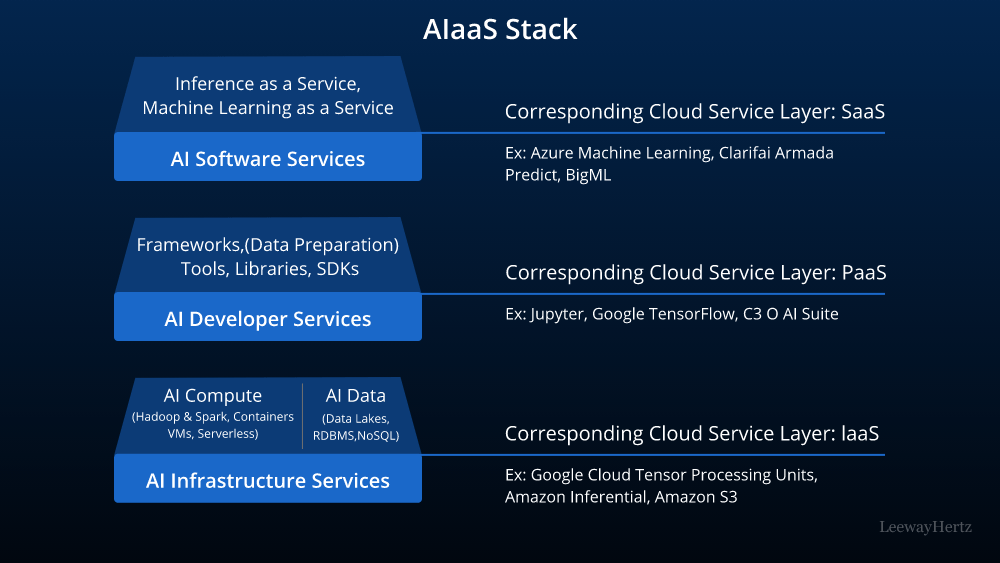
In today’s rapidly evolving technological landscape, Artificial Intelligence (AI) has emerged as a game-changing force, revolutionizing industries and redefining the way businesses operate. One of the remarkable developments in this domain is the concept of AI as a Service (AIaaS). AIaaS offers a novel approach that empowers organizations to harness the power of AI without significant upfront investments, thereby democratizing access to cutting-edge AI capabilities. This article delves into the key facets of AIaaS and its profound impact on various sectors.

1. Introduction to AI as a Service (AIaaS)

AIaaS represents a paradigm shift by providing AI solutions on a cloud-based, pay-as-you-go model. Just like Software as a Service (SaaS) transformed the software industry, AIaaS is disrupting traditional models of AI implementation. With AIaaS, businesses can access a wide array of AI tools, algorithms, and infrastructure without the need to develop these resources in-house.

2. Advantages of AIaaS

  • Cost Efficiency: AI projects often demand substantial investments in hardware, software, and expertise. AIaaS eliminates these upfront costs by offering a subscription-based model, making it affordable for organizations of all sizes.
  • Scalability: AIaaS platforms allow businesses to scale their AI initiatives effortlessly. Whether an organization needs to analyze a small dataset or perform complex computations on massive datasets, AIaaS resources can be scaled up or down as required.
  • Faster Deployment: Traditional AI implementation can be time-consuming, from data preprocessing to model training. AIaaS platforms provide pre-built models and tools, significantly reducing deployment time.
  • Access to Expertise: AIaaS providers bring together a pool of AI experts and researchers. This enables organizations to tap into the knowledge of specialists who are at the forefront of AI research.

3. Diverse Applications of AIaaS

  • Healthcare: AIaaS is making significant strides in medical imaging analysis, drug discovery, and personalized treatment plans. Healthcare institutions can leverage AIaaS to analyze medical images, detect anomalies, and predict patient outcomes.
  • Finance: AI-powered algorithms can be utilized for fraud detection, algorithmic trading, and risk assessment. AIaaS platforms enable financial institutions to incorporate these algorithms without the need for extensive AI knowledge.
  • Manufacturing: AIaaS facilitates predictive maintenance, optimizing supply chains, and enhancing quality control. Manufacturers can harness AI for predictive analysis, ensuring timely maintenance and reducing downtime.
  • Retail: Personalized shopping experiences, demand forecasting, and inventory management benefit from AI-powered insights. Retailers can leverage AIaaS to better understand consumer behavior and preferences.

4. Challenges and Considerations

  • Data Privacy: Outsourcing AI to third-party providers raises concerns about data privacy and security. Organizations must ensure that sensitive data remains protected throughout the AI process.
  • Integration Complexity: Integrating AIaaS solutions into existing workflows might be complex, demanding seamless compatibility between AI systems and legacy software.
  • Dependency Concerns: Relying heavily on AIaaS vendors could lead to vendor lock-in, limiting an organization’s flexibility in the long run.

5. Leading AIaaS Providers

  • Amazon Web Services (AWS): AWS offers a comprehensive suite of AI services, including image and speech recognition, language processing, and recommendation systems.
  • Microsoft Azure: Azure’s AI offerings encompass natural language understanding, computer vision, and anomaly detection, making AI adoption accessible to a wide range of industries.
  • Google Cloud AI: Google Cloud AI provides tools for machine learning, data analysis, and AI model deployment, enabling businesses to build and deploy AI applications quickly.

6. The Future of AIaaS

As AI continues to advance, AIaaS is poised to play an even more significant role in shaping industries. The integration of AI with the Internet of Things (IoT) and 5G networks will pave the way for real-time data analysis and decision-making, driving innovation in fields such as smart cities and autonomous vehicles. Moreover, AIaaS providers are likely to focus on enhancing interpretability and transparency of AI models, addressing concerns about bias and ethics.

Conclusion

AI as a Service (AIaaS) is a transformative concept that democratizes access to AI capabilities, enabling organizations to leverage AI without prohibitive costs and expertise barriers. With its cost-effectiveness, scalability, and rapid deployment advantages, AIaaS has emerged as a key enabler across various sectors. While challenges persist, the future of AIaaS holds immense promise, propelling industries toward a new era of innovation and efficiency.

Design a site like this with WordPress.com
Get started