The Future and Benefits of Customized ChatGPT Apps

In recent years, advancements in artificial intelligence (AI) have revolutionized various industries, and one of the most intriguing applications is the development of customized ChatGPT apps. These apps leverage AI-powered natural language processing to engage users in dynamic conversations, making them an invaluable tool for businesses and individuals alike. This article delves into the future potential and the myriad benefits that customized ChatGPT apps bring to the table.

1. Tailored User Experiences

The hallmark of customized ChatGPT apps is their ability to provide tailored user experiences. These apps can be designed and trained to understand industry-specific language, jargon, and context. For businesses, this means customer interactions that feel personalized and relevant, fostering a stronger connection between the company and its clientele. This personalization enhances user engagement and satisfaction, ultimately boosting customer loyalty and retention rates.

2. Efficient Customer Support

Gone are the days of long wait times and repetitive responses in customer support queues. Customized ChatGPT apps have the potential to transform customer support into a seamless and efficient experience. These apps can be trained to provide accurate and consistent responses to common queries, freeing up human agents to focus on more complex issues. This leads to faster issue resolution, increased customer satisfaction, and reduced operational costs for businesses.

3. Language Accessibility

Language barriers often hinder effective communication, especially in a globalized world. Customized ChatGPT apps can bridge these gaps by offering multilingual support. Regardless of the user’s preferred language, these apps can engage in conversations, provide information, and offer assistance. This opens up new markets and opportunities for businesses to expand their reach beyond linguistic constraints.

4. Personal Productivity

Individual users can also benefit greatly from customized ChatGPT apps. These apps can serve as virtual assistants, helping users with tasks ranging from drafting emails and creating to-do lists to providing quick answers to general knowledge questions. With a ChatGPT app tailored to their preferences and needs, users can enhance their personal productivity and streamline their daily routines.

5. Learning and Education

Education is another domain that stands to gain from customized ChatGPT apps. These apps can be programmed to provide explanations and clarifications on a wide range of topics, making learning more interactive and engaging. Students can ask questions and receive detailed responses, fostering a deeper understanding of the subject matter. Additionally, these apps can adapt to individual learning paces, ensuring a personalized learning journey for each student.

6. Innovative Marketing

Customized ChatGPT apps can play a pivotal role in shaping the future of marketing. By analyzing user interactions and preferences, businesses can gather valuable insights into consumer behavior. This data can then be used to refine marketing strategies, develop targeted campaigns, and create more relevant product offerings. The result is a more efficient allocation of resources and a higher return on investment in marketing efforts.

7. Entertainment and Creativity

The creative potential of customized ChatGPT apps is boundless. These apps can generate stories, poems, and even scripts based on user prompts, opening up new avenues for entertainment. Writers, artists, and content creators can collaborate with these AI-powered assistants to brainstorm ideas, overcome creative blocks, and refine their work. This synergy between human creativity and AI innovation could lead to unprecedented forms of artistic expression.

8. Data Analysis and Decision Making

Businesses deal with vast amounts of data on a daily basis. Customized ChatGPT apps can assist in data analysis by extracting insights, generating reports, and providing context to complex datasets. This empowers decision-makers to make informed choices backed by data-driven intelligence. The speed and accuracy of AI-driven analysis can significantly enhance a company’s strategic planning and competitive edge.

Conclusion

The future of customized ChatGPT apps holds immense promise across a multitude of sectors. From transforming customer support to aiding in education, from fostering creativity to driving innovative marketing strategies, the benefits of these apps are far-reaching. As AI technology continues to evolve, these apps will become increasingly sophisticated, delivering even more personalized and valuable experiences. Businesses and individuals who embrace this technology stand to gain a competitive advantage in a rapidly changing digital landscape. As we look ahead, it’s clear that customized ChatGPT apps are poised to shape the way we interact, learn, work, and create in the years to come.
The Future of MLOps Consulting Services

In recent years, the landscape of machine learning (ML) and artificial intelligence (AI) has undergone a paradigm shift. As organizations increasingly harness the power of data-driven insights to gain a competitive edge, the need for efficient and streamlined processes in developing, deploying, and managing ML models has become more crucial than ever. This is where MLOps (Machine Learning Operations) comes into play, and the role of MLOps consulting services is poised to become even more pivotal in shaping the future of technology and business. Let’s delve into the key trends that are shaping the future of MLOps consulting services:

1. Holistic Approach to MLOps:
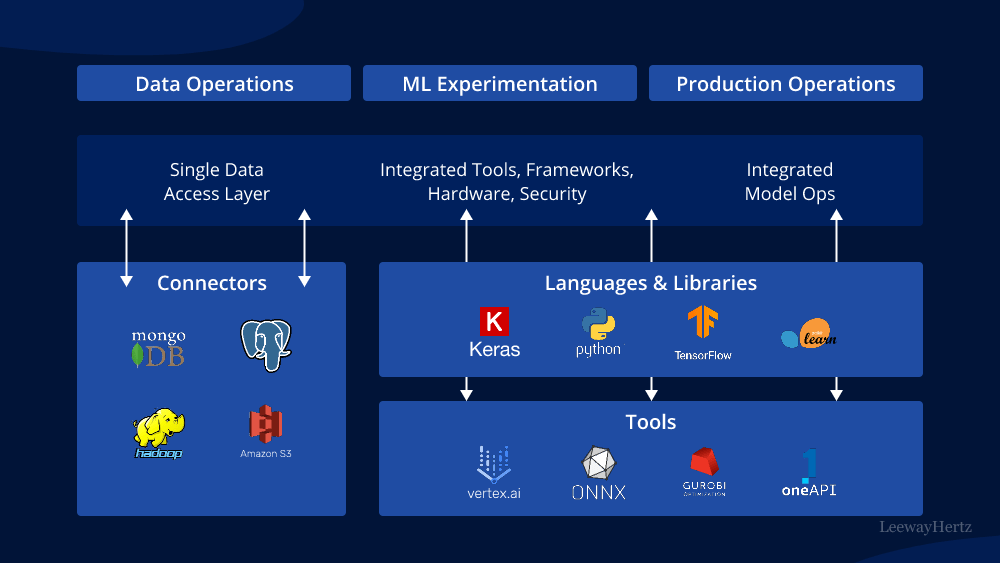
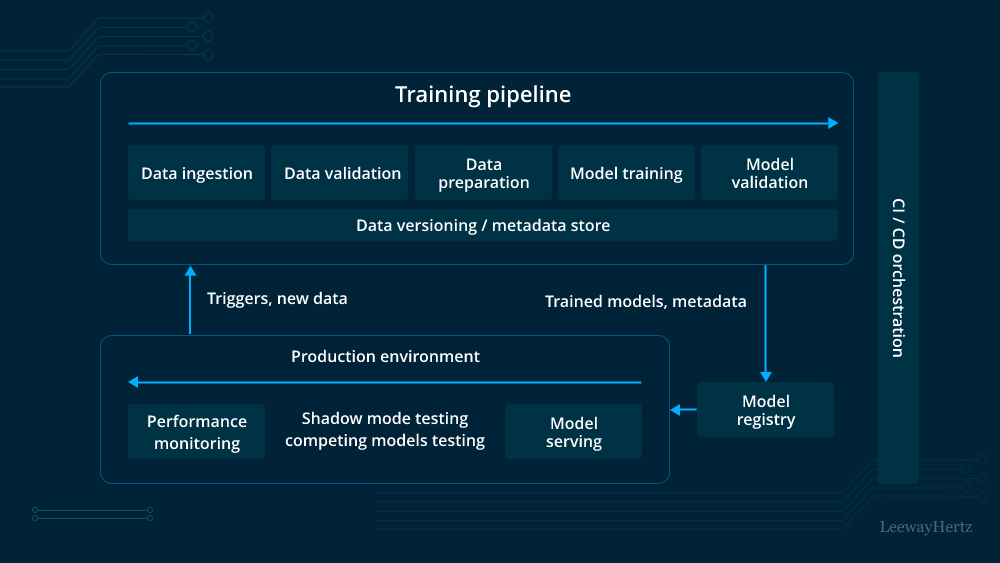
MLOps is not limited to just deploying models; it encompasses the entire ML lifecycle, from data preparation and model development to deployment, monitoring, and retraining. Future MLOps consulting services will take a holistic approach, focusing on end-to-end optimization of the entire process. Consultants will work closely with organizations to design and implement comprehensive MLOps pipelines that automate and streamline each phase, ensuring a seamless and efficient workflow.

2. Advanced Automation and Orchestration:
Automation will be at the heart of future MLOps consulting services. As models become more complex and diverse, manual management becomes unsustainable. Consultants will leverage advanced tools and platforms to automate routine tasks such as data preprocessing, model training, deployment, and monitoring. Moreover, they will emphasize orchestration to manage complex workflows, ensuring that different components of the MLOps pipeline work seamlessly together.

3. DevOps and MLOps Integration:
The integration of MLOps with DevOps (Development Operations) will become a standard practice. Future MLOps consulting services will bridge the gap between data science and IT operations, facilitating smoother collaboration between these traditionally distinct domains. Consultants will guide organizations in adopting DevOps practices tailored to the specific requirements of machine learning projects, fostering a culture of collaboration, rapid iteration, and continuous improvement.

4. Explainable and Ethical AI:
Transparency and ethical considerations will gain prominence in MLOps consulting. As AI systems influence critical decisions, there is a growing need for models to be interpretable and unbiased. MLOps consultants will work to implement tools and techniques that ensure model explainability, allowing organizations to understand and justify the decisions made by their AI systems. Moreover, ethical considerations, such as fairness and accountability, will be embedded into MLOps pipelines.

5. Real-time Monitoring and Governance:
MLOps consulting services will focus on establishing robust monitoring and governance mechanisms. Real-time monitoring of deployed models will become essential to detect and address issues promptly. Consultants will set up comprehensive tracking of model performance, data drift, and system behavior, enabling organizations to maintain the quality and reliability of their AI solutions over time.

6. Cloud-native MLOps:
The cloud will continue to play a pivotal role in the future of MLOps consulting services. Consultants will guide organizations in adopting cloud-native strategies, leveraging the scalability, flexibility, and resource optimization offered by cloud platforms. Cloud-native MLOps solutions will enable seamless integration of various services, such as storage, computing, and AI tools, creating an agile and cost-effective infrastructure.

7. Upskilling and Knowledge Transfer:
MLOps consulting will not only involve delivering solutions but also empowering organizations to take ownership of their AI initiatives. Consultants will prioritize knowledge transfer and upskilling, equipping internal teams with the necessary skills to maintain and evolve their MLOps pipelines. This approach ensures long-term sustainability and reduces dependency on external expertise.

8. Personalized Solutions:
Every organization’s AI journey is unique, and future MLOps consulting services will recognize this diversity. Consultants will offer tailored solutions that align with an organization’s specific goals, challenges, and existing infrastructure. This personalized approach will maximize the value derived from MLOps investments.

In conclusion, the future of MLOps consulting services is bright and transformative. As businesses increasingly rely on AI and ML to drive innovation and growth, the role of MLOps will be pivotal in ensuring the efficiency, reliability, and ethical use of these technologies. Consultants will play a crucial role in shaping this future by embracing automation, integration, transparency, and a holistic approach. By staying attuned to these trends, organizations can leverage MLOps consulting services to navigate the complexities of the AI landscape successfully.

Hire Action Transformer Model Developers: Unlocking the Power of AI

In today’s rapidly evolving technological landscape, artificial intelligence (AI) has emerged as a transformative force across various industries. One of the most remarkable advancements in AI is the development of Action Transformer models. These models have the capability to comprehend and generate sequences of actions, making them invaluable for tasks ranging from natural language understanding to complex decision-making processes. As the demand for AI-driven solutions grows, hiring skilled Action Transformer model developers has become crucial for businesses aiming to stay competitive and innovative. In this article, we will delve into the reasons why hiring such developers is essential and explore the key benefits they bring to the table.

Understanding Action Transformer Models

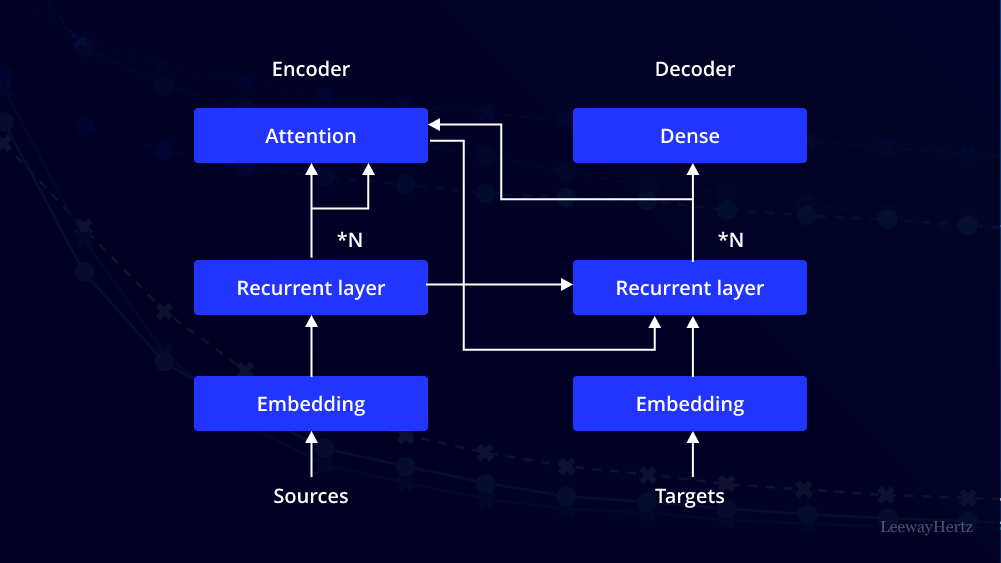
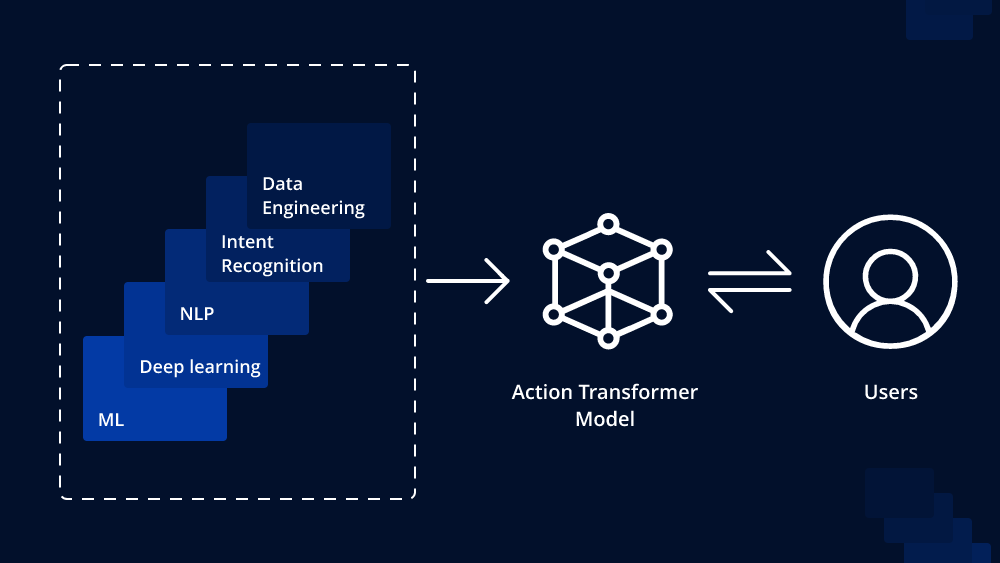
Before delving into the hiring process, it’s important to understand what Action Transformer models are and how they work. These models are an evolution of the original Transformer architecture, which has already proven its effectiveness in various AI tasks. However, Action Transformers take a step further by incorporating the notion of actions into the model’s understanding and generation capabilities. Essentially, they enable machines to process and predict sequences of actions based on input data, opening up a plethora of possibilities across industries.

Why Hire Action Transformer Model Developers?

  1. Expertise in AI and NLP: Action Transformer models require a deep understanding of both artificial intelligence and natural language processing (NLP). Developers skilled in these domains can create models that comprehend and generate action sequences accurately.
  2. Custom Solution Development: Hiring dedicated Action Transformer model developers allows businesses to craft custom solutions tailored to their specific needs. Whether it’s building AI-driven chatbots, recommendation systems, or decision-making tools, these developers can create solutions that align perfectly with business goals.
  3. Innovation and Competitiveness: Businesses that adopt Action Transformer models early gain a competitive edge. These models can automate complex processes, enhance customer interactions, and streamline operations, ultimately leading to innovation that sets the company apart from its competitors.
  4. Enhanced User Experience: Action Transformer models enable the development of more intuitive and interactive applications. Developers can create systems that understand user intent and respond with meaningful action, resulting in an improved user experience.
  5. Complex Task Automation: Many industries deal with intricate processes that involve a series of actions. Action Transformer models can automate these tasks, reducing the need for manual intervention and increasing efficiency.
  6. Data-Driven Insights: Action Transformers can process and understand large volumes of textual and sequential data. Skilled developers can harness this capability to extract valuable insights from data, aiding in better decision-making.

Benefits of Hiring Action Transformer Model Developers

  1. Expertise in Model Fine-Tuning: Skilled developers have the ability to fine-tune Action Transformer models for specific tasks. This ensures that the model performs optimally and delivers accurate results.
  2. Faster Time-to-Market: Hiring experienced developers accelerates the development process. Their expertise allows them to build, train, and deploy models more efficiently, reducing time-to-market for AI-powered solutions.
  3. Mitigating Challenges: Developing and implementing Action Transformer models can be challenging due to their complexity. Experienced developers are better equipped to address potential roadblocks and navigate through the development process smoothly.
  4. Scalability and Flexibility: As business requirements evolve, the need for scalable and flexible AI solutions becomes evident. Skilled developers can design models that can be easily scaled to accommodate growing data volumes and evolving business needs.
  5. Staying Abreast of Advances: The field of AI is rapidly advancing, and new techniques and methodologies emerge frequently. Dedicated developers stay updated with the latest trends, ensuring that the models they create are built using state-of-the-art practices.

Conclusion

The integration of Action Transformer models into various industries marks a significant milestone in the AI landscape. These models have the potential to revolutionize how businesses interact with data and perform complex tasks. Hiring skilled Action Transformer model developers is not just an investment in technology; it’s an investment in innovation, competitiveness, and efficiency. By leveraging the expertise of these developers, businesses can harness the power of AI to create solutions that redefine user experiences and drive success in the modern digital era.

Transformer Model Development Services: Unveiling the Future of AI

In the ever-evolving landscape of artificial intelligence (AI), the emergence of transformer models has catalyzed a paradigm shift in the way machines understand and process information. As businesses and industries continue to harness the power of AI for their growth and innovation, the demand for advanced transformer model development services has skyrocketed. In this article, we delve into the world of transformer model development services and explore how they are shaping the future of AI.

1. The Rise of Transformers:

  • Transformers have revolutionized natural language processing (NLP) and various AI tasks, offering superior performance over traditional models.
  • Their ability to capture long-range dependencies and contextual information makes them ideal for tasks such as language translation, sentiment analysis, text generation, and more.

2. What are Transformer Model Development Services?

  • Transformer model development services encompass the creation, customization, fine-tuning, and deployment of transformer-based AI models to cater to specific business needs.
  • These services leverage pre-trained transformer architectures (e.g., BERT, GPT, T5) and adapt them to extract domain-specific insights, ensuring optimal model performance.

3. Key Components of Transformer Model Development Services:

  • Customization: Expert data scientists tailor transformer models to understand industry-specific jargon, nuances, and context.
  • Data Collection and Preparation: High-quality, relevant datasets are curated and pre-processed to train and fine-tune the transformer models.
  • Model Training: The process of training involves optimizing model parameters, adjusting hyperparameters, and fine-tuning to achieve superior accuracy.
  • Evaluation and Validation: Rigorous testing and validation procedures ensure the model’s effectiveness and generalization to real-world scenarios.
  • Deployment: Deploying the trained model to production environments, ensuring seamless integration with existing systems.

4. Industries Benefiting from Transformer Model Development Services:

  • Healthcare: Transformers aid in medical image analysis, disease diagnosis, drug discovery, and patient data analysis.
  • Finance: Risk assessment, fraud detection, algorithmic trading, and sentiment analysis benefit from transformer-based solutions.
  • E-commerce: Personalized recommendations, chatbots, and customer sentiment analysis enhance user experiences.
  • Content Generation: Transformers enable automated content creation for marketing, journalism, and entertainment industries.

5. Advantages of Transformer Model Development Services:

  • Enhanced Performance: Transformers excel in understanding context, resulting in accurate and contextually relevant predictions.
  • Adaptability: These models can be fine-tuned for specific tasks, making them adaptable to various domains.
  • Time and Cost Savings: Leveraging pre-trained models reduces the time and resources required for model development.
  • Scalability: Transformer models can handle large-scale data and perform efficiently on a wide range of tasks.
  • Improved User Experience: AI-powered applications offer improved user interactions and personalization.

6. Challenges and Considerations:

  • Data Privacy and Ethics: Ensuring data privacy and maintaining ethical AI practices are critical considerations.
  • Model Interpretability: Transformers’ complexity can pose challenges in understanding model decisions, especially in high-stakes applications.
  • Resource Intensiveness: Training and deploying large transformer models require substantial computational resources.

7. Future Prospects:

  • Continued Innovation: Ongoing research and development in transformers will lead to even more advanced models and applications.
  • Multimodal Transformers: Integrating text and other data modalities (images, audio) will open up new possibilities.
  • Smaller and Faster Models: Efforts to create more efficient transformer architectures will make AI more accessible.

8. Choosing the Right Transformer Model Development Service Provider:

  • Expertise: Look for providers with a track record of developing successful transformer-based solutions.
  • Customization: Ensure the service provider can tailor models to your specific industry and business needs.
  • Scalability: Consider providers that can handle projects of varying sizes and complexities.

In conclusion, transformer model development services have ushered in a new era of AI capabilities, empowering industries to achieve new heights of efficiency, accuracy, and innovation. As businesses seek to capitalize on the potential of transformer-based solutions, partnering with a reliable and experienced service provider is key to harnessing the full potential of these remarkable AI models. The future holds exciting possibilities as transformer technology continues to evolve, shaping a world where machines understand and interact with human language and data in ways previously unimaginable.

The Future with AI-Powered Chatbot Development Companies

In today’s fast-paced digital landscape, AI-powered chatbots have emerged as an indispensable tool for businesses to enhance customer experiences, streamline operations, and improve engagement. These advanced chatbots, driven by artificial intelligence and natural language processing, have the potential to revolutionize the way companies interact with their customers. As the demand for seamless and efficient communication continues to rise, AI chatbot development companies are poised to play a pivotal role in shaping the future of business-customer interactions.

Redefining Customer Engagement

The integration of AI-powered chatbots into businesses’ communication strategies has opened up new avenues for customer engagement. Unlike traditional customer support systems that are often constrained by operating hours and resource availability, AI chatbots are available 24/7, ensuring immediate assistance and support to customers across different time zones. This accessibility not only enhances customer satisfaction but also strengthens brand loyalty.

Enhancing Personalization and User Experience

One of the most remarkable features of AI-powered chatbots is their ability to provide highly personalized interactions. Through the analysis of user data and preferences, these chatbots can offer tailored recommendations, suggestions, and responses. This level of personalization not only elevates the user experience but also contributes to increased sales and conversions. As AI continues to evolve, chatbots are likely to become even more adept at understanding and anticipating individual customer needs.

Efficiency in Business Operations

AI-powered chatbots are not limited to customer-facing roles; they are also transforming internal business operations. These chatbots can be integrated into various departments, such as HR, IT, and finance, to streamline processes, automate routine tasks, and provide instant responses to employee queries. By reducing the burden of manual work and administrative tasks, companies can allocate their resources more efficiently, ultimately leading to improved productivity and cost savings.

Seamless Multilingual Communication

In an increasingly globalized world, effective communication across languages is crucial for businesses targeting international audiences. AI-powered chatbots can bridge language barriers by offering real-time translation and multilingual support. This capability opens up new markets and allows companies to engage with diverse customer bases, expanding their reach and driving growth.

The Road Ahead for AI Chatbot Development Companies

As AI technology continues to evolve, the future holds exciting possibilities for AI chatbot development companies. Here are some trends that are likely to shape the trajectory of these companies in the coming years:

  1. Conversational AI Advancements: AI chatbots will become even more conversational, mimicking human-like interactions through improved natural language processing and sentiment analysis. This will create more meaningful and engaging conversations between businesses and customers.
  2. Integration with Emerging Technologies: AI chatbots will be seamlessly integrated with other emerging technologies such as augmented reality (AR) and virtual reality (VR), providing immersive and interactive experiences for users.
  3. Enhanced Emotional Intelligence: Future AI chatbots will be equipped with advanced emotional intelligence, enabling them to recognize and respond to human emotions effectively. This will result in more empathetic and empathic interactions, further enhancing customer satisfaction.
  4. Hyper-Personalization: AI chatbots will continue to refine their ability to provide hyper-personalized experiences by leveraging data analytics and predictive modeling. This will drive higher engagement, conversion rates, and customer loyalty.
  5. Cross-Platform Integration: AI chatbots will seamlessly operate across various platforms and devices, ensuring consistent and uninterrupted interactions, regardless of the user’s preferred communication channel.

In conclusion, AI chatbot development company are at the forefront of shaping the future of communication between businesses and their customers. These companies are not only revolutionizing customer engagement but also optimizing internal operations and driving efficiency. As AI technology continues to advance, the potential for AI chatbots to provide personalized, efficient, and multilingual interactions is limitless. With a focus on constant innovation and integration with emerging technologies, AI chatbot development companies are poised to lead the way in redefining the future of business-customer interactions.

Enhancing Business Potential with Enterprise AI Development Services

In today’s rapidly evolving business landscape, organizations are constantly seeking innovative ways to gain a competitive edge and streamline their operations. The emergence of Artificial Intelligence (AI) has ushered in a new era of possibilities, enabling businesses to leverage advanced technologies to optimize processes, improve decision-making, and drive growth. Enterprise AI development services have emerged as a critical component in harnessing the potential of AI for various industries, allowing companies to tailor AI solutions to their specific needs and objectives.

Enterprise AI development services encompass a range of activities aimed at creating, deploying, and maintaining AI solutions tailored to the unique requirements of businesses. These services often include:

  1. Custom AI Solutions: Every business has distinct challenges and opportunities, and enterprise AI development services offer tailored solutions to address these specific needs. Whether it’s predictive analytics, natural language processing, computer vision, or recommendation systems, AI experts collaborate with organizations to create bespoke AI applications that drive value and innovation.
  2. Data Analysis and Modeling: AI development services emphasize thorough data analysis to fuel AI models. By leveraging vast amounts of data, these services help organizations gain insights into customer behavior, market trends, and operational inefficiencies. This data-driven approach forms the foundation for building accurate and effective AI algorithms.
  3. Model Development and Training: Skilled AI developers work to create and train machine learning models that can interpret data and make intelligent decisions. This involves using algorithms to identify patterns, correlations, and anomalies within the data, enabling AI systems to improve their performance over time.
  4. Integration and Deployment: The successful integration of AI solutions into existing business processes is crucial. Enterprise AI development services ensure seamless deployment and integration of AI technologies into various systems, whether it’s customer relationship management (CRM), supply chain management, or financial forecasting.
  5. Continuous Monitoring and Optimization: AI solutions are not static; they require ongoing monitoring and optimization to ensure they remain effective and aligned with changing business dynamics. Enterprise AI development services provide regular maintenance, updates, and fine-tuning to keep AI systems performing at their best.

Benefits of Enterprise AI Development Services

  1. Enhanced Decision-Making: AI-powered insights help businesses make more informed and data-driven decisions. These insights, derived from complex data analysis, empower executives to identify trends, risks, and opportunities that might have otherwise gone unnoticed.
  2. Efficiency and Automation: Automation is a cornerstone of AI, and enterprise AI development services enable businesses to automate repetitive tasks and processes. This leads to increased efficiency, reduced human error, and the ability to allocate resources to more strategic initiatives.
  3. Personalized Customer Experiences: AI-driven recommendations and personalization enhance customer experiences by delivering tailored products and services based on individual preferences and behaviors. This not only improves customer satisfaction but also boosts sales and brand loyalty.
  4. Predictive Analytics: AI models can forecast future trends and outcomes based on historical data. This predictive capability allows organizations to proactively respond to changing market conditions and make proactive decisions to stay ahead of the competition.
  5. Cost Savings: By automating processes and optimizing resource allocation, businesses can achieve significant cost savings over time. Enterprise AI development services help identify cost-cutting opportunities and create sustainable strategies for resource management.

Challenges and Considerations

While the benefits of enterprise AI development services are vast, there are also challenges that businesses must navigate:

  1. Data Quality and Privacy: AI models require high-quality data to produce accurate results. Ensuring data privacy and complying with regulations such as GDPR is a critical consideration in AI development.
  2. Skill Gap: Developing and deploying AI solutions requires specialized skills that may not be readily available within an organization. Collaborating with experienced AI development services can bridge this skill gap.
  3. Integration Complexity: Integrating AI solutions into existing IT infrastructure can be complex and require careful planning to ensure a seamless transition.

Conclusion

In a world where technology continues to reshape industries, enterprise AI development services have emerged as a catalyst for growth and innovation. By leveraging the power of AI, businesses can unlock valuable insights, enhance operational efficiency, and provide exceptional customer experiences. As the demand for AI-driven solutions continues to grow, partnering with experienced AI development services becomes imperative for businesses aiming to thrive in the digital age. With the right strategy and support, organizations can harness the potential of AI to achieve their goals and remain competitive in an ever-evolving market.

AI Use Cases in Private Equity and Principal Investment

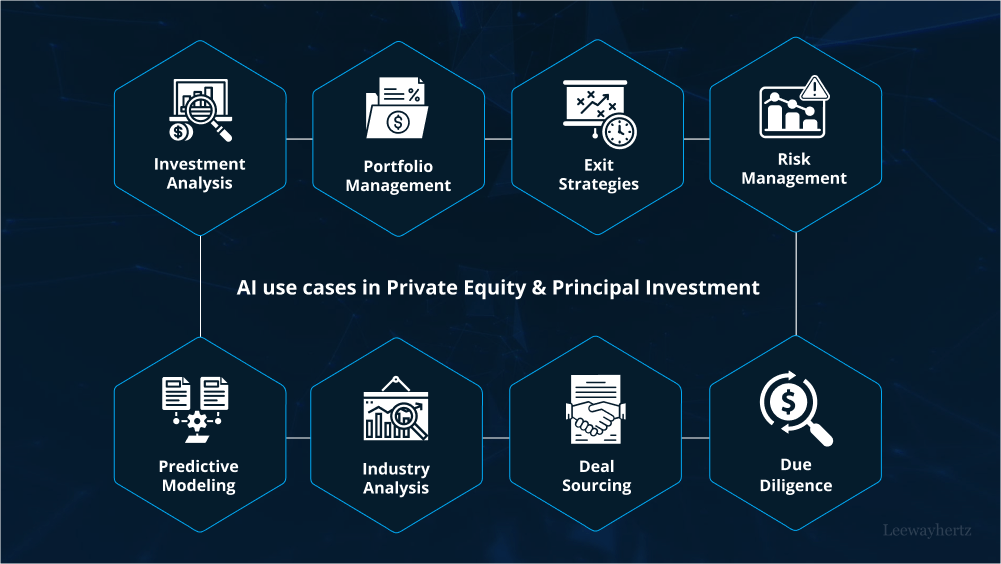
In recent years, the world of finance has been undergoing a transformative revolution fueled by advancements in artificial intelligence (AI) technology. Private equity and principal investment, traditionally characterized by complex decision-making processes and rigorous analysis, are no exception to this paradigm shift. AI is making waves in these sectors by streamlining operations, enhancing due diligence, and uncovering new investment opportunities. This article explores some of the most impactful AI use cases in private equity and principal investment.

1. Data Analysis and Prediction

One of the primary ways AI is transforming private equity and principal investment is through its capacity to analyze vast amounts of data at unprecedented speeds. Machine learning algorithms can sift through historical financial data, market trends, and economic indicators to identify patterns and correlations that human analysts might overlook. This allows investment professionals to make more informed decisions based on data-driven insights.

AI algorithms can also predict market movements and assess the risk associated with various investment options. By analyzing historical performance and contextual factors, AI models can provide predictions on potential returns, helping investors mitigate risk and optimize their investment strategies.

2. Due Diligence Enhancement

Due diligence is a critical aspect of private equity and principal investment, involving comprehensive research to evaluate the financial health and growth prospects of target companies. AI streamlines this process by automating data collection, uncovering hidden risks, and accelerating the assessment of investment opportunities.

Natural language processing (NLP) algorithms, a subset of AI, can analyze vast amounts of textual data, such as news articles, social media, and regulatory filings. This allows investors to gain insights into market sentiment, company reputation, and potential risks associated with an investment. By identifying potential red flags or market trends, AI-driven due diligence can significantly enhance decision-making accuracy.

3. Portfolio Management and Optimization

AI technologies enable private equity firms and investment professionals to optimize their portfolios for maximum returns and risk management. Machine learning algorithms can continuously monitor the performance of investments and adjust the portfolio allocation based on real-time data. This dynamic approach allows for quicker responses to market changes and the identification of new investment opportunities.

Furthermore, AI-driven predictive analytics can help investors identify underperforming assets and develop strategies to improve their returns. By analyzing various scenarios and historical data, AI models can suggest portfolio adjustments that align with the investor’s risk appetite and return expectations.

4. Deal Sourcing and Screening

Finding promising investment opportunities is a cornerstone of private equity and principal investment success. AI technologies assist in deal sourcing and screening by scanning vast amounts of data to identify potential targets that match predefined investment criteria.

Machine learning algorithms can analyze financial data, industry trends, and company performance metrics to identify companies with growth potential. This saves investment professionals time and resources that would otherwise be spent on manual research. AI-powered deal sourcing tools can provide a competitive advantage by uncovering hidden gems in the market.

5. Risk Management and Compliance

AI is also playing a crucial role in enhancing risk management and ensuring compliance within the private equity and principal investment sectors. AI models can assess the risk associated with various investment options by considering a wide range of factors, such as market volatility, macroeconomic indicators, and geopolitical events. This comprehensive risk assessment allows investors to make more informed decisions and better allocate their resources.

Additionally, AI-driven compliance tools can help investment firms navigate complex regulatory landscapes. By monitoring changes in regulations and automating compliance checks, AI reduces the risk of non-compliance and potential legal issues.

In conclusion, AI’s impact on private equity and principal investment is undeniable. From data analysis and due diligence to portfolio optimization and risk management, AI technologies are revolutionizing how investment professionals operate. As the technology continues to evolve, it is likely that its role in these sectors will only become more significant, paving the way for more accurate, efficient, and successful investment strategies.

Chatbot Development Company: Unlocking the Power of Conversational AI

In the age of digital transformation, businesses are increasingly turning to chatbots as a powerful tool to engage customers, automate processes, and provide personalized experiences. A Chatbot Development Company plays a pivotal role in creating intelligent virtual assistants that leverage cutting-edge technologies to enhance customer interactions. In this article, we will explore the significance of a Chatbot Development Company and the key qualities that make it a driving force behind successful chatbot projects.

  1. Expertise in Conversational AI Technologies

A reputable Chatbot Development Company boasts a team of skilled developers with expertise in Conversational AI technologies. These professionals are well-versed in natural language processing (NLP), machine learning, and deep learning algorithms. Their proficiency in these areas allows them to build chatbots that understand user intent, interpret context, and deliver contextually relevant responses.

  1. Customized Solutions for Unique Business Needs

Every business has its distinct requirements, industry challenges, and target audience. A Chatbot Development Company understands the importance of customization and tailors solutions to align with the specific needs of each client. Through thorough consultation and in-depth analysis, the development team crafts chatbots that reflect the brand’s voice, personality, and values, ensuring seamless integration into the overall business strategy.

  1. Multi-Channel Integration and Accessibility

In today’s omnichannel environment, customers interact with businesses through various platforms and devices. A proficient Chatbot Development Company creates chatbots with multi-channel integration capabilities, allowing seamless interactions across websites, social media, messaging apps, and mobile applications. This versatility ensures a consistent user experience, regardless of the platform used.

  1. Continuous Learning and Improvement

Great Chatbot Development Companies recognize that the success of a chatbot hinges on its ability to learn and adapt. Utilizing machine learning techniques, these companies ensure that chatbots continually improve their responses based on user interactions. Regular updates and enhancements guarantee that the chatbot stays current and relevant, meeting evolving user needs.

  1. Data Privacy and Security

Handling user data requires utmost care and responsibility. Ethical Chatbot Development Companies prioritize data privacy and security, implementing robust encryption methods and adhering to data protection regulations. This dedication to data security builds trust and confidence in customers, which is essential for long-term success.

  1. User-Centric Approach

An exceptional Chatbot Development Company takes a user-centric approach throughout the development process. By understanding user preferences, pain points, and expectations, the company creates chatbots that deliver valuable and personalized experiences. This approach fosters customer satisfaction and loyalty, driving positive business outcomes.

Conclusion

A Chatbot Development Company plays a crucial role in harnessing the power of conversational AI to elevate customer engagement and operational efficiency. With expertise in Conversational AI technologies, customization capabilities, multi-channel integration, commitment to continuous learning, and data privacy focus, such companies are instrumental in creating intelligent chatbot solutions for businesses across industries. By partnering with a reputable Chatbot Development Company, enterprises can leverage the potential of chatbots to foster meaningful connections with customers and achieve sustainable growth in the digital landscape.

Click here for more information:

https://www.leewayhertz.com/ai-chatbot-development-company/

Enterprise Chatbot Development Service: Empowering Businesses with Intelligent Virtual Assistants

Enterprise Chatbot Development Service: Empowering Businesses with Intelligent Virtual Assistants

In today’s fast-paced business landscape, customer expectations are evolving, and enterprises are seeking innovative solutions to stay ahead of the competition. The Enterprise Chatbot Development Service has emerged as a transformative offering, enabling businesses to build sophisticated and intelligent virtual assistants that revolutionize customer interactions, streamline processes, and enhance overall efficiency. Let’s explore the essence of the Enterprise Chatbot Development Service, its key components, and the benefits it brings to businesses.

Understanding Enterprise Chatbot Development Service

The Enterprise Chatbot Development Service is a specialized service provided by expert development companies to design, create, and deploy chatbots tailored to meet the unique needs of businesses. These chatbots are powered by advanced Natural Language Processing (NLP) and Machine Learning (ML) algorithms, enabling them to comprehend human language, interpret user intent, and deliver contextually relevant responses. The development service covers the entire life cycle of chatbot development, from conceptualization and design to integration and ongoing support.

Key Components of Enterprise Chatbot Development Service

  1. Requirement Analysis and Strategy: The development process begins with an in-depth analysis of the business’s objectives, target audience, and specific use cases. Based on this analysis, a strategic plan is crafted to align the chatbot’s capabilities with the organization’s goals.
  2. Chatbot Design and Development: Skilled AI developers and data scientists collaborate to design the chatbot’s conversational flow, user interface (UI), and backend integrations. The chatbot is trained using relevant datasets and ML algorithms to optimize its performance.
  3. Natural Language Processing (NLP) Integration: The chatbot is equipped with advanced NLP capabilities, allowing it to understand and interpret user queries with a high level of accuracy and context.
  4. Multi-channel Integration: The development service ensures that the chatbot can seamlessly integrate into various communication channels, including websites, mobile apps, social media, and messaging platforms, providing a consistent user experience.
  5. Personalization and Context Awareness: The chatbot can be customized to gather user data and preferences, enabling personalized responses and context retention for more fluid and engaging conversations.

Benefits of Enterprise Chatbot Development Service

  1. Improved Customer Experience: With instant and accurate responses, the chatbot enhances customer satisfaction, providing round-the-clock support and reducing response times.
  2. Enhanced Efficiency: By automating routine tasks and handling multiple interactions simultaneously, the chatbot optimizes business processes and frees up human resources.
  3. Cost Savings: The deployment of an efficient chatbot can lead to significant cost savings in customer support and service operations, reducing the need for human intervention in basic tasks.
  4. Data-Driven Insights: The chatbot generates valuable data on user interactions and preferences, offering businesses actionable insights to improve their offerings and strategies.
  5. Scalability and Adaptability: The chatbot can scale seamlessly to accommodate growing user demands and adapt to changing business requirements.

Implementing the Enterprise Chatbot Development Service

The implementation of the Enterprise Chatbot Development Service generally involves the following steps:

  1. Discovery and Planning: The development team collaborates with the enterprise to understand their specific needs and define the chatbot’s scope and functionalities.
  2. Design and Development: The chatbot’s conversational flow, UI, and backend integrations are designed and developed according to the agreed-upon requirements.
  3. Testing and Optimization: Rigorous testing is conducted to ensure the chatbot performs accurately and efficiently. Optimization efforts are made based on user feedback and data analysis.
  4. Deployment and Integration: Once fully tested and refined, the chatbot is deployed and seamlessly integrated into the enterprise’s platforms.
  5. Monitoring and Support: The development service provides ongoing monitoring and support to ensure the chatbot’s smooth operation and continual improvement.

Conclusion

The Enterprise Chatbot Development Service represents a transformative solution that empowers businesses to leverage AI-driven conversational technology for improved customer interactions and operational efficiency. By collaborating with expert AI developers and data scientists, enterprises can create virtual assistants that deliver personalized experiences, streamline processes, and drive business success. As the technology continues to evolve, the significance of enterprise chatbots in transforming customer engagement and service delivery will only grow, making it an essential component for businesses looking to stay competitive and meet the demands of the modern digital era.

Click here for more information:https://www.leewayhertz.com/enterprise-ai-chatbot-development/

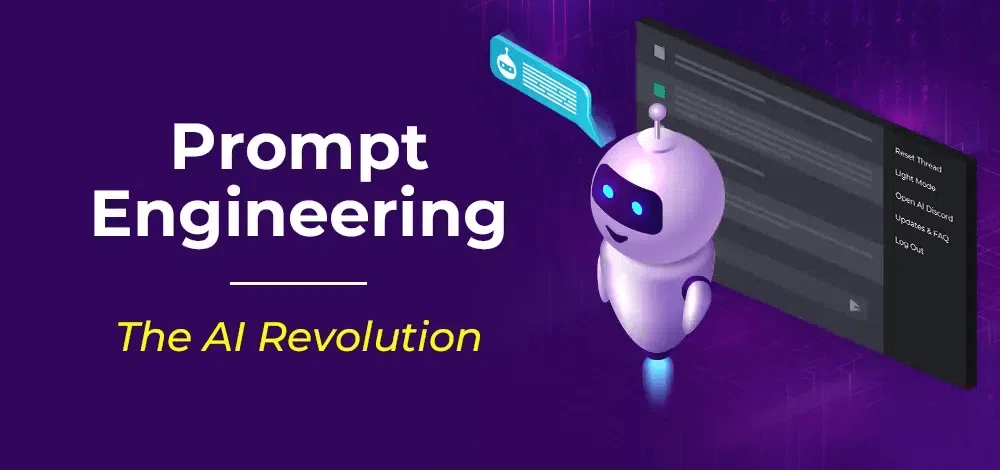
Prompt Engineering and Its Uses?

In the rapidly evolving field of natural language processing (NLP), prompt engineering has emerged as a powerful technique for enhancing the capabilities of language models. As the name suggests, prompt engineering involves crafting effective prompts to interact with these language models, guiding them to produce desired outputs. This approach has revolutionized the way we utilize NLP models and has found numerous applications across various domains. In this article, we will delve into the concept of prompt engineering, its significance, and the diverse range of its uses.

Understanding Prompt Engineering:

Prompt engineering is an innovative method used to leverage the potential of large language models like GPT-3.5, GPT-3, and similar models in the future. These models, known as autoregressive language models, can generate human-like text based on the input they receive. However, without well-designed prompts, their responses may not consistently align with the user’s intent. Prompt engineering comes into play to bridge this gap.

Essentially, a prompt is a set of instructions or a starting point provided to the language model to direct its output. These prompts act as cues, shaping the context and conditioning the model’s behavior. Creating an effective prompt involves carefully choosing the wording, specifying the format, and sometimes even fine-tuning the model with custom examples. The art of prompt engineering lies in formulating prompts that result in reliable and accurate responses.

Uses of Prompt Engineering:

  1. Chatbots and Virtual Assistants: Prompt engineering has revolutionized the development of chatbots and virtual assistants. By crafting prompts that clearly define the user’s query, developers can ensure that the language model generates meaningful and relevant responses. This leads to more natural and engaging interactions between users and AI-powered systems.
  2. Content Generation: In content creation tasks, prompt engineering allows writers and content generators to provide the model with specific guidelines. Whether it’s generating blog posts, product descriptions, or creative writing, prompts can steer the language model’s creativity in desired directions while maintaining coherence.
  3. Language Translation: Prompt engineering has found applications in language translation tasks. By providing the model with well-structured input prompts, translators can obtain accurate and contextually appropriate translations, even for complex sentences and idiomatic expressions.
  4. Code Generation and Debugging: Software developers have benefited from prompt engineering when it comes to code generation and debugging. By presenting the model with clear instructions and code examples, it can be used to generate code snippets or even identify issues in existing codebases.
  5. Question Answering Systems: Prompt engineering plays a crucial role in question-answering systems. By crafting prompts that precisely frame the questions, NLP models can provide more accurate and relevant answers, making these systems highly effective for information retrieval.
  6. Data Analysis and Interpretation: Researchers and data scientists use prompt engineering to facilitate data analysis and interpretation. By posing questions to the model with specific data context, they can gain insights, summarize findings, and even generate visualizations.
  7. Educational Applications: Prompt engineering has immense potential in the education sector. It enables personalized learning experiences by tailoring prompts to individual students’ needs, providing explanations, and automating assessments.

Conclusion:

Prompt engineering has become a game-changer in the realm of natural language processing. By crafting effective and tailored prompts, we can harness the full potential of large language models and guide them to produce desired outputs. Whether it’s creating chatbots that better understand users, generating content, enabling accurate translations, assisting developers, powering question-answering systems, aiding researchers, or transforming education, prompt engineering has diverse and powerful applications.

However, as with any technology, ethical considerations must be taken into account. Ensuring that prompts are designed responsibly and free from biases is crucial to maintain the ethical use of NLP models. As NLP technology continues to advance, prompt engineering will undoubtedly play a central role in shaping its future, making interactions between humans and AI more intuitive and productive than ever before.

To Learn More:- https://www.leewayhertz.com/prompt-engineering/

Design a site like this with WordPress.com
Get started