Transformer Model Development Services: Unveiling the Future of AI

In the ever-evolving landscape of artificial intelligence (AI), the emergence of transformer models has catalyzed a paradigm shift in the way machines understand and process information. As businesses and industries continue to harness the power of AI for their growth and innovation, the demand for advanced transformer model development services has skyrocketed. In this article, we delve into the world of transformer model development services and explore how they are shaping the future of AI.
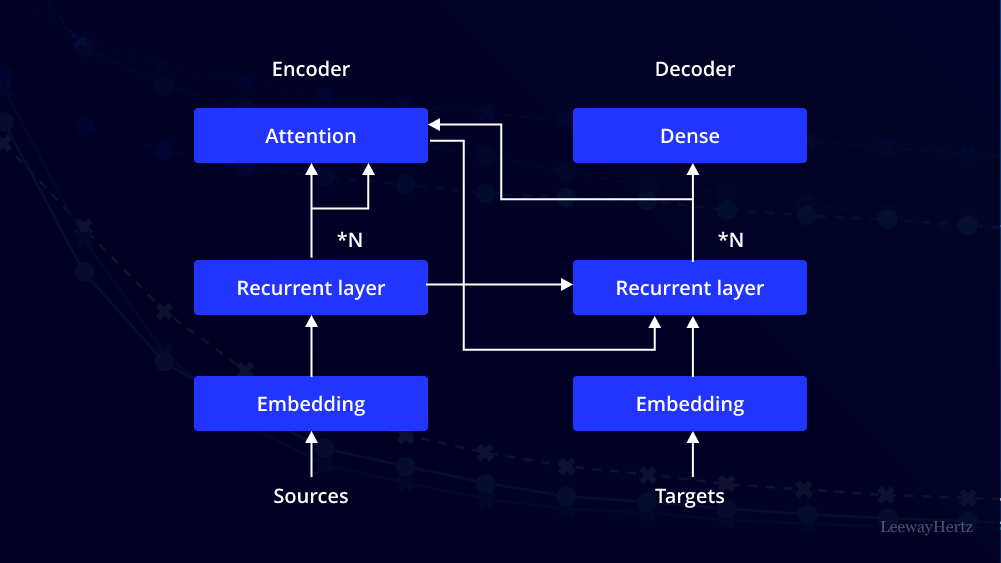
1. The Rise of Transformers:

  • Transformers have revolutionized natural language processing (NLP) and various AI tasks, offering superior performance over traditional models.
  • Their ability to capture long-range dependencies and contextual information makes them ideal for tasks such as language translation, sentiment analysis, text generation, and more.

2. What are Transformer Model Development Services?

  • Transformer model development services encompass the creation, customization, fine-tuning, and deployment of transformer-based AI models to cater to specific business needs.
  • These services leverage pre-trained transformer architectures (e.g., BERT, GPT, T5) and adapt them to extract domain-specific insights, ensuring optimal model performance.

3. Key Components of Transformer Model Development Services:

  • Customization: Expert data scientists tailor transformer models to understand industry-specific jargon, nuances, and context.
  • Data Collection and Preparation: High-quality, relevant datasets are curated and pre-processed to train and fine-tune the transformer models.
  • Model Training: The process of training involves optimizing model parameters, adjusting hyperparameters, and fine-tuning to achieve superior accuracy.
  • Evaluation and Validation: Rigorous testing and validation procedures ensure the model’s effectiveness and generalization to real-world scenarios.
  • Deployment: Deploying the trained model to production environments, ensuring seamless integration with existing systems.

4. Industries Benefiting from Transformer Model Development Services:

  • Healthcare: Transformers aid in medical image analysis, disease diagnosis, drug discovery, and patient data analysis.
  • Finance: Risk assessment, fraud detection, algorithmic trading, and sentiment analysis benefit from transformer-based solutions.
  • E-commerce: Personalized recommendations, chatbots, and customer sentiment analysis enhance user experiences.
  • Content Generation: Transformers enable automated content creation for marketing, journalism, and entertainment industries.

5. Advantages of Transformer Model Development Services:

  • Enhanced Performance: Transformers excel in understanding context, resulting in accurate and contextually relevant predictions.
  • Adaptability: These models can be fine-tuned for specific tasks, making them adaptable to various domains.
  • Time and Cost Savings: Leveraging pre-trained models reduces the time and resources required for model development.
  • Scalability: Transformer models can handle large-scale data and perform efficiently on a wide range of tasks.
  • Improved User Experience: AI-powered applications offer improved user interactions and personalization.

6. Challenges and Considerations:

  • Data Privacy and Ethics: Ensuring data privacy and maintaining ethical AI practices are critical considerations.
  • Model Interpretability: Transformers’ complexity can pose challenges in understanding model decisions, especially in high-stakes applications.
  • Resource Intensiveness: Training and deploying large transformer models require substantial computational resources.

7. Future Prospects:

  • Continued Innovation: Ongoing research and development in transformers will lead to even more advanced models and applications.
  • Multimodal Transformers: Integrating text and other data modalities (images, audio) will open up new possibilities.
  • Smaller and Faster Models: Efforts to create more efficient transformer architectures will make AI more accessible.

8. Choosing the Right Transformer Model Development Service Provider:

  • Expertise: Look for providers with a track record of developing successful transformer-based solutions.
  • Customization: Ensure the service provider can tailor models to your specific industry and business needs.
  • Scalability: Consider providers that can handle projects of varying sizes and complexities.

In conclusion, transformer model development services have ushered in a new era of AI capabilities, empowering industries to achieve new heights of efficiency, accuracy, and innovation. As businesses seek to capitalize on the potential of transformer-based solutions, partnering with a reliable and experienced service provider is key to harnessing the full potential of these remarkable AI models. The future holds exciting possibilities as transformer technology continues to evolve, shaping a world where machines understand and interact with human language and data in ways previously unimaginable.
The Future with AI-Powered Chatbot Development Companies

In today’s fast-paced digital landscape, AI-powered chatbots have emerged as an indispensable tool for businesses to enhance customer experiences, streamline operations, and improve engagement. These advanced chatbots, driven by artificial intelligence and natural language processing, have the potential to revolutionize the way companies interact with their customers. As the demand for seamless and efficient communication continues to rise, AI chatbot development companies are poised to play a pivotal role in shaping the future of business-customer interactions.

Redefining Customer Engagement

The integration of AI-powered chatbots into businesses’ communication strategies has opened up new avenues for customer engagement. Unlike traditional customer support systems that are often constrained by operating hours and resource availability, AI chatbots are available 24/7, ensuring immediate assistance and support to customers across different time zones. This accessibility not only enhances customer satisfaction but also strengthens brand loyalty.

Enhancing Personalization and User Experience

One of the most remarkable features of AI-powered chatbots is their ability to provide highly personalized interactions. Through the analysis of user data and preferences, these chatbots can offer tailored recommendations, suggestions, and responses. This level of personalization not only elevates the user experience but also contributes to increased sales and conversions. As AI continues to evolve, chatbots are likely to become even more adept at understanding and anticipating individual customer needs.

Efficiency in Business Operations

AI-powered chatbots are not limited to customer-facing roles; they are also transforming internal business operations. These chatbots can be integrated into various departments, such as HR, IT, and finance, to streamline processes, automate routine tasks, and provide instant responses to employee queries. By reducing the burden of manual work and administrative tasks, companies can allocate their resources more efficiently, ultimately leading to improved productivity and cost savings.

Seamless Multilingual Communication

In an increasingly globalized world, effective communication across languages is crucial for businesses targeting international audiences. AI-powered chatbots can bridge language barriers by offering real-time translation and multilingual support. This capability opens up new markets and allows companies to engage with diverse customer bases, expanding their reach and driving growth.

The Road Ahead for AI Chatbot Development Companies

As AI technology continues to evolve, the future holds exciting possibilities for AI chatbot development companies. Here are some trends that are likely to shape the trajectory of these companies in the coming years:

  1. Conversational AI Advancements: AI chatbots will become even more conversational, mimicking human-like interactions through improved natural language processing and sentiment analysis. This will create more meaningful and engaging conversations between businesses and customers.
  2. Integration with Emerging Technologies: AI chatbots will be seamlessly integrated with other emerging technologies such as augmented reality (AR) and virtual reality (VR), providing immersive and interactive experiences for users.
  3. Enhanced Emotional Intelligence: Future AI chatbots will be equipped with advanced emotional intelligence, enabling them to recognize and respond to human emotions effectively. This will result in more empathetic and empathic interactions, further enhancing customer satisfaction.
  4. Hyper-Personalization: AI chatbots will continue to refine their ability to provide hyper-personalized experiences by leveraging data analytics and predictive modeling. This will drive higher engagement, conversion rates, and customer loyalty.
  5. Cross-Platform Integration: AI chatbots will seamlessly operate across various platforms and devices, ensuring consistent and uninterrupted interactions, regardless of the user’s preferred communication channel.

In conclusion, AI chatbot development company are at the forefront of shaping the future of communication between businesses and their customers. These companies are not only revolutionizing customer engagement but also optimizing internal operations and driving efficiency. As AI technology continues to advance, the potential for AI chatbots to provide personalized, efficient, and multilingual interactions is limitless. With a focus on constant innovation and integration with emerging technologies, AI chatbot development companies are poised to lead the way in redefining the future of business-customer interactions.

Enhancing Business Potential with Enterprise AI Development Services

In today’s rapidly evolving business landscape, organizations are constantly seeking innovative ways to gain a competitive edge and streamline their operations. The emergence of Artificial Intelligence (AI) has ushered in a new era of possibilities, enabling businesses to leverage advanced technologies to optimize processes, improve decision-making, and drive growth. Enterprise AI development services have emerged as a critical component in harnessing the potential of AI for various industries, allowing companies to tailor AI solutions to their specific needs and objectives.

Enterprise AI development services encompass a range of activities aimed at creating, deploying, and maintaining AI solutions tailored to the unique requirements of businesses. These services often include:

  1. Custom AI Solutions: Every business has distinct challenges and opportunities, and enterprise AI development services offer tailored solutions to address these specific needs. Whether it’s predictive analytics, natural language processing, computer vision, or recommendation systems, AI experts collaborate with organizations to create bespoke AI applications that drive value and innovation.
  2. Data Analysis and Modeling: AI development services emphasize thorough data analysis to fuel AI models. By leveraging vast amounts of data, these services help organizations gain insights into customer behavior, market trends, and operational inefficiencies. This data-driven approach forms the foundation for building accurate and effective AI algorithms.
  3. Model Development and Training: Skilled AI developers work to create and train machine learning models that can interpret data and make intelligent decisions. This involves using algorithms to identify patterns, correlations, and anomalies within the data, enabling AI systems to improve their performance over time.
  4. Integration and Deployment: The successful integration of AI solutions into existing business processes is crucial. Enterprise AI development services ensure seamless deployment and integration of AI technologies into various systems, whether it’s customer relationship management (CRM), supply chain management, or financial forecasting.
  5. Continuous Monitoring and Optimization: AI solutions are not static; they require ongoing monitoring and optimization to ensure they remain effective and aligned with changing business dynamics. Enterprise AI development services provide regular maintenance, updates, and fine-tuning to keep AI systems performing at their best.

Benefits of Enterprise AI Development Services

  1. Enhanced Decision-Making: AI-powered insights help businesses make more informed and data-driven decisions. These insights, derived from complex data analysis, empower executives to identify trends, risks, and opportunities that might have otherwise gone unnoticed.
  2. Efficiency and Automation: Automation is a cornerstone of AI, and enterprise AI development services enable businesses to automate repetitive tasks and processes. This leads to increased efficiency, reduced human error, and the ability to allocate resources to more strategic initiatives.
  3. Personalized Customer Experiences: AI-driven recommendations and personalization enhance customer experiences by delivering tailored products and services based on individual preferences and behaviors. This not only improves customer satisfaction but also boosts sales and brand loyalty.
  4. Predictive Analytics: AI models can forecast future trends and outcomes based on historical data. This predictive capability allows organizations to proactively respond to changing market conditions and make proactive decisions to stay ahead of the competition.
  5. Cost Savings: By automating processes and optimizing resource allocation, businesses can achieve significant cost savings over time. Enterprise AI development services help identify cost-cutting opportunities and create sustainable strategies for resource management.

Challenges and Considerations

While the benefits of enterprise AI development services are vast, there are also challenges that businesses must navigate:

  1. Data Quality and Privacy: AI models require high-quality data to produce accurate results. Ensuring data privacy and complying with regulations such as GDPR is a critical consideration in AI development.
  2. Skill Gap: Developing and deploying AI solutions requires specialized skills that may not be readily available within an organization. Collaborating with experienced AI development services can bridge this skill gap.
  3. Integration Complexity: Integrating AI solutions into existing IT infrastructure can be complex and require careful planning to ensure a seamless transition.

Conclusion

In a world where technology continues to reshape industries, enterprise AI development services have emerged as a catalyst for growth and innovation. By leveraging the power of AI, businesses can unlock valuable insights, enhance operational efficiency, and provide exceptional customer experiences. As the demand for AI-driven solutions continues to grow, partnering with experienced AI development services becomes imperative for businesses aiming to thrive in the digital age. With the right strategy and support, organizations can harness the potential of AI to achieve their goals and remain competitive in an ever-evolving market.

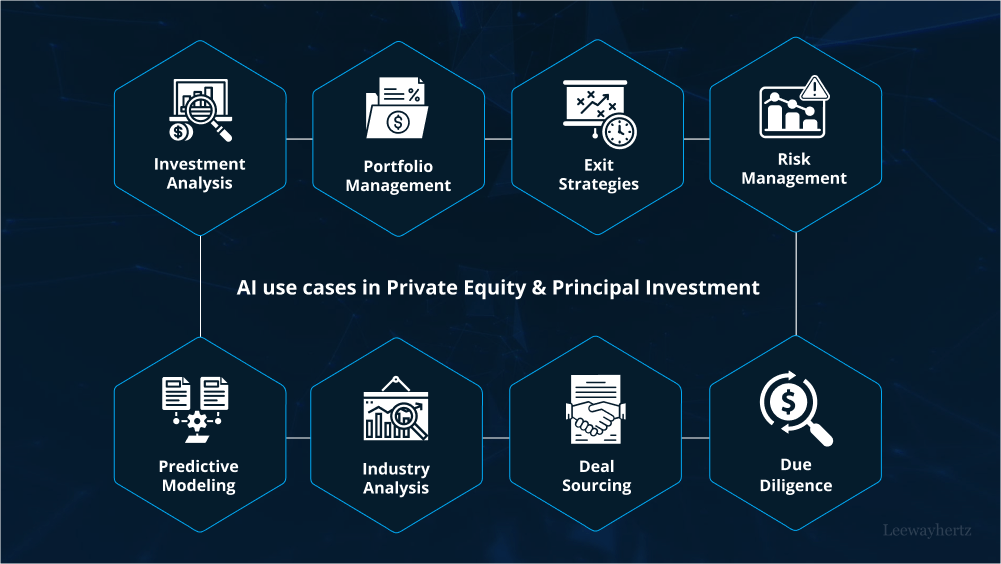
AI Use Cases in Private Equity and Principal Investment

In recent years, the world of finance has been undergoing a transformative revolution fueled by advancements in artificial intelligence (AI) technology. Private equity and principal investment, traditionally characterized by complex decision-making processes and rigorous analysis, are no exception to this paradigm shift. AI is making waves in these sectors by streamlining operations, enhancing due diligence, and uncovering new investment opportunities. This article explores some of the most impactful AI use cases in private equity and principal investment.

1. Data Analysis and Prediction

One of the primary ways AI is transforming private equity and principal investment is through its capacity to analyze vast amounts of data at unprecedented speeds. Machine learning algorithms can sift through historical financial data, market trends, and economic indicators to identify patterns and correlations that human analysts might overlook. This allows investment professionals to make more informed decisions based on data-driven insights.

AI algorithms can also predict market movements and assess the risk associated with various investment options. By analyzing historical performance and contextual factors, AI models can provide predictions on potential returns, helping investors mitigate risk and optimize their investment strategies.

2. Due Diligence Enhancement

Due diligence is a critical aspect of private equity and principal investment, involving comprehensive research to evaluate the financial health and growth prospects of target companies. AI streamlines this process by automating data collection, uncovering hidden risks, and accelerating the assessment of investment opportunities.

Natural language processing (NLP) algorithms, a subset of AI, can analyze vast amounts of textual data, such as news articles, social media, and regulatory filings. This allows investors to gain insights into market sentiment, company reputation, and potential risks associated with an investment. By identifying potential red flags or market trends, AI-driven due diligence can significantly enhance decision-making accuracy.

3. Portfolio Management and Optimization

AI technologies enable private equity firms and investment professionals to optimize their portfolios for maximum returns and risk management. Machine learning algorithms can continuously monitor the performance of investments and adjust the portfolio allocation based on real-time data. This dynamic approach allows for quicker responses to market changes and the identification of new investment opportunities.

Furthermore, AI-driven predictive analytics can help investors identify underperforming assets and develop strategies to improve their returns. By analyzing various scenarios and historical data, AI models can suggest portfolio adjustments that align with the investor’s risk appetite and return expectations.

4. Deal Sourcing and Screening

Finding promising investment opportunities is a cornerstone of private equity and principal investment success. AI technologies assist in deal sourcing and screening by scanning vast amounts of data to identify potential targets that match predefined investment criteria.

Machine learning algorithms can analyze financial data, industry trends, and company performance metrics to identify companies with growth potential. This saves investment professionals time and resources that would otherwise be spent on manual research. AI-powered deal sourcing tools can provide a competitive advantage by uncovering hidden gems in the market.

5. Risk Management and Compliance

AI is also playing a crucial role in enhancing risk management and ensuring compliance within the private equity and principal investment sectors. AI models can assess the risk associated with various investment options by considering a wide range of factors, such as market volatility, macroeconomic indicators, and geopolitical events. This comprehensive risk assessment allows investors to make more informed decisions and better allocate their resources.

Additionally, AI-driven compliance tools can help investment firms navigate complex regulatory landscapes. By monitoring changes in regulations and automating compliance checks, AI reduces the risk of non-compliance and potential legal issues.

In conclusion, AI’s impact on private equity and principal investment is undeniable. From data analysis and due diligence to portfolio optimization and risk management, AI technologies are revolutionizing how investment professionals operate. As the technology continues to evolve, it is likely that its role in these sectors will only become more significant, paving the way for more accurate, efficient, and successful investment strategies.

Chatbot Development Company: Unlocking the Power of Conversational AI

In the age of digital transformation, businesses are increasingly turning to chatbots as a powerful tool to engage customers, automate processes, and provide personalized experiences. A Chatbot Development Company plays a pivotal role in creating intelligent virtual assistants that leverage cutting-edge technologies to enhance customer interactions. In this article, we will explore the significance of a Chatbot Development Company and the key qualities that make it a driving force behind successful chatbot projects.

  1. Expertise in Conversational AI Technologies

A reputable Chatbot Development Company boasts a team of skilled developers with expertise in Conversational AI technologies. These professionals are well-versed in natural language processing (NLP), machine learning, and deep learning algorithms. Their proficiency in these areas allows them to build chatbots that understand user intent, interpret context, and deliver contextually relevant responses.

  1. Customized Solutions for Unique Business Needs

Every business has its distinct requirements, industry challenges, and target audience. A Chatbot Development Company understands the importance of customization and tailors solutions to align with the specific needs of each client. Through thorough consultation and in-depth analysis, the development team crafts chatbots that reflect the brand’s voice, personality, and values, ensuring seamless integration into the overall business strategy.

  1. Multi-Channel Integration and Accessibility

In today’s omnichannel environment, customers interact with businesses through various platforms and devices. A proficient Chatbot Development Company creates chatbots with multi-channel integration capabilities, allowing seamless interactions across websites, social media, messaging apps, and mobile applications. This versatility ensures a consistent user experience, regardless of the platform used.

  1. Continuous Learning and Improvement

Great Chatbot Development Companies recognize that the success of a chatbot hinges on its ability to learn and adapt. Utilizing machine learning techniques, these companies ensure that chatbots continually improve their responses based on user interactions. Regular updates and enhancements guarantee that the chatbot stays current and relevant, meeting evolving user needs.

  1. Data Privacy and Security

Handling user data requires utmost care and responsibility. Ethical Chatbot Development Companies prioritize data privacy and security, implementing robust encryption methods and adhering to data protection regulations. This dedication to data security builds trust and confidence in customers, which is essential for long-term success.

  1. User-Centric Approach

An exceptional Chatbot Development Company takes a user-centric approach throughout the development process. By understanding user preferences, pain points, and expectations, the company creates chatbots that deliver valuable and personalized experiences. This approach fosters customer satisfaction and loyalty, driving positive business outcomes.

Conclusion

A Chatbot Development Company plays a crucial role in harnessing the power of conversational AI to elevate customer engagement and operational efficiency. With expertise in Conversational AI technologies, customization capabilities, multi-channel integration, commitment to continuous learning, and data privacy focus, such companies are instrumental in creating intelligent chatbot solutions for businesses across industries. By partnering with a reputable Chatbot Development Company, enterprises can leverage the potential of chatbots to foster meaningful connections with customers and achieve sustainable growth in the digital landscape.

Click here for more information:

https://www.leewayhertz.com/ai-chatbot-development-company/

Enterprise Chatbot Development Service: Empowering Businesses with Intelligent Virtual Assistants

Enterprise Chatbot Development Service: Empowering Businesses with Intelligent Virtual Assistants

In today’s fast-paced business landscape, customer expectations are evolving, and enterprises are seeking innovative solutions to stay ahead of the competition. The Enterprise Chatbot Development Service has emerged as a transformative offering, enabling businesses to build sophisticated and intelligent virtual assistants that revolutionize customer interactions, streamline processes, and enhance overall efficiency. Let’s explore the essence of the Enterprise Chatbot Development Service, its key components, and the benefits it brings to businesses.

Understanding Enterprise Chatbot Development Service

The Enterprise Chatbot Development Service is a specialized service provided by expert development companies to design, create, and deploy chatbots tailored to meet the unique needs of businesses. These chatbots are powered by advanced Natural Language Processing (NLP) and Machine Learning (ML) algorithms, enabling them to comprehend human language, interpret user intent, and deliver contextually relevant responses. The development service covers the entire life cycle of chatbot development, from conceptualization and design to integration and ongoing support.

Key Components of Enterprise Chatbot Development Service

  1. Requirement Analysis and Strategy: The development process begins with an in-depth analysis of the business’s objectives, target audience, and specific use cases. Based on this analysis, a strategic plan is crafted to align the chatbot’s capabilities with the organization’s goals.
  2. Chatbot Design and Development: Skilled AI developers and data scientists collaborate to design the chatbot’s conversational flow, user interface (UI), and backend integrations. The chatbot is trained using relevant datasets and ML algorithms to optimize its performance.
  3. Natural Language Processing (NLP) Integration: The chatbot is equipped with advanced NLP capabilities, allowing it to understand and interpret user queries with a high level of accuracy and context.
  4. Multi-channel Integration: The development service ensures that the chatbot can seamlessly integrate into various communication channels, including websites, mobile apps, social media, and messaging platforms, providing a consistent user experience.
  5. Personalization and Context Awareness: The chatbot can be customized to gather user data and preferences, enabling personalized responses and context retention for more fluid and engaging conversations.

Benefits of Enterprise Chatbot Development Service

  1. Improved Customer Experience: With instant and accurate responses, the chatbot enhances customer satisfaction, providing round-the-clock support and reducing response times.
  2. Enhanced Efficiency: By automating routine tasks and handling multiple interactions simultaneously, the chatbot optimizes business processes and frees up human resources.
  3. Cost Savings: The deployment of an efficient chatbot can lead to significant cost savings in customer support and service operations, reducing the need for human intervention in basic tasks.
  4. Data-Driven Insights: The chatbot generates valuable data on user interactions and preferences, offering businesses actionable insights to improve their offerings and strategies.
  5. Scalability and Adaptability: The chatbot can scale seamlessly to accommodate growing user demands and adapt to changing business requirements.

Implementing the Enterprise Chatbot Development Service

The implementation of the Enterprise Chatbot Development Service generally involves the following steps:

  1. Discovery and Planning: The development team collaborates with the enterprise to understand their specific needs and define the chatbot’s scope and functionalities.
  2. Design and Development: The chatbot’s conversational flow, UI, and backend integrations are designed and developed according to the agreed-upon requirements.
  3. Testing and Optimization: Rigorous testing is conducted to ensure the chatbot performs accurately and efficiently. Optimization efforts are made based on user feedback and data analysis.
  4. Deployment and Integration: Once fully tested and refined, the chatbot is deployed and seamlessly integrated into the enterprise’s platforms.
  5. Monitoring and Support: The development service provides ongoing monitoring and support to ensure the chatbot’s smooth operation and continual improvement.

Conclusion

The Enterprise Chatbot Development Service represents a transformative solution that empowers businesses to leverage AI-driven conversational technology for improved customer interactions and operational efficiency. By collaborating with expert AI developers and data scientists, enterprises can create virtual assistants that deliver personalized experiences, streamline processes, and drive business success. As the technology continues to evolve, the significance of enterprise chatbots in transforming customer engagement and service delivery will only grow, making it an essential component for businesses looking to stay competitive and meet the demands of the modern digital era.

Click here for more information:https://www.leewayhertz.com/enterprise-ai-chatbot-development/

Prompt Engineering and Its Uses?

In the rapidly evolving field of natural language processing (NLP), prompt engineering has emerged as a powerful technique for enhancing the capabilities of language models. As the name suggests, prompt engineering involves crafting effective prompts to interact with these language models, guiding them to produce desired outputs. This approach has revolutionized the way we utilize NLP models and has found numerous applications across various domains. In this article, we will delve into the concept of prompt engineering, its significance, and the diverse range of its uses.

Understanding Prompt Engineering:

Prompt engineering is an innovative method used to leverage the potential of large language models like GPT-3.5, GPT-3, and similar models in the future. These models, known as autoregressive language models, can generate human-like text based on the input they receive. However, without well-designed prompts, their responses may not consistently align with the user’s intent. Prompt engineering comes into play to bridge this gap.

Essentially, a prompt is a set of instructions or a starting point provided to the language model to direct its output. These prompts act as cues, shaping the context and conditioning the model’s behavior. Creating an effective prompt involves carefully choosing the wording, specifying the format, and sometimes even fine-tuning the model with custom examples. The art of prompt engineering lies in formulating prompts that result in reliable and accurate responses.

Uses of Prompt Engineering:

  1. Chatbots and Virtual Assistants: Prompt engineering has revolutionized the development of chatbots and virtual assistants. By crafting prompts that clearly define the user’s query, developers can ensure that the language model generates meaningful and relevant responses. This leads to more natural and engaging interactions between users and AI-powered systems.
  2. Content Generation: In content creation tasks, prompt engineering allows writers and content generators to provide the model with specific guidelines. Whether it’s generating blog posts, product descriptions, or creative writing, prompts can steer the language model’s creativity in desired directions while maintaining coherence.
  3. Language Translation: Prompt engineering has found applications in language translation tasks. By providing the model with well-structured input prompts, translators can obtain accurate and contextually appropriate translations, even for complex sentences and idiomatic expressions.
  4. Code Generation and Debugging: Software developers have benefited from prompt engineering when it comes to code generation and debugging. By presenting the model with clear instructions and code examples, it can be used to generate code snippets or even identify issues in existing codebases.
  5. Question Answering Systems: Prompt engineering plays a crucial role in question-answering systems. By crafting prompts that precisely frame the questions, NLP models can provide more accurate and relevant answers, making these systems highly effective for information retrieval.
  6. Data Analysis and Interpretation: Researchers and data scientists use prompt engineering to facilitate data analysis and interpretation. By posing questions to the model with specific data context, they can gain insights, summarize findings, and even generate visualizations.
  7. Educational Applications: Prompt engineering has immense potential in the education sector. It enables personalized learning experiences by tailoring prompts to individual students’ needs, providing explanations, and automating assessments.

Conclusion:

Prompt engineering has become a game-changer in the realm of natural language processing. By crafting effective and tailored prompts, we can harness the full potential of large language models and guide them to produce desired outputs. Whether it’s creating chatbots that better understand users, generating content, enabling accurate translations, assisting developers, powering question-answering systems, aiding researchers, or transforming education, prompt engineering has diverse and powerful applications.

However, as with any technology, ethical considerations must be taken into account. Ensuring that prompts are designed responsibly and free from biases is crucial to maintain the ethical use of NLP models. As NLP technology continues to advance, prompt engineering will undoubtedly play a central role in shaping its future, making interactions between humans and AI more intuitive and productive than ever before.

To Learn More:- https://www.leewayhertz.com/prompt-engineering/

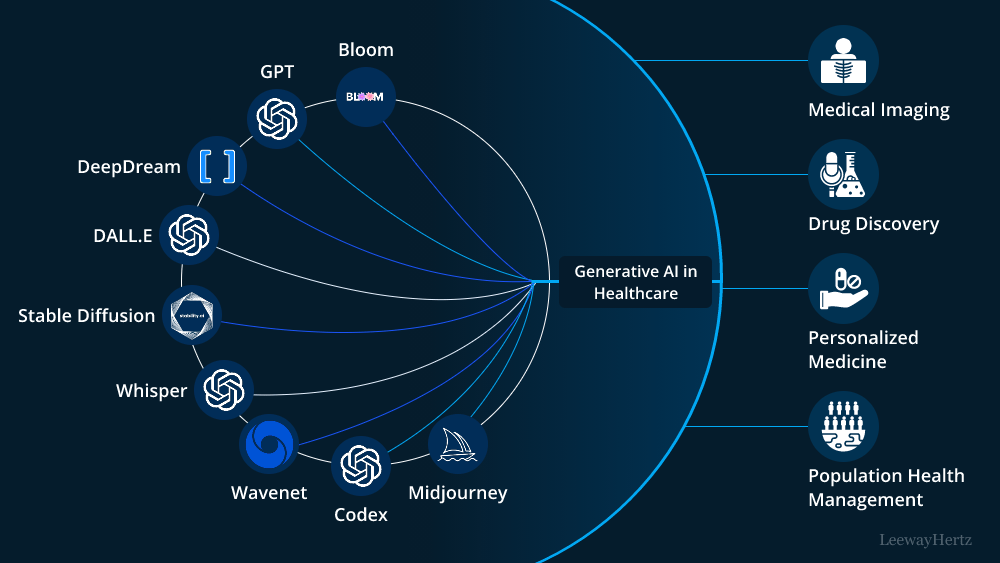
Use Cases of Generative AI in Healthcare

Artificial Intelligence (AI) has become a game-changer in various industries, and healthcare is no exception. One of the most promising subsets of AI in healthcare is Generative AI, a technology that enables machines to create data that mimics human-generated data. Generative AI utilizes deep learning algorithms to generate new content, such as images, text, and even human-like conversation. In this article, we will explore ten compelling use cases of Generative AI in healthcare, revolutionizing patient care and medical research.

  1. Medical Image Generation

Generative AI can produce synthetic medical images that resemble real patient scans. These generated images can be used to augment limited datasets, train AI models, and test the robustness of algorithms. This capability is especially valuable in radiology, where access to large and diverse image datasets is crucial for accurate diagnostics and treatment planning.

  1. Drug Discovery and Development

Pharmaceutical companies are leveraging Generative AI to accelerate drug discovery and development. The technology can create molecular structures with specific properties, allowing researchers to design and optimize new drugs more efficiently. This leads to faster identification of potential drug candidates and expedites the process of bringing life-saving medications to market.

  1. Personalized Treatment Plans

Generative AI can analyze large-scale patient data, including electronic health records and genomic information, to create personalized treatment plans. By considering individual patient characteristics, such as genetic predispositions and lifestyle factors, healthcare providers can offer tailored and more effective treatment strategies.

  1. Medical Text Generation

Generating medical reports, summaries, and patient information using Generative AI can significantly reduce administrative burdens for healthcare professionals. The technology can quickly produce accurate and coherent medical texts, freeing up valuable time for doctors and nurses to focus on patient care.

  1. Medical Chatbots

Generative AI-powered medical chatbots are transforming the way patients interact with healthcare systems. These chatbots can simulate human-like conversations, answering questions, providing medical advice, and even assisting in diagnosing minor health issues. They enhance accessibility to healthcare services and can handle large volumes of patient queries simultaneously.

  1. Virtual Patient Simulations

Medical education benefits greatly from Generative AI by enabling the creation of virtual patient simulations. These simulations can mimic a wide range of medical conditions and scenarios, allowing medical students and healthcare professionals to practice complex procedures in a risk-free environment.

  1. Disease Progression Modeling

Predicting disease progression is critical for optimizing treatment plans and improving patient outcomes. Generative AI can analyze historical patient data and simulate disease progressions, aiding healthcare professionals in making informed decisions and interventions.

  1. AI-Generated Medical Devices

Generative AI plays a significant role in designing and optimizing medical devices. It can create innovative and customized designs for prosthetics, implants, and assistive technologies, tailored to each patient’s unique needs.

  1. Mental Health Support

Generative AI can be employed to create conversational agents that offer mental health support to individuals. These virtual counselors can provide empathetic conversations, assess emotional states, and offer coping strategies, contributing to the overall mental well-being of patients.

  1. Augmented Reality for Surgery

In surgical settings, Generative AI combined with augmented reality can enhance precision and efficiency. Surgeons can visualize complex anatomical structures and practice procedures using AI-generated 3D models, minimizing risks during actual surgeries.

Conclusion

Generative AI is rapidly transforming the landscape of healthcare, with its diverse applications enhancing patient care, medical research, and healthcare professionals’ productivity. From generating medical images to personalized treatment plans and virtual patient simulations, the potential of Generative AI in healthcare is vast. As technology continues to advance, we can expect even more groundbreaking use cases, ultimately leading to better health outcomes for patients worldwide. However, it’s crucial to balance innovation with ethical considerations to ensure patient safety and data privacy remain paramount in the integration of Generative AI into healthcare systems.

To Learn More:- https://www.leewayhertz.com/generative-ai-in-healthcare/

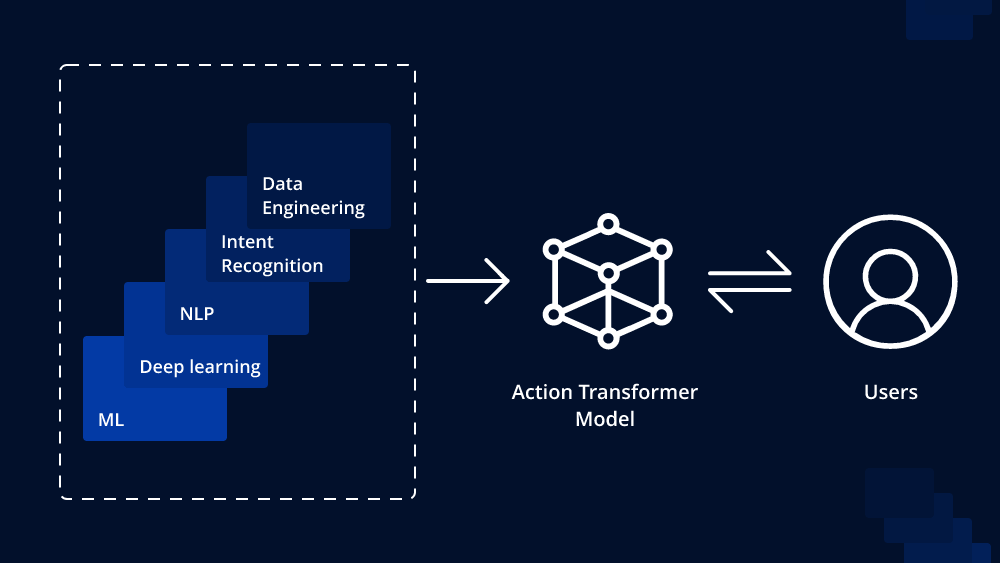
Action Transformer Model: Implementation

In recent years, Transformer models have revolutionized the field of natural language processing (NLP) and have been successfully applied to various tasks such as machine translation, text generation, and sentiment analysis. The success of Transformer models is mainly attributed to their ability to effectively capture long-range dependencies in sequential data. Building upon this foundation, researchers have introduced the concept of Action Transformer models, which extend the capabilities of traditional Transformers to handle sequential decision-making tasks. In this article, we will delve into the concept of Action Transformers and explore how to implement one.

Understanding Action Transformer Models:

Action Transformer models are an extension of the standard Transformer architecture that caters to sequential decision-making tasks. In traditional NLP tasks, such as language translation, the input is a fixed sequence, and the Transformer processes it to generate an output sequence. However, in real-world applications like robotics, game playing, or autonomous vehicles, decision-making is not confined to a fixed sequence. Instead, actions need to be taken at each step, and the outcomes of these actions influence subsequent decisions.

Action Transformers address this challenge by introducing the concept of “actions” and “action spaces” into the Transformer model. The model’s objective is to learn a policy that maps the current state to a probability distribution over possible actions. At each step, an action is sampled from this distribution, executed in the environment, and the process continues iteratively. This way, the model effectively learns to make sequential decisions based on the environment’s state and the actions it has taken in the past.

Implementing an Action Transformer:

Implementing an Action Transformer involves several key steps. Here, we will outline a high-level guide to help you get started:

1. Define the Environment:

The first step is to define the environment in which the sequential decision-making will take place. The environment represents the context in which the model operates, and it provides observations or feedback to the model at each step. For instance, if you are building a game-playing AI, the environment could be the game board, and the observations could be the current state of the board and the available moves.

2. Define the Action Space:

Next, you need to define the action space for the environment. The action space comprises all the possible actions the model can take at each step. These actions should be well-defined and relevant to the task at hand. In the game-playing example, the action space would consist of all legal moves that a player can make.

3. Data Collection:

To train the Action Transformer, you will need data that contains sequences of states, actions taken, and rewards received. This data can be collected by running simulations of the environment with random or predefined policies. The collected data serves as the training set for the model.

4. Model Architecture:

The core of the Action Transformer model is the same as the traditional Transformer architecture, consisting of encoder and decoder layers. The encoder processes the input states, while the decoder generates the action probabilities. The encoder and decoder layers are trained jointly to maximize the expected reward, incorporating a reinforcement learning approach.

5. Reinforcement Learning:

Reinforcement Learning (RL) is used to optimize the Action Transformer model. At each step, the model samples an action from the predicted probability distribution and executes it in the environment. The environment returns a reward, indicating how good or bad the action was. The RL algorithm uses these rewards to update the model’s parameters, encouraging it to take better actions in the future.

6. Training and Evaluation:

During training, the model iteratively interacts with the environment, samples actions, receives rewards, and updates its parameters using the RL algorithm. The training process continues until the model converges to a satisfactory policy. Evaluation is done on a separate set of data to assess the model’s performance in decision-making tasks.

In conclusion, Action Transformer models offer a powerful framework for addressing sequential decision-making tasks in various domains. By extending the Transformer architecture to incorporate actions and action spaces, these models can effectively learn policies to make intelligent and informed decisions based on their environment. Implementing an Action Transformer involves defining the environment and action space, collecting data, designing the model architecture, and employing reinforcement learning to train the model. With the increasing interest in sequential decision-making problems, Action Transformers hold significant promise for pushing the boundaries of AI applications in the real world.

To Learn More:- https://www.leewayhertz.com/action-transformer-model/

Services of an AI Chatbot Development Company

In the fast-paced world of technology, businesses are constantly seeking innovative ways to improve customer engagement and streamline operations. One solution that has gained significant popularity is AI chatbots. These intelligent virtual assistants have revolutionized the way companies interact with their customers, providing real-time support, boosting efficiency, and enhancing user experiences. In this article, we will explore the various services offered by an AI chatbot development company and their importance in today’s digital landscape.

  1. Custom Chatbot Development

AI chatbot development companies specialize in creating custom chatbot solutions tailored to specific business needs. These companies employ teams of skilled developers and AI experts who design chatbots capable of emulating human-like conversations, catering to the unique requirements of each client. Through an in-depth understanding of a company’s target audience, industry, and objectives, these chatbots are crafted to provide personalized experiences and deliver maximum value to end-users.

  1. Natural Language Processing (NLP) Integration

NLP is a crucial component of advanced chatbots that enables them to comprehend and interpret human language. AI chatbot development companies integrate sophisticated NLP algorithms into their solutions, empowering chatbots to understand user intent, context, and sentiment accurately. As a result, users can engage in more natural and seamless conversations with the chatbot, leading to improved customer satisfaction.

  1. Chatbot Deployment and Integration

Developing a chatbot is only one part of the process; deploying and integrating it into existing systems is equally vital. A proficient chatbot development company ensures a smooth deployment process and seamless integration with various platforms, including websites, social media, mobile applications, and messaging services. This multi-channel integration extends the reach of the chatbot, making it accessible to customers across different touchpoints.

  1. Machine Learning and AI Improvements

AI chatbots are constantly evolving, learning from every interaction to enhance their responses and become more effective over time. An AI chatbot development company employs machine learning techniques to analyze data, identify patterns, and improve the chatbot’s performance continuously. As the chatbot accumulates more data, it becomes more intelligent, leading to more accurate responses and an improved user experience.

  1. Conversational Design and User Experience

A successful chatbot is not just about having advanced AI capabilities; it also requires excellent conversational design and user experience (UX). Expert chatbot developers pay close attention to creating intuitive and user-friendly interfaces, ensuring that the conversations feel natural and engaging. By focusing on UX, these companies provide chatbots that are easy to navigate, reducing user frustration and increasing user adoption rates.

  1. 24/7 Customer Support

One of the most significant advantages of AI chatbots is their round-the-clock availability. An AI chatbot development company ensures that their chatbots are operational 24/7, providing customers with instant assistance and support at any time of the day. This uninterrupted service improves customer satisfaction and reduces the need for human intervention during non-business hours.

  1. Data Security and Compliance

Dealing with customer data requires a high level of security and compliance with data protection regulations. A reputable chatbot development company places a strong emphasis on data security and ensures that their chatbot solutions adhere to industry-standard security protocols. Additionally, they provide secure data storage and have measures in place to protect sensitive information from unauthorized access.

Conclusion

The services offered by AI chatbot development companies have revolutionized the way businesses interact with their customers. From personalized user experiences to improved efficiency and 24/7 support, AI chatbots have become indispensable tools for companies seeking a competitive edge in the digital era. With advancements in AI technology and machine learning, these chatbots will continue to evolve, offering even more sophisticated and efficient solutions in the future. As businesses embrace AI chatbots, they can expect enhanced customer engagement, streamlined operations, and increased customer loyalty, making these services invaluable for success in today’s digital landscape.

To Learn More:- https://www.leewayhertz.com/ai-chatbot-development-company/

Design a site like this with WordPress.com
Get started