Unlocking the Creative Power of Generative AI Image Models

The field of artificial intelligence has witnessed remarkable advancements in recent years, and one area that has particularly captured the imagination of researchers and enthusiasts alike is generative AI models for image synthesis. These powerful algorithms have revolutionized the way images are created and manipulated, finding applications in various industries and creative pursuits. In this article, we explore the fascinating world of generative AI image models and their wide-ranging applications.

Understanding Generative AI Image Models

Generative AI image models are a subset of generative models in the field of machine learning. These models use sophisticated algorithms, particularly deep learning techniques, to generate new images that resemble real-world examples. They function by learning patterns and features from vast datasets and then leveraging this knowledge to produce new and original content. Two prominent types of generative models used for image synthesis are Variational Autoencoders (VAEs) and Generative Adversarial Networks (GANs).

Applications of Generative AI Image Models

  1. Art and Creativity: Generative AI image models have opened up exciting possibilities for artists and creatives. They can be used to generate stunning digital artwork, abstract designs, and even create new styles by combining various artistic elements. These models have democratized the creative process, allowing artists to use AI as a tool to amplify their imagination and push the boundaries of traditional art forms.
  2. Photorealistic Image Generation: With the advancement of generative AI models, creating photorealistic images has become more attainable. These models can synthesize images that closely resemble real photographs, which finds applications in industries such as architecture, interior design, and product prototyping. This capability allows designers and architects to visualize their concepts and ideas more vividly.
  3. Data Augmentation: Generative AI image models are used in data augmentation techniques for enhancing the performance of computer vision tasks. By generating augmented versions of existing images, the model can create a larger and more diverse dataset, leading to improved accuracy and robustness of AI systems in tasks like object detection, classification, and segmentation.
  4. Style Transfer: Style transfer is a captivating application of generative AI models, where the style of one image can be applied to another while preserving its content. This is particularly popular in the realm of photography and graphic design, as it allows photographers and artists to transform ordinary images into visually striking and artistic masterpieces.
  5. Character and Avatar Generation: In the gaming and entertainment industries, generative AI models are employed to create lifelike characters and avatars. By training the models on vast character datasets, they can produce new and diverse characters that can be used in video games, animations, and virtual reality experiences.
  6. Medical Imaging: Generative AI image models have found applications in medical imaging, where generating synthetic images can aid in data augmentation for training medical diagnosis algorithms. Additionally, these models can help in generating realistic representations of organs or tissues for educational purposes and surgical simulations.
  7. Fashion and Design: The fashion industry is leveraging generative AI image models to design and create new patterns, textiles, and clothing designs. This technology allows designers to explore a vast array of design possibilities quickly and efficiently.

Conclusion

Generative AI image models have proven to be a groundbreaking innovation with a plethora of practical applications. Their ability to generate high-quality and diverse images has transformed various industries, ranging from art and design to medicine and gaming. As these models continue to evolve and become more sophisticated, we can expect even more exciting and transformative applications in the future. Embracing the power of generative AI image models enables us to unleash our creativity and unlock new possibilities in the realm of image synthesis.

To Learn More:- https://www.leewayhertz.com/a-guide-on-generative-ai-models-for-image-synthesis/
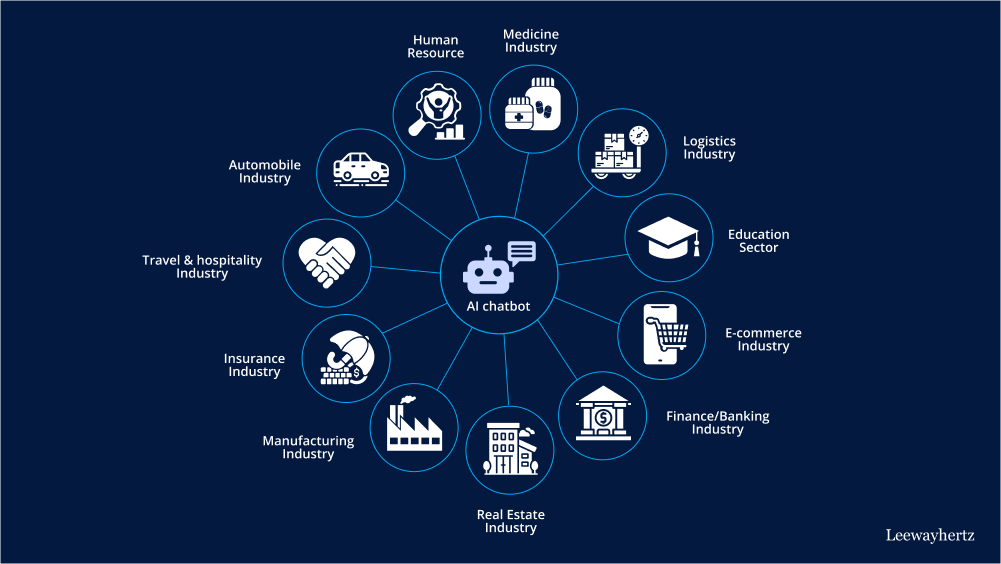
Services Offered by an Enterprise AI Chatbot Development Company

In recent years, the business landscape has witnessed a remarkable transformation with the widespread adoption of artificial intelligence (AI) and chatbot technologies. Among the various applications of AI, chatbots have emerged as a powerful tool for enterprises to enhance customer service, streamline internal processes, and boost operational efficiency. As the demand for intelligent chatbots grows, enterprise AI chatbot development companies play a crucial role in providing cutting-edge solutions to meet the diverse needs of businesses. In this article, we explore the key services offered by these specialized companies that are shaping the future of customer interactions and business operations.

1. Custom Chatbot Development:
Enterprise AI chatbot development companies excel in creating tailor-made chatbot solutions that align with the specific requirements of businesses. These companies typically have experienced teams of AI developers, natural language processing (NLP) experts, and user experience (UX) designers who collaborate to build chatbots capable of handling complex interactions. The custom chatbot development process involves understanding the client’s business goals, defining the scope of the chatbot’s functionalities, and designing conversational flows that offer seamless user experiences.

2. Integration with Enterprise Systems:
One of the key strengths of enterprise AI chatbot development companies is their ability to integrate chatbots with existing enterprise systems. These integrations enable chatbots to access and retrieve data from various sources, such as customer databases, inventory management systems, and order processing platforms. By integrating with these systems, chatbots can provide real-time information and perform tasks such as order tracking, product recommendations, and account management, leading to improved customer engagement and operational efficiency.

3. Natural Language Processing (NLP) Capabilities:
The success of a chatbot heavily relies on its NLP capabilities. Enterprise AI chatbot development companies invest significant efforts in training chatbots to understand and respond to user queries accurately. By leveraging machine learning algorithms, these chatbots can continually learn from interactions, allowing them to improve their language comprehension and provide more relevant responses over time. Advanced NLP techniques enable chatbots to handle complex language structures, multiple languages, and even recognize user sentiments, leading to more human-like interactions.

4. Omni-channel Deployment:
Modern businesses operate on multiple communication channels, including websites, social media, mobile apps, and messaging platforms. An enterprise AI chatbot development company ensures that chatbots they develop can seamlessly function across various channels, offering a consistent experience to users regardless of their preferred platform. Omni-channel deployment empowers businesses to reach a broader audience and deliver personalized interactions, which in turn strengthens customer loyalty and satisfaction.

5. Chatbot Analytics and Reporting:
Effective analysis and monitoring of chatbot performance are critical for ongoing improvements. Enterprise AI chatbot development companies incorporate analytics and reporting features into their solutions, providing businesses with valuable insights into chatbot usage, user interactions, and user satisfaction. These analytics help identify common pain points, frequently asked questions, and areas for improvement. The data-driven approach allows businesses to optimize chatbot performance continually and make informed decisions to enhance customer experiences.

6. Chatbot Security and Compliance:
With chatbots often handling sensitive customer data, security and compliance are paramount. Reputed enterprise AI chatbot development companies implement robust security measures to safeguard user information and prevent unauthorized access. They also ensure that their chatbot solutions comply with relevant data protection regulations, industry standards, and best practices, providing businesses with peace of mind regarding data privacy and legal requirements.

7. Chatbot Maintenance and Support:
Chatbot development is not a one-time project but an ongoing process. An enterprise AI chatbot development company offers continuous maintenance and support services to keep chatbots up-to-date, resolve issues, and implement feature enhancements. Regular updates ensure that the chatbot remains relevant and adaptive to changing business needs and customer preferences.

In conclusion, enterprise AI chatbot development companies play a vital role in enabling businesses to leverage the power of AI-driven conversational interfaces. By offering custom chatbot development, seamless integration, advanced NLP capabilities, omni-channel deployment, analytics, security, and ongoing support, these companies empower businesses to provide exceptional customer experiences and streamline internal operations. As AI and chatbot technologies continue to evolve, these services will undoubtedly keep businesses at the forefront of innovation and digital transformation.

To Learn More:- https://www.leewayhertz.com/enterprise-ai-chatbot-development/

Use Cases of Transactional Chatbots

The advent of artificial intelligence has revolutionized the way businesses interact with their customers. One of the most transformative applications of AI in the customer service domain is the rise of transactional chatbots. These intelligent virtual agents have the capability to handle various types of transactions, delivering a seamless and efficient experience to users. In this article, we will explore some of the most compelling use cases of transactional chatbots and how they are revolutionizing customer interactions.

  1. E-commerce and Order Management

Transactional chatbots have found substantial use in the e-commerce sector, where they streamline the process of order management and customer inquiries. Customers can use chatbots to search for products, place orders, track shipments, and even initiate returns or refunds. These bots are capable of handling multiple customer requests simultaneously, significantly reducing response times and ensuring a smooth shopping experience.

  1. Banking and Finance

The financial industry has embraced transactional chatbots to cater to various customer needs. These bots assist users with balance inquiries, fund transfers, bill payments, transaction history, and account updates. Advanced transactional chatbots can also provide personalized financial advice and investment recommendations based on the user’s financial profile and goals.

  1. Travel and Hospitality

Transactional chatbots are revolutionizing the travel and hospitality industry by automating various tasks. They can assist customers with flight bookings, hotel reservations, car rentals, and itinerary planning. Additionally, these chatbots can offer real-time updates on flight statuses, weather conditions, and travel alerts, ensuring travelers stay informed throughout their journey.

  1. Customer Support and Issue Resolution

Providing prompt and effective customer support is essential for any business. Transactional chatbots serve as the first line of defense in handling customer inquiries and resolving issues. They can address frequently asked questions, guide users through troubleshooting processes, and escalate complex problems to human agents when necessary. This approach not only enhances customer satisfaction but also reduces the workload on human support teams.

  1. Appointment Scheduling

Transactional chatbots have simplified the process of scheduling appointments across various industries. For example, medical facilities, salons, and service providers can leverage chatbots to allow customers to book appointments conveniently. These bots can also send automated reminders and handle rescheduling requests, reducing no-show rates and optimizing resource allocation.

  1. Food Ordering and Delivery

Restaurants and food delivery services have embraced transactional chatbots to improve the ordering process. Customers can use these bots to browse menus, place orders, customize dishes, and track deliveries in real-time. Integration with payment gateways ensures secure and efficient transactions, making the food ordering experience seamless and hassle-free.

  1. Subscription Management

Transactional chatbots play a significant role in subscription-based businesses. They assist customers in subscribing to services, modifying subscription plans, and managing payment details. Moreover, these bots can proactively remind users about upcoming renewals, reducing the chances of subscription lapses.

  1. Personal Finance Management

Many users struggle to keep track of their expenses and savings. Transactional chatbots in personal finance apps help users monitor their spending patterns, set budgetary limits, and categorize transactions. By offering insights into financial habits, these bots empower users to make informed financial decisions.

Conclusion

Transactional chatbots have emerged as invaluable tools in enhancing customer interactions and streamlining business processes. With their ability to handle various transactions, these AI-powered agents provide round-the-clock assistance, ensuring a seamless user experience. From e-commerce to banking, travel, and more, transactional chatbots are revolutionizing diverse industries and transforming the way businesses engage with their customers. As AI technology continues to evolve, we can expect even more sophisticated and personalized interactions with these virtual assistants, further enhancing the overall customer journey.

To Learn More:- https://www.leewayhertz.com/train-transactional-chatbot-using-reinforcement-learning/

AI as a Service: Transforming Industries with Intelligent Solutions

In the digital era, Artificial Intelligence (AI) has emerged as a transformative force, reshaping industries and revolutionizing how businesses operate. The widespread adoption of AI has led to the emergence of a novel concept known as “AI as a Service” (AIaaS), which offers tremendous potential for organizations of all sizes to leverage AI capabilities without the need for extensive in-house expertise or infrastructure. This article explores the concept of AI as a Service, its advantages, and its impact on various sectors.

What is AI as a Service?

AI as a Service refers to the delivery of artificial intelligence solutions and capabilities via the cloud. Similar to other “as a Service” models, such as Software as a Service (SaaS) or Infrastructure as a Service (IaaS), AIaaS allows businesses to access AI tools, algorithms, and applications on a subscription basis, eliminating the need for substantial upfront investments in hardware and software.

AIaaS offerings cover a wide range of functionalities, including natural language processing, machine learning, computer vision, predictive analytics, and recommendation systems, among others. This approach democratizes AI, making it accessible to businesses with limited resources or technical expertise, thereby leveling the playing field and fostering innovation.

Advantages of AI as a Service:

  1. Cost-Effectiveness: By opting for AI as a Service, companies can significantly reduce costs associated with AI implementation. Instead of investing in expensive AI infrastructure and hiring specialized talent, businesses can subscribe to AIaaS solutions that suit their specific needs, leading to cost optimization.
  2. Scalability: AIaaS providers offer flexible plans that allow businesses to scale their AI capabilities up or down based on changing requirements. As businesses grow, AI services can adapt accordingly, ensuring seamless integration and efficient performance.
  3. Speed and Time-to-Market: Integrating AI in-house can be a time-consuming process, involving research, development, and testing. AIaaS enables rapid deployment of AI solutions, reducing the time-to-market for new products and services.
  4. Accessibility: AIaaS platforms often come with user-friendly interfaces and APIs, making it easier for non-technical professionals to interact with and integrate AI capabilities into their existing systems. This accessibility empowers organizations to harness the potential of AI across diverse domains.
  5. Expertise and Support: AIaaS providers have teams of experienced AI experts who continuously update and improve the underlying algorithms and infrastructure. This ensures that subscribers have access to cutting-edge technologies and support for their AI initiatives.

Impact of AI as a Service across Industries:

  1. Healthcare: AIaaS is revolutionizing healthcare by enabling the analysis of vast amounts of medical data to improve diagnostics, personalized treatments, and drug discovery. It enhances patient care through AI-driven virtual assistants and remote monitoring systems.
  2. Finance: In the financial sector, AIaaS is used for fraud detection, risk assessment, and algorithmic trading. AI-powered chatbots and customer service systems also enhance the overall banking experience.
  3. Retail: Retailers leverage AIaaS for demand forecasting, inventory management, and personalized customer recommendations, driving higher sales and customer satisfaction.
  4. Manufacturing: AIaaS enhances efficiency and productivity in manufacturing through predictive maintenance, quality control, and supply chain optimization, reducing downtime and costs.
  5. Marketing: AI-powered marketing platforms use AIaaS for data analysis, customer segmentation, and targeted advertising, leading to more effective and efficient marketing campaigns.
  6. Education: AIaaS facilitates personalized learning experiences through adaptive learning platforms, intelligent tutoring systems, and automated grading, improving educational outcomes.

Challenges:

While AI as a Service presents numerous benefits, it also brings forth certain challenges. Data privacy and security are major concerns, as companies need to share sensitive data with service providers. Additionally, dependence on external AI services can lead to vendor lock-in and potential integration issues with existing systems.

Conclusion:

AI as a Service has emerged as a game-changer in the tech landscape, offering businesses an affordable and scalable means to leverage the potential of artificial intelligence. By democratizing AI, organizations across industries can now harness its transformative power to drive innovation, enhance customer experiences, and gain a competitive edge in the market. As technology continues to evolve, the scope and impact of AI as a Service are likely to expand, shaping the future of how businesses operate and deliver value to their customers.

To Learn More:- https://www.leewayhertz.com/ai-as-a-service/

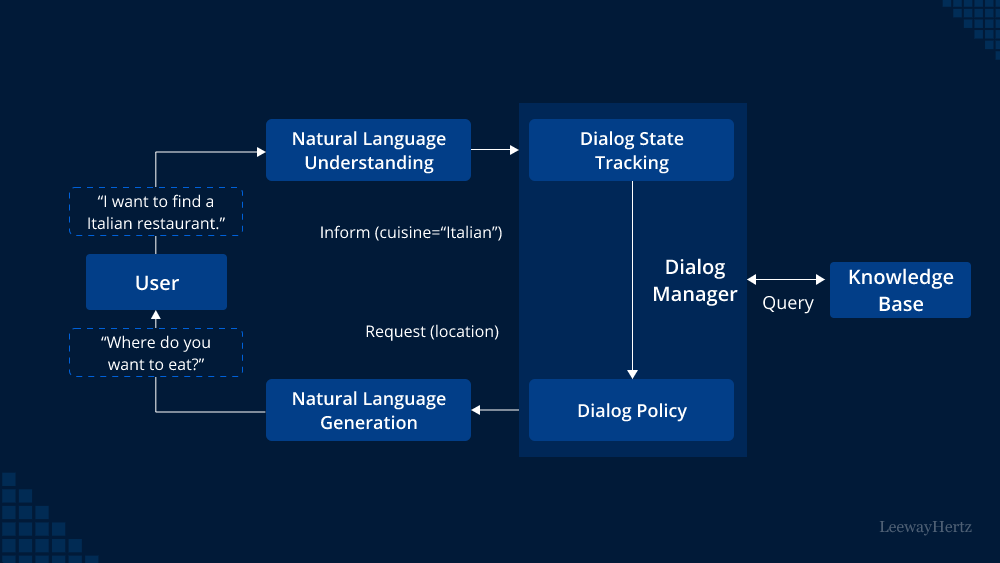
HOW TO BUILD AN AI-POWERED CHATBOT?

In recent years, chatbots have become an increasingly popular tool for businesses to enhance customer service, streamline processes, and engage with their audience in a more personalized manner. With advancements in artificial intelligence (AI), building an AI-powered chatbot has become more accessible and effective than ever before. In this article, we will explore the step-by-step process of creating an AI-powered chatbot that can interact intelligently with users and provide valuable assistance.

Step 1: Define the Purpose and Objectives

The first and most crucial step in building an AI-powered chatbot is defining its purpose and objectives. Determine the tasks and functions your chatbot will perform. It could be customer support, answering frequently asked questions, guiding users through a process, or even providing entertainment. Understanding the purpose will help you tailor the chatbot’s functionalities and design to meet the specific needs of your target audience.

Step 2: Choose the Right Platform

There are several platforms and frameworks available for building chatbots. Depending on your expertise and requirements, you can choose from various options, including open-source frameworks like TensorFlow and Dialogflow, or chatbot development platforms like Microsoft Bot Framework or IBM Watson. Consider factors such as ease of integration, scalability, and natural language processing capabilities when selecting a platform.

Step 3: Natural Language Processing (NLP)

One of the essential elements of an AI-powered chatbot is Natural Language Processing (NLP). NLP allows the chatbot to understand user inputs, process them, and respond in a human-like manner. To implement NLP, you can use pre-built NLP libraries like NLTK (Natural Language Toolkit) or SpaCy, or use NLP services provided by platforms like Google Cloud Natural Language or Microsoft Azure Language Understanding (LUIS). Properly training the NLP model with relevant data is crucial for accurate and contextually appropriate responses.

Step 4: Design the User Experience

An intuitive and user-friendly interface is vital for any successful chatbot. Design the conversation flow with clarity and simplicity in mind. Map out the potential user queries and craft responses that provide value while maintaining a conversational tone. Incorporate visual elements, such as buttons and images, to enhance the user experience and guide users through the interaction smoothly.

Step 5: Integration with Backend Systems

Depending on the complexity of the tasks your chatbot will perform, it may need to integrate with backend systems and databases to access relevant information. Ensure that the integration is secure and seamless. The chatbot should be able to retrieve data, update records, and execute tasks efficiently to provide users with accurate and up-to-date information.

Step 6: Train and Test the Chatbot

Training your AI-powered chatbot is an ongoing process. Initially, provide it with a set of predefined responses and use real user interactions to continuously improve its performance. Regularly analyze user feedback and fine-tune the chatbot’s responses to make them more accurate and contextually relevant. Thoroughly test the chatbot across different scenarios to identify and fix any potential issues before deploying it to the public.

Step 7: Deploy and Monitor

Once you have completed the development and testing phases, it’s time to deploy your AI-powered chatbot. Depending on your platform choice, deployment methods may vary. Ensure that the chatbot is seamlessly integrated into your website, app, or preferred communication channels. After deployment, closely monitor its performance and collect user feedback to make further improvements.

Step 8: Continuous Improvement

An AI-powered chatbot is never truly finished. To keep it effective and relevant, continuously update and enhance its capabilities. Stay informed about the latest AI and NLP advancements, and implement them in your chatbot to provide an ever-improving user experience.

In conclusion, building an AI-powered chatbot involves careful planning, choosing the right tools and frameworks, designing a user-friendly interface, and integrating with backend systems. Through continuous improvement and monitoring, you can create an intelligent and efficient chatbot that will delight your users and add value to your business operations. Embrace the power of AI and chatbot technology to unlock new possibilities in customer engagement and support.

To Learn More:- https://www.leewayhertz.com/ai-chatbots/

AI Use Cases in Fashion: Revolutionizing the Industry

Artificial Intelligence (AI) has rapidly emerged as a transformative technology in various sectors, and the fashion industry is no exception. With its ability to analyze vast amounts of data, recognize patterns, and make intelligent decisions, AI is revolutionizing the way fashion companies design, produce, market, and sell their products. From enhancing the customer experience to streamlining supply chain operations, AI is reshaping the future of fashion. Let’s explore some key AI use cases in the fashion industry:

  1. Personalized Recommendations: AI-powered recommendation engines analyze customer behavior, preferences, and purchase history to provide highly personalized product recommendations. This tailored approach enhances the shopping experience, increases customer engagement, and drives sales.
  2. Virtual Stylists: AI-driven virtual stylist tools use computer vision and machine learning algorithms to suggest outfit combinations based on individual body types, fashion trends, and occasions. These applications assist customers in experimenting with different looks and styles without physically trying on clothes.
  3. Size and Fit Prediction: AI algorithms can predict a customer’s measurements accurately, helping reduce the risk of purchasing ill-fitting clothes and minimizing return rates. This technology leverages historical customer data and garment specifications to determine the best size for each individual.
  4. Trend Forecasting: AI can analyze vast amounts of social media posts, fashion blogs, runway shows, and celebrity outfits to predict upcoming fashion trends. This allows designers and retailers to stay ahead of the curve and cater to changing consumer preferences effectively.
  5. Supply Chain Optimization: AI optimizes the fashion supply chain by predicting demand patterns, automating inventory management, and improving logistics. This streamlines operations, reduces costs, and minimizes waste, making the entire supply chain more efficient and sustainable.
  6. Textile Design and Pattern Generation: AI-powered tools aid designers in creating unique textile patterns and prints. By analyzing historical design data, AI generates innovative and artistic patterns that can be used in clothing, accessories, and home furnishings.
  7. Visual Search: Visual search enables customers to find products by uploading images or screenshots of desired items. AI-powered algorithms analyze the visuals and match them with similar products available in the fashion retailer’s inventory.
  8. Fraud Detection: AI algorithms can detect fraudulent activities, such as fake product reviews and counterfeit products, safeguarding both customers and brands from potential harm.
  9. Sustainability and Ethical Practices: AI is helping fashion companies adopt more sustainable and ethical practices. From optimizing energy consumption to reducing waste in manufacturing, AI plays a crucial role in promoting eco-friendly initiatives across the industry.
  10. Real-time Inventory Management: AI technology assists retailers in maintaining optimal inventory levels by predicting demand fluctuations accurately. This prevents overstocking or understocking of products, leading to improved profitability.
  11. Chatbots and Customer Service: AI-powered chatbots offer 24/7 customer support, addressing queries, and resolving issues promptly. They enhance customer engagement, provide instant assistance, and free up human agents to handle more complex tasks.
  12. Influencer Marketing: AI identifies potential influencers and analyzes their impact on specific target audiences. This data-driven approach helps fashion brands collaborate with relevant influencers, maximizing the effectiveness of marketing campaigns.
  13. Pricing Optimization: AI algorithms analyze market dynamics, competitor pricing, and customer behavior to recommend optimal pricing strategies. This ensures that fashion brands remain competitive while maintaining profitability.
  14. Aesthetic Intelligence: AI can analyze and understand visual aesthetics, allowing brands to maintain consistent brand identity and visual appeal across various marketing channels and product designs.
  15. 3D Design and Virtual Prototyping: AI assists designers in creating 3D models and virtual prototypes, reducing the need for physical samples and shortening the product development cycle.

In conclusion, AI is transforming the fashion industry in unprecedented ways. From enhancing customer experience through personalized recommendations and virtual stylists to optimizing supply chains and promoting sustainability, AI’s integration into fashion promises a more efficient, innovative, and customer-centric future for the industry. As AI technology continues to advance, we can expect even more exciting use cases and possibilities in the world of fashion.

To Learn More:- https://www.leewayhertz.com/ai-use-cases-in-fashion/

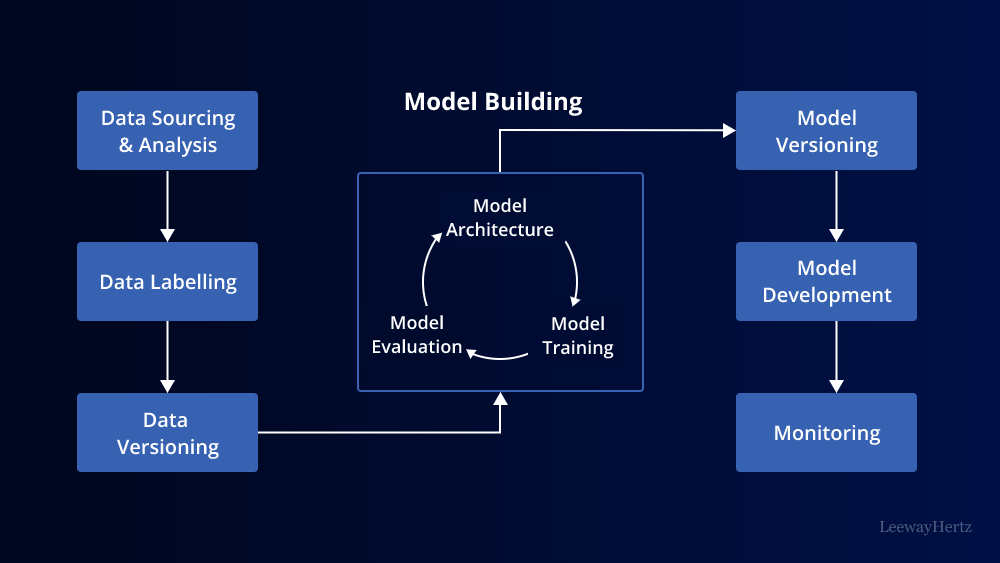
How to Implement MLOps: A Comprehensive Guide

Machine Learning Operations, or MLOps, is a crucial practice that streamlines the development, deployment, and management of machine learning (ML) models. In recent years, MLOps has gained prominence as organizations increasingly recognize the value of ML in their operations. By combining DevOps principles with ML, MLOps ensures that ML models are delivered efficiently and effectively. In this article, we’ll explore the steps to implement MLOps in your organization:

1. Define Clear Objectives:
Identify the specific goals you want to achieve with MLOps. Whether it’s improving model performance, reducing deployment time, or enhancing collaboration among teams, having a clear vision helps in the successful implementation of MLOps.

2. Build a Cross-Functional Team:
Form a team that includes data scientists, engineers, operations personnel, and domain experts. Collaboration among different stakeholders is essential for effective MLOps implementation.

3. Version Control for Data and Models:
Adopt version control systems like Git to track changes in data, code, and models. This ensures reproducibility and provides a history of model development.

4. Automated Testing:
Implement automated testing for ML models to verify their accuracy and stability. Unit tests, integration tests, and performance tests are essential to identify issues early in the development process.

5. Continuous Integration and Continuous Deployment (CI/CD):
Adopt CI/CD practices to automate the model development, testing, and deployment processes. This streamlines the workflow, reduces manual errors, and accelerates the deployment cycle.

6. Model Registry:
Maintain a model registry to store and manage trained models. It acts as a central repository for different model versions, making it easier to track and compare performance.

7. Monitoring and Logging:
Integrate monitoring and logging tools into your ML pipeline to keep track of model performance, data drift, and system behavior. This enables proactive identification of issues and improves model reliability.

8. Infrastructure Orchestration:
Use containerization technologies like Docker and Kubernetes to manage and scale ML applications. Containers ensure consistency across different environments, making deployment more manageable.

9. Governance and Security:
Implement governance policies to ensure compliance with data privacy and security regulations. Define access controls and monitor model usage to prevent unauthorized access.

10. Collaboration and Documentation:
Encourage collaboration among team members by using tools that facilitate knowledge sharing and documentation. Clear and comprehensive documentation helps in knowledge transfer and onboarding new team members.

11. Model Retraining and Update Strategy:
Define a strategy for model retraining and updates. Set up automated pipelines to retrain models periodically using new data to keep them up-to-date and accurate.

12. A/B Testing and Experimentation:
Employ A/B testing and experimentation to compare different model versions and choose the most effective one. This data-driven approach optimizes model performance and enhances user experience.

13. Feedback Loop from Production:
Establish a feedback loop from production to continuously improve models. Monitor model performance in real-world scenarios and use feedback to refine the models over time.

14. Scalability and Resource Management:
Plan for scalability and resource management to handle increasing demands for ML applications. Cloud computing services and auto-scaling mechanisms can help manage resources efficiently.

15. Training Infrastructure:
Invest in powerful and scalable training infrastructure to support the development of complex ML models. High-performance GPUs and TPUs can significantly speed up the training process.

16. Education and Training:
Provide education and training to the MLOps team members and other stakeholders to keep them updated with the latest tools, technologies, and best practices in the field.

17. Continuous Improvement:
MLOps is an evolving practice, and it’s essential to continuously seek ways to improve the ML pipeline, deployment processes, and team collaboration.

In conclusion, implementing MLOps is critical for organizations that rely on ML models to drive decision-making and enhance business operations. By following the steps mentioned above, organizations can ensure efficient model development, deployment, and management while fostering collaboration and continuous improvement within the team. Embracing MLOps empowers organizations to harness the full potential of machine learning and stay ahead in this data-driven world.

To Learn More:- https://www.leewayhertz.com/mlops-pipeline/

How to Use the Decision Transformer in a Transformer?

The Transformer model, introduced by Vaswani et al. in 2017, revolutionized natural language processing tasks and brought significant advancements in various AI fields. It uses a self-attention mechanism to process input sequences and capture long-range dependencies effectively. However, as machine learning models have evolved, researchers have explored ways to make Transformers more powerful and efficient.

One such advancement is the Decision Transformer, a variant of the Transformer architecture that incorporates decision-making capabilities. The Decision Transformer extends the traditional self-attention mechanism to include explicit handling of decisions and outcomes, making it well-suited for tasks that involve sequential decision-making. In this article, we will explore how to use the Decision Transformer in a Transformer for various applications.

Understanding the Decision Transformer

The Decision Transformer builds upon the standard Transformer model and introduces additional components to handle decisions during sequence processing. It incorporates decision heads that can influence the model’s behavior based on prior outcomes. This allows the Decision Transformer to excel in tasks with multiple decision points and conditional dependencies.

Step 1: Model Architecture

The first step in using the Decision Transformer is to understand its architecture. Like the original Transformer, it consists of an encoder-decoder architecture with self-attention layers. However, the Decision Transformer extends this by adding decision heads to the self-attention mechanism. These decision heads take into account the decisions made at each step and use this information to guide the model’s future decisions.

Step 2: Data Preparation

Before using the Decision Transformer, ensure that your data is appropriately prepared for the specific task you want to tackle. For sequential decision-making tasks, the dataset should include examples with decision points and corresponding outcomes. Each decision point should be associated with a specific token in the input sequence.

Step 3: Implementing Decision Heads

To incorporate decision-making capabilities, you need to modify the self-attention mechanism of the Transformer. In each self-attention layer, decision heads are introduced to capture the decisions made at each step. These decision heads take the form of additional attention mechanisms that consider the previous decisions and their outcomes.

Step 4: Training the Model

Once the Decision Transformer is implemented, the next step is to train the model on your prepared dataset. During training, the model learns to make decisions based on the provided outcomes at each decision point. This process helps the model develop a deeper understanding of conditional dependencies and improves its sequential decision-making capabilities.

Step 5: Evaluation and Fine-Tuning

After training the Decision Transformer, evaluate its performance on the task at hand. The evaluation metrics will depend on the specific application, but they should take into account both the accuracy of decisions and the overall task performance.

If the model’s performance is not satisfactory, consider fine-tuning it on additional data or adjusting hyperparameters to improve its decision-making abilities.

Applications of Decision Transformers

Decision Transformers find applications in various fields due to their ability to handle sequential decision-making tasks effectively. Some notable applications include:

  1. Autonomous Systems: Decision Transformers can be used in autonomous vehicles and robots, enabling them to make complex decisions in real-time based on sensor inputs and prior outcomes.
  2. Financial Modeling: In finance, Decision Transformers can aid in making investment decisions by considering historical outcomes and market conditions.
  3. Medical Diagnosis: Decision Transformers can be employed in medical diagnosis systems, taking into account patient history and test results to arrive at accurate diagnoses.
  4. Natural Language Processing: In NLP, Decision Transformers can be used for tasks involving multiple decision points, such as dialogue generation and question-answering systems.

Conclusion

The Decision Transformer extends the capabilities of the traditional Transformer model by incorporating decision-making mechanisms. By explicitly considering decisions and outcomes, the Decision Transformer is well-suited for tasks that involve sequential decision-making. When applied to various applications, Decision Transformers have the potential to improve performance and enhance the decision-making abilities of AI systems, making them a valuable tool in the field of machine learning.

To Learn More:- https://www.leewayhertz.com/decision-transformer/

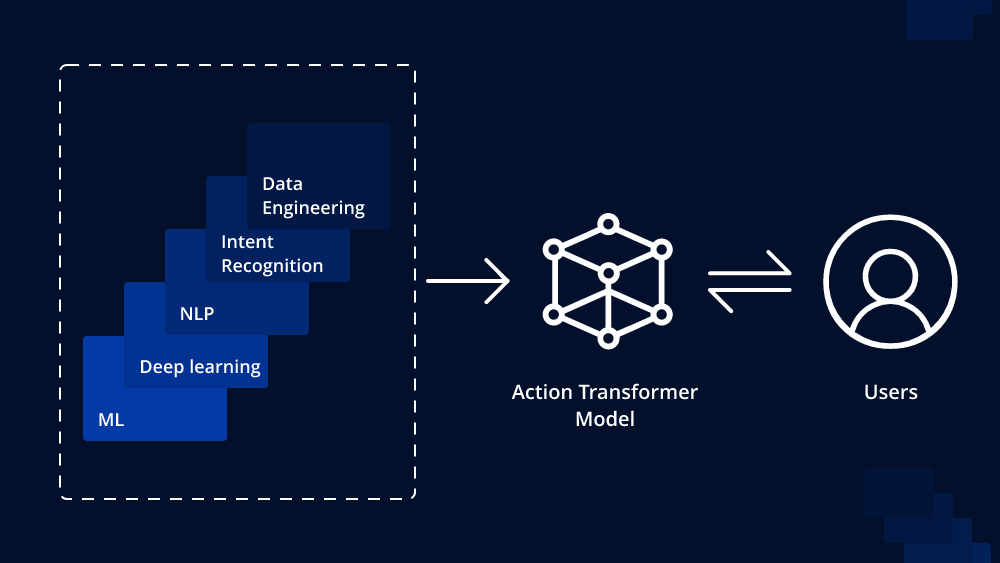
Unleashing Dynamic Language Generation: The Power of Action Transformer Models

In recent years, deep learning models have revolutionized various natural language processing (NLP) tasks, such as machine translation, text generation, and sentiment analysis. The Transformer model, introduced by Vaswani et al. in 2017, marked a significant advancement in NLP with its attention mechanism, allowing it to process long-range dependencies efficiently. Building upon this success, researchers have further enhanced the Transformer architecture to tackle more complex tasks. One such extension is the Action Transformer model, which aims to incorporate dynamic action generation into the standard Transformer framework.

The Evolution of Transformers

Before delving into the specifics of an Action Transformer, let’s briefly recap the original Transformer model’s key components. The Transformer architecture is based on an encoder-decoder framework, where the encoder processes the input sequence, and the decoder generates the output sequence. It utilizes self-attention mechanisms, allowing each word to attend to all other words in the sequence, enabling parallel processing and capturing contextual information effectively.

Understanding Action Transformer Model

The Action Transformer model extends the traditional Transformer by introducing a dynamic action generation mechanism. Unlike standard Transformers, which are primarily used for sequence-to-sequence tasks like machine translation, Action Transformers excel in tasks where the output is not a fixed sequence but depends on the model’s actions during the generation process.

The concept of actions in an Action Transformer refers to the decisions made by the model during the decoding process. Instead of straightforwardly predicting each token in a sequential manner, the model actively selects actions that influence subsequent generations. This dynamic decision-making allows the Action Transformer to exhibit a more interactive and adaptive behavior during sequence generation.

How does an Action Transformer work?

  1. Action Space Definition: In an Action Transformer, the first step involves defining an action space. This space comprises a set of possible actions the model can take at each generation step. Actions can range from selecting a particular token from the vocabulary to applying various transformation operations on the current hidden state.
  2. Action Selection: During the decoding process, the Action Transformer chooses actions at each time step based on the context, current hidden state, and predefined action space. The model can also learn to assign probabilities to different actions, allowing it to make informed decisions during generation.
  3. Action Execution and Generation: After selecting an action, the Action Transformer performs the chosen action, which might involve appending a token to the output sequence or modifying the hidden state. The model then proceeds to the next generation step, and the process iterates until the desired sequence is generated or a predefined stopping condition is met.
  4. Feedback Loop: One key aspect of the Action Transformer is its ability to receive feedback on the impact of previously selected actions. This feedback loop enables the model to learn from its past decisions and adjust its behavior accordingly. Reinforcement learning techniques are often employed to optimize action selection policies based on the generated sequences’ quality.

Applications of Action Transformer Models

Action Transformer models have demonstrated their effectiveness in various NLP tasks, particularly those with complex and dynamic output generation requirements. Some prominent applications include:

  1. Dialogue Systems: Action Transformers are well-suited for building interactive dialogue systems, where the model engages in dynamic conversation and adapts its responses based on the user’s input.
  2. Code Generation: In programming-related tasks, Action Transformers can generate code snippets step-by-step, ensuring that each action taken is syntactically and semantically correct.
  3. Image Captioning: When generating captions for images, an Action Transformer can dynamically adjust the description based on the visual content and the generated text so far.

Conclusion

The Action Transformer model represents a significant advancement in sequence generation tasks within the NLP domain. By incorporating dynamic action selection and feedback mechanisms, the model gains the ability to make interactive and adaptive decisions during sequence generation. As researchers continue to explore and refine this architecture, we can expect Action Transformers to find broader applications in various real-world scenarios, further pushing the boundaries of natural language processing capabilities.

To Learn More:- https://www.leewayhertz.com/action-transformer-model/

Exploratory Data Analysis (EDA): Methods and Techniques

Exploratory Data Analysis (EDA) is a crucial initial step in the data analysis process, enabling data scientists, researchers, and analysts to understand the structure and patterns within a dataset. EDA involves a variety of methods and techniques to visually and quantitatively explore data, identify trends, patterns, outliers, and relationships between variables. This article will delve into what Exploratory Data Analysis entails, along with some common methods and techniques used in this process.

Understanding Exploratory Data Analysis (EDA)

EDA is all about understanding the data you are working with. It is a process of discovery that helps analysts gain insights and intuitions about the dataset before formal modeling or hypothesis testing begins. The primary objectives of EDA include:

  1. Data Summarization: Summarizing the main characteristics of the data, such as measures of central tendency, variability, and distributions.
  2. Data Visualization: Creating various visual representations, such as histograms, scatter plots, and box plots, to explore patterns and relationships in the data.
  3. Identifying Patterns: Spotting trends, clusters, and patterns within the dataset to understand underlying structures.
  4. Detecting Outliers: Identifying anomalies or extreme values that deviate significantly from the rest of the data.
  5. Feature Selection: Identifying relevant features or variables that contribute significantly to the analysis.
  6. Data Cleaning: Addressing missing or inconsistent data to ensure a reliable and accurate analysis.

Methods and Techniques of EDA

  1. Summary Statistics: Calculating summary statistics, such as mean, median, standard deviation, and percentiles, provides an initial understanding of the data’s central tendency and spread.
  2. Data Visualization: Data visualization is a cornerstone of EDA. Various charts and graphs help visualize the data’s distribution and relationships. Some common visualizations include:
  • Histograms: Representing the distribution of numerical data.
  • Box plots: Displaying the distribution of data and detecting outliers.
  • Scatter plots: Examining the relationship between two numerical variables.
  • Bar charts: Displaying the distribution of categorical data.
  • Heatmaps: Visualizing the correlation between variables.
  1. Correlation Analysis: EDA often involves analyzing correlations between variables. A correlation matrix or a correlation plot can provide insights into the strength and direction of relationships between different variables.
  2. Outlier Detection: Identifying outliers is critical to understanding potential errors or anomalies in the dataset. Techniques like Z-score analysis or the use of box plots can help spot outliers.
  3. Data Imputation: Dealing with missing data is essential during EDA. Imputation techniques, such as mean imputation or interpolation, help estimate missing values.
  4. Dimensionality Reduction: In datasets with a large number of features, dimensionality reduction techniques like Principal Component Analysis (PCA) can help simplify the analysis by reducing the number of variables while preserving important information.
  5. Clustering Analysis: Clustering algorithms, such as k-means, can be used to group similar data points together, revealing underlying patterns in the data.
  6. Time Series Analysis: For time-series data, techniques like seasonality decomposition, autocorrelation, and lag plots can help understand temporal patterns.

The Importance of EDA

EDA is not just a preliminary step but a crucial part of the entire data analysis process. It helps analysts gain valuable insights, identify potential issues, and make informed decisions about subsequent steps in the analysis. Through EDA, analysts can discover hidden patterns, relationships, or trends that might not be apparent through simple data modeling. Moreover, it facilitates effective communication of findings to stakeholders, making complex data more understandable and actionable.

In conclusion, Exploratory Data Analysis (EDA) plays a fundamental role in understanding and extracting meaningful information from data. By employing a variety of methods and techniques, analysts can uncover valuable insights and set the stage for more advanced data modeling and hypothesis testing. As data continues to play an increasingly crucial role in decision-making across various domains, the significance of EDA in harnessing the full potential of data cannot be overstated.

To Learn More:- https://www.leewayhertz.com/what-is-exploratory-data-analysis/

Design a site like this with WordPress.com
Get started