Exploring the Services of Action Transformer

In recent years, there has been a growing demand for advanced technologies that can automate and optimize various processes across industries. One such breakthrough innovation is the Action Transformer Services, a powerful tool that combines the capabilities of natural language processing and machine learning algorithms to enhance efficiency and automation. Let’s delve into the key points of this transformative technology:

Introduction to Action Transformer Services:

  • Action Transformer Services leverage the Transformer architecture, a state-of-the-art deep learning model, to process and understand natural language inputs.
  • These services enable businesses to automate tasks, streamline workflows, and improve overall operational efficiency.

Natural Language Understanding (NLU):

  • Action Transformer Services excel in understanding and interpreting natural language inputs, enabling them to comprehend complex instructions and queries.
  • NLU capabilities enable businesses to automate customer support, analyze feedback, and extract valuable insights from unstructured text data.

Task Automation:

  • Leveraging the power of machine learning, Action Transformer Services can automate a wide range of tasks, including data entry, document processing, and content generation.
  • By automating repetitive and time-consuming tasks, businesses can free up their workforce to focus on more strategic and creative endeavors.

Customization and Adaptability:

  • Action Transformer Services can be customized and fine-tuned to meet specific business requirements.
  • Through training on domain-specific data, these services can adapt to industry-specific jargon, context, and nuances, making them highly versatile and effective.

Improved Decision-Making:

  • By analyzing vast amounts of data and extracting relevant information, Action Transformer Services can provide valuable insights to support decision-making processes.
  • These services assist in forecasting, risk analysis, and recommendation systems, helping businesses make informed choices and improve their outcomes.

Enhanced Communication:

  • Action Transformer Services can facilitate seamless communication between humans and machines.
  • They can assist in creating chatbots, virtual assistants, and voice-controlled systems that understand and respond to user queries and commands accurately and efficiently.

Increased Productivity:

  • With the automation capabilities of Action Transformer Services, businesses can significantly increase productivity and output.
  • By reducing manual efforts and minimizing errors, these services enable faster and more accurate completion of tasks.

Integration with Existing Systems:

  • Action Transformer Services can be easily integrated with existing software and systems, making it convenient for businesses to adopt and implement this technology.
  • Integration ensures a smooth transition and allows organizations to leverage the benefits of automation without disrupting their established workflows.

Ethical Considerations:

  • As with any technology, ethical considerations must be taken into account while deploying Action Transformer Services.
  • Privacy, data security, and bias mitigation are crucial aspects that need careful attention to ensure responsible and fair usage of this technology.

Future Prospects:

  • Action Transformer Services hold immense potential for further advancements and innovations.
  • Continued research and development in the field of natural language processing and machine learning will likely lead to more sophisticated and capable versions of this technology.

In conclusion, Action Transformer Services have emerged as a game-changer in the realm of automation and efficiency. By combining natural language understanding and machine learning algorithms, these services empower businesses to automate tasks, streamline workflows, and improve overall productivity. With their adaptability, customization options, and integration capabilities, Action Transformer Services offer a versatile and scalable solution for businesses across various industries. As technology continues to evolve, we can expect even more groundbreaking applications and advancements in the realm of Action Transformer Services.

To Learn More:- https://www.leewayhertz.com/hire-action-transformer-developers/

MLOps Consulting Services: Transforming Machine Learning into Actionable Insights

In today’s data-driven world, organizations are increasingly recognizing the value of machine learning (ML) and its potential to unlock valuable insights from vast amounts of data. However, implementing ML solutions and effectively integrating them into existing business processes can be a complex and challenging task. This is where MLOps consulting services come into play. MLOps, short for Machine Learning Operations, focuses on bridging the gap between ML development and deployment, enabling organizations to extract actionable insights from their ML models. Let’s explore the key benefits and components of MLOps consulting services in this article.

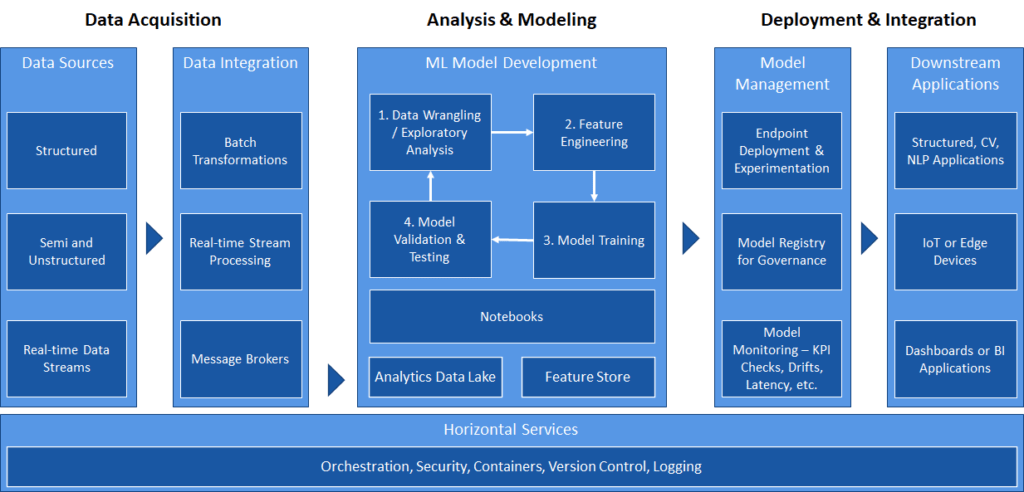
  1. Streamlined ML Development Process: MLOps consulting services assist organizations in establishing a well-defined ML development process. This includes defining project goals, data collection and preprocessing, model training and evaluation, and deployment strategies. By streamlining these processes, businesses can save time and resources while ensuring consistent and reliable model performance.
  2. Model Versioning and Tracking: MLOps consultants help organizations implement robust versioning and tracking mechanisms for ML models. This allows teams to effectively manage multiple versions of models, track changes, and revert to previous versions if necessary. Model versioning and tracking provide transparency and reproducibility, making it easier to troubleshoot issues and ensure model integrity.
  3. Infrastructure and Environment Setup: MLOps consulting services assist organizations in setting up scalable and reliable infrastructure for ML deployment. This includes designing and implementing cloud-based solutions, configuring compute resources, and establishing secure environments for model training and inference. With a well-optimized infrastructure, organizations can handle large-scale ML workloads efficiently.
  4. Automated Model Deployment: MLOps consultants focus on automating the deployment process of ML models. This involves creating deployment pipelines that enable seamless integration between development and production environments. By automating the deployment process, organizations can reduce human error, accelerate model deployment, and ensure consistent performance across different environments.
  5. Continuous Monitoring and Model Governance: MLOps consulting services emphasize continuous monitoring and governance of ML models. Consultants help organizations implement monitoring systems that track model performance, data drift, and concept drift, allowing proactive detection and mitigation of issues. Additionally, model governance frameworks ensure compliance with regulations and ethical considerations surrounding ML deployments.
  6. Scalability and Performance Optimization: MLOps consultants assist organizations in optimizing ML models for scalability and performance. They help identify and address bottlenecks, improve model inference speed, and optimize resource allocation. Scalable and performant ML models enable organizations to handle increasing data volumes and deliver real-time insights efficiently.
  7. Integration with Existing Systems: MLOps consulting services focus on integrating ML solutions with existing business systems and processes. Consultants help organizations integrate ML models into production environments, ensuring compatibility with existing infrastructure and data sources. Seamless integration enables organizations to leverage the power of ML without disrupting established workflows.
  8. Training and Knowledge Transfer: MLOps consultants provide training and knowledge transfer to ensure organizations can sustain and enhance their ML capabilities independently. This includes upskilling teams on ML best practices, tooling, and methodologies. By empowering internal teams, organizations can build self-sufficient ML operations and drive innovation.

In conclusion, MLOps consulting services play a pivotal role in transforming machine learning from an experimental endeavor into actionable insights that drive business value. By streamlining ML development processes, implementing robust model versioning and tracking, optimizing infrastructure, automating deployment, ensuring continuous monitoring and governance, optimizing performance, integrating with existing systems, and providing training and knowledge transfer, MLOps consultants empower organizations to unlock the full potential of their ML investments. With the guidance of MLOps experts, organizations can navigate the complexities of ML deployment and successfully leverage data-driven insights to gain a competitive edge in the digital landscape.

To Learn More:- https://www.leewayhertz.com/mlops-consulting-services/

Benefits and Services Provided by Customized ChatGPT App

In today’s fast-paced digital world, businesses are constantly seeking innovative ways to enhance customer engagement and improve the overall user experience. One such solution that has gained significant popularity is the implementation of customized ChatGPT apps. These artificial intelligence-powered chatbots provide a wide range of benefits and services, revolutionizing the way businesses interact with their customers. Let’s explore some of the key advantages offered by these customized chatbot applications.

  1. 24/7 Availability: Customized ChatGPT apps provide round-the-clock availability, allowing customers to access support and information whenever they need it. Unlike traditional customer support methods that operate within specific business hours, these chatbots are available at any time, increasing customer satisfaction and improving response time.
  2. Improved Customer Service: By implementing a customized ChatGPT app, businesses can enhance their customer service capabilities significantly. These chatbots are designed to answer frequently asked questions, provide product information, and resolve common issues. This ensures prompt and accurate responses, reducing the waiting time for customers and improving overall satisfaction.
  3. Personalized Interactions: Customized ChatGPT apps can be tailored to deliver personalized interactions based on individual customer preferences and behavior. By leveraging customer data and insights, these chatbots can provide personalized recommendations, product suggestions, and targeted marketing messages, creating a more engaging and relevant experience for each user.
  4. Scalability and Cost-Effectiveness: With a customized ChatGPT app, businesses can handle multiple customer interactions simultaneously without compromising the quality of service. These chatbots can scale effortlessly to accommodate increasing customer demands, reducing the need for additional human resources. This scalability improves operational efficiency and reduces costs associated with hiring and training new employees.
  5. Enhanced Customer Engagement: ChatGPT apps have the ability to engage customers in interactive conversations, making the user experience more enjoyable and memorable. Through natural language processing and advanced algorithms, these chatbots can understand user intent, provide contextually relevant responses, and maintain coherent conversations. This level of engagement fosters customer loyalty and increases the likelihood of repeat business.
  6. Quick and Accurate Information Retrieval: One of the significant advantages of using customized ChatGPT apps is their ability to retrieve information quickly and accurately. These chatbots can access vast databases of product information, FAQs, and other relevant data, ensuring accurate and up-to-date responses. This saves time for both customers and businesses, streamlining the information retrieval process.
  7. Multilingual Support: Customized ChatGPT apps can be programmed to support multiple languages, catering to a diverse customer base. This feature enables businesses to expand their reach and provide support to customers worldwide, regardless of their language preferences. Multilingual chatbot support enhances inclusivity and fosters a global brand image.
  8. Data Collection and Analysis: ChatGPT apps collect valuable customer data during interactions, allowing businesses to gain insights into customer preferences, behavior patterns, and pain points. This data can be analyzed to identify trends, improve products and services, and make informed business decisions. The insights obtained through chatbot interactions empower businesses to deliver personalized experiences and targeted marketing campaigns.
  9. Integration with Existing Systems: Customized ChatGPT apps can be seamlessly integrated with existing business systems and platforms, such as customer relationship management (CRM) software or e-commerce platforms. This integration ensures a unified customer experience, with chatbots able to access and update customer information in real-time. It also facilitates efficient order processing and seamless transition between chatbot and human support, if required.
  10. Continuous Learning and Improvement: Customized ChatGPT apps leverage machine learning techniques to continuously learn and improve their performance over time. They can adapt to changing customer needs, update their knowledge base, and enhance their conversational capabilities. This ensures that the chatbot remains up-to-date and delivers accurate and relevant information to customers.

To Learn More:- https://www.leewayhertz.com/customized-chatgpt-app/

Exploring the AI Chatbot Development Services

In today’s fast-paced digital era, businesses are constantly looking for innovative solutions to enhance customer engagement and support. AI chatbots have emerged as a game-changer in this domain, providing businesses with a powerful tool to automate customer interactions, improve response times, and deliver personalized experiences. AI chatbot development services have gained significant traction, and here are some key points highlighting their importance and benefits.

  1. Improved Customer Experience: AI chatbots enable businesses to provide round-the-clock customer support, ensuring that customers’ queries are addressed promptly. Chatbots can handle multiple conversations simultaneously, minimizing waiting times and reducing customer frustration. The use of natural language processing (NLP) and machine learning algorithms empowers chatbots to understand customer intents and deliver accurate and relevant responses.
  2. Cost Efficiency: AI chatbots offer cost-effective customer support solutions compared to traditional methods. Deploying a chatbot eliminates the need for hiring and training additional customer service representatives, saving significant resources. Chatbots can handle a high volume of customer inquiries without compromising the quality of service, enabling businesses to scale their operations efficiently.
  3. Enhanced Lead Generation and Sales: AI chatbots can engage customers in interactive conversations, providing personalized recommendations and product information based on their preferences. By leveraging customer data and behavioral patterns, chatbots can guide potential customers through the sales funnel, improving lead generation and conversion rates. Chatbots can also handle order processing, payment assistance, and post-sales support, enhancing the overall customer experience.
  4. 24/7 Availability: With AI chatbots, businesses can provide uninterrupted customer support, even outside regular working hours. Customers can access information and assistance at any time, increasing customer satisfaction and loyalty. Chatbots can also handle repetitive and mundane tasks, freeing up human agents to focus on complex customer issues that require human intervention.
  5. Multichannel Support: AI chatbots can be integrated across various digital platforms, including websites, mobile applications, social media, and messaging platforms. This multichannel support ensures that customers can access assistance through their preferred communication channel, enhancing convenience and accessibility. Chatbots can maintain context and conversation history across channels, providing a seamless and consistent user experience.
  6. Data-Driven Insights: AI chatbots collect and analyze vast amounts of customer data, enabling businesses to gain valuable insights into customer behavior, preferences, and pain points. These insights can be utilized to refine marketing strategies, improve products or services, and personalize customer interactions further. By understanding customer needs better, businesses can tailor their offerings to meet specific requirements, thereby enhancing customer satisfaction and retention.
  7. Continuous Learning and Improvement: AI chatbots are powered by machine learning algorithms that enable them to continuously learn and improve over time. Through user interactions and feedback, chatbots can refine their responses, expand their knowledge base, and understand new trends and patterns. This iterative learning process ensures that chatbots become increasingly intelligent and capable of handling complex queries, delivering a more personalized and accurate customer experience.
  8. Customization and Integration: AI chatbot development services offer customization options to align the chatbot’s capabilities with specific business requirements. Chatbots can be designed to reflect the brand’s personality and tone, creating a consistent brand experience. Furthermore, chatbots can be integrated with existing systems, such as customer relationship management (CRM) platforms and e-commerce solutions, streamlining operations and data flow.

To Learn More:- https://www.leewayhertz.com/ai-chatbot-development-company/

Exploring the Enterprise AI Development Services

In today’s rapidly evolving technological landscape, artificial intelligence (AI) has emerged as a game-changer for enterprises across various industries. AI enables businesses to streamline operations, enhance decision-making processes, and gain valuable insights from vast amounts of data. To harness the power of AI, many enterprises are turning to specialized development services that cater to their specific needs. In this article, we will explore seven essential enterprise AI development services that are transforming businesses worldwide.

  1. Data Analysis and Insights:
    One of the fundamental aspects of AI development is data analysis and insights. Enterprise AI development services offer advanced analytics capabilities to process and analyze large volumes of data. By leveraging machine learning algorithms, businesses can uncover patterns, trends, and actionable insights from their data. This empowers enterprises to make informed decisions and drive strategic initiatives.
  2. Natural Language Processing (NLP):
    NLP is a crucial component of AI that focuses on understanding and interpreting human language. Enterprise AI development services employ NLP techniques to extract meaning from unstructured text data, enabling businesses to automate tasks like sentiment analysis, chatbots, and language translation. NLP facilitates effective communication between humans and machines, enhancing customer experiences and operational efficiency.
  3. Computer Vision:
    Computer vision allows machines to interpret and understand visual information. Enterprise AI development services leverage computer vision algorithms to automate image and video analysis, object recognition, and visual inspection. This technology finds applications in various industries, such as healthcare, manufacturing, and retail, where visual data plays a significant role in decision-making processes.
  4. Predictive Analytics:
    Predictive analytics is a branch of AI that uses historical data and statistical models to forecast future outcomes. Enterprise AI development services help businesses implement predictive analytics solutions that can optimize operations, anticipate customer behavior, and identify potential risks. By leveraging predictive analytics, enterprises can gain a competitive edge and enhance their strategic planning capabilities.
  5. Robotic Process Automation (RPA):
    RPA combines AI and automation technologies to automate repetitive and rule-based tasks. Enterprise AI development services enable businesses to streamline workflows, reduce manual errors, and increase operational efficiency by deploying software robots. RPA frees up human resources to focus on more complex and value-added activities, improving overall productivity and cost-effectiveness.
  6. Speech Recognition:
    Speech recognition technology enables machines to convert spoken language into written text. Enterprise AI development services utilize speech recognition algorithms to develop applications such as voice assistants, transcription services, and voice-controlled systems. Speech recognition enhances accessibility, convenience, and hands-free operation in various domains, including customer service and healthcare.
  7. Personalization and Recommendation Systems:
    Personalization and recommendation systems leverage AI algorithms to provide customized experiences and tailored recommendations to users. Enterprise AI development services assist businesses in building intelligent systems that analyze user preferences, behavior, and historical data to deliver personalized content, product recommendations, and targeted marketing campaigns. This improves customer satisfaction, engagement, and conversion rates.

To Learn More:- https://www.leewayhertz.com/enterprise-ai-development-company/

Transformer Model Development: Advancements in Natural Language Processing

Natural Language Processing (NLP) has witnessed remarkable advancements in recent years, primarily due to the development of transformer models. These models, particularly the groundbreaking Transformer architecture, have revolutionized various NLP tasks, including machine translation, language understanding, and text generation. In this article, we explore seven significant developments in transformer model development that have paved the way for the current state-of-the-art NLP systems.

  1. Transformer Architecture: The Transformer architecture, introduced in 2017 by Vaswani et al., marked a significant shift in NLP. Unlike traditional recurrent neural networks, Transformers utilize self-attention mechanisms to process sequences in parallel, eliminating the need for sequential processing. This parallelization significantly improves computational efficiency and allows for better long-range dependencies modeling.
  2. BERT: Bidirectional Encoder Representations from Transformers (BERT) is a transformer-based model introduced by Google in 2018. It pretrains a deep bidirectional representation on a large corpus and demonstrates impressive performance across various NLP tasks. BERT’s contextualized word embeddings capture the meaning of words based on their surrounding context, resulting in a leap forward in natural language understanding.
  3. GPT: The Generative Pretrained Transformer (GPT) series, pioneered by OpenAI, encompasses a family of models with increasing sizes and capabilities. GPT-3, released in 2020, consists of a staggering 175 billion parameters and achieves state-of-the-art results in numerous language generation tasks. GPT models employ a decoder-only transformer architecture, making them highly proficient in generating coherent and contextually appropriate text.
  4. XLNet: XLNet, proposed by Yang et al. in 2019, introduces a new permutation-based training objective that overcomes the limitations of the traditional auto-regressive language modeling objective used in models like GPT. By modeling the probability distribution over all possible permutations of the input sequence, XLNet captures bidirectional dependencies more effectively, achieving superior performance in tasks requiring contextual understanding.
  5. T5: Text-to-Text Transfer Transformer (T5) is a versatile transformer model introduced by Google in 2019. T5 aims to unify diverse NLP tasks under a single framework, using a text-to-text approach where all tasks are converted into a text generation task. By training on a large-scale dataset with multiple tasks, T5 demonstrates impressive performance on a wide range of NLP benchmarks, achieving state-of-the-art results.
  6. ALBERT: A Lite BERT (ALBERT) addresses the limitations of BERT’s large memory footprint by introducing parameter reduction techniques. ALBERT achieves comparable performance to BERT while significantly reducing the model size, making it more efficient for deployment on resource-constrained devices. By sharing parameters across layers, ALBERT demonstrates remarkable compression without sacrificing performance.
  7. ViT: Vision Transformer (ViT) represents an extension of transformer models from NLP to computer vision tasks. ViT applies self-attention mechanisms to image patches, breaking down images into sequences for processing. This approach eliminates the need for handcrafted features or convolutional neural networks, achieving impressive results in image classification and other vision tasks.

To Learn More:- https://www.leewayhertz.com/transformer-model-development-services/

Blockchain Consulting: Understanding the Benefits and How It Can Help Your Business

We specialize in providing high-quality blockchain consulting services to businesses of all sizes. We understand that the world of blockchain technology can be complex and confusing, but with our expertise and experience, we can help you navigate this space with ease.

In this article, we’ll explore the benefits of blockchain technology and how our consulting services can help your business take advantage of this innovative technology.

What is Blockchain Technology?

Blockchain technology is a decentralized, distributed ledger that is used to record transactions across many computers so that the record cannot be altered retroactively without the alteration of all subsequent blocks and the consensus of the network. It is essentially a secure and transparent ledger that allows multiple parties to record transactions in real-time without the need for intermediaries.

The Benefits of Blockchain Technology

There are many benefits to using blockchain technology for your business, including:

  1. Increased Security – Blockchain technology is incredibly secure as each block in the chain contains a cryptographic hash of the previous block, which ensures that the data cannot be tampered with or altered. This makes it an ideal solution for industries such as banking, healthcare, and government.
  2. Reduced Costs – Because blockchain technology eliminates the need for intermediaries, it can significantly reduce transaction costs for businesses. This is particularly useful for industries such as finance, where fees for intermediaries can be high.
  3. Transparency – Blockchain technology provides transparency in transactions, making it easy for all parties involved to see the transaction details. This is particularly useful for industries such as supply chain management and real estate.
  4. Efficiency – Blockchain technology enables faster and more efficient transactions, reducing the time it takes for transactions to be processed. This is particularly useful for industries such as finance, where time is of the essence.

How Our Blockchain Consulting Services Can Help Your Business

  1. Blockchain Strategy Development – We’ll work with your business to develop a blockchain strategy that aligns with your business goals and objectives.
  2. Blockchain Implementation – We’ll help you implement blockchain technology into your existing systems, ensuring a smooth transition.
  3. Blockchain Integration – We’ll help you integrate blockchain technology into your existing systems, ensuring that it works seamlessly with your current processes.
  4. Blockchain Training – We’ll provide training to your staff to ensure they have the knowledge and skills necessary to effectively use blockchain technology.

We pride ourselves on providing high-quality blockchain consulting services to businesses of all sizes. Our team of experts has years of experience in the blockchain space and can help you navigate this complex and evolving industry with ease. We’re committed to delivering results for our clients and will work with you every step of the way to ensure your success.

Conclusion

Blockchain technology has the potential to revolutionize the way we do business, and at [company name], we’re here to help you take advantage of this innovative technology. From blockchain strategy development to implementation and training, we have the expertise and experience to help your business succeed in the blockchain space.

Solana Blockchain Development Company: Building the Future of Decentralization

Solana is a high-performance blockchain platform designed for decentralized applications (dApps) and crypto-native solutions. It is built to scale for global adoption and offers fast, low-cost transactions that can support thousands of transactions per second.

Solana uses a unique architecture called Proof of History (PoH) that enables fast and efficient consensus. This technology allows validators to verify the order of transactions without the need for expensive computations.

Solana’s platform supports a range of programming languages, including Rust, C, C++, and Go, making it accessible to developers with diverse backgrounds. With its high-speed transactions and low transaction fees, Solana is quickly becoming a popular choice for developers looking to build decentralized applications and blockchain solutions.

Getting Started with Solana Blockchain Development

To get started with Solana blockchain development, you will need to set up a development environment that includes a wallet, a local network, and the Solana command-line interface (CLI).

First, you’ll need to create a wallet. You can create a wallet using the Solana CLI, which generates a keypair that includes a public key and a private key. The public key is used to identify your wallet on the network, and the private key is used to sign transactions.

Next, you’ll need to set up a local network. Solana provides a local network that you can use for testing and development purposes. You can start the local network using the Solana CLI.

Once you have set up your wallet and local network, you can start using the Solana CLI to create and deploy smart contracts, interact with the blockchain, and test your dApps.

Developing Solana Smart Contracts

Solana smart contracts are written in the Rust programming language and compiled to bytecode that can be executed on the Solana blockchain. Solana’s smart contract language, called “Program”, is designed to be simple and easy to use, with a focus on efficiency and performance.

To develop Solana smart contracts, you will need to learn the basics of the Rust programming language and the Solana Program framework. Solana provides extensive documentation and tutorials to help you get started, including examples of smart contracts that you can use as a starting point for your own projects.

Once you have written and tested your smart contract code, you can deploy it to the Solana blockchain using the Solana CLI. You can also use Solana’s Web3.js library to interact with your smart contract from a web application or a dApp.

Conclusion

Solana is an exciting platform for blockchain development that offers fast, low-cost transactions and a flexible programming environment. With its unique Proof of History consensus algorithm and support for multiple programming languages, Solana is quickly becoming a popular choice for developers looking to build decentralized applications and blockchain solutions.

If you’re interested in Solana blockchain development, start by setting up your development environment and exploring Solana’s documentation and tutorials. With the right tools and knowledge, you can build innovative dApps and smart contracts that leverage the power of the Solana blockchain.

The Metaverse Gaming Space: Development and Advancement

The gaming industry has come a long way since the days of arcade games and early consoles. With the advent of high-speed internet and powerful hardware, the metaverse gaming space has exploded in recent years. The metaverse is a virtual reality experience that is rapidly becoming one of the most exciting and dynamic parts of the gaming industry. In this article, we will delve into the development and advancement of the metaverse gaming space and how it is changing the way we play and interact with games.

Definition of the Metaverse

The metaverse refers to a virtual world that is accessible to users from any location via the internet. This virtual world is designed to mimic the real world and offer an immersive gaming experience. The metaverse allows players to interact with each other and the virtual world in real-time, creating a sense of community and connectedness.

The Evolution of the Metaverse

The metaverse has been a concept in science fiction for decades, but it is only in recent years that the technology has become advanced enough to make it a reality. The early metaverse gaming experiences were limited and clunky, but as hardware and software have improved, so too has the metaverse.

One of the key developments in the metaverse has been the introduction of virtual reality (VR) technology. VR allows players to enter the metaverse and interact with it in a way that feels real and immersive. This has revolutionized the gaming experience and has made the metaverse one of the most exciting and dynamic parts of the gaming industry.

Another important development in the metaverse has been the rise of blockchain technology. Blockchain has allowed for the creation of decentralized virtual economies, where players can trade virtual goods and currency with each other. This has created a new level of depth and complexity in the metaverse, and has opened up new opportunities for players to engage with the virtual world.

The Metaverse Gaming Experience

The metaverse gaming experience is like no other. Players enter a virtual world that is rich, detailed, and immersive. They can interact with each other and the virtual world in real-time, creating a sense of community and connectedness. The metaverse offers a new level of depth and complexity in gaming, and provides players with a more engaging and dynamic experience.

One of the key benefits of the metaverse is that it allows players to escape the real world and enter a new, exciting environment. The virtual world is designed to mimic the real world, and players can interact with it in a way that feels real and immersive. This provides a unique gaming experience that is unlike anything else.

The Future of the Metaverse

The metaverse is still in its early stages of development, but it is rapidly becoming one of the most exciting and dynamic parts of the gaming industry. As technology continues to advance, the metaverse is likely to become even more immersive and engaging. We can expect to see new VR and AR technologies, as well as the integration of blockchain and other advanced technologies.

The future of the metaverse also holds great promise for the gaming industry. The metaverse has the potential to create new, innovative games and experiences that are unlike anything we have seen before. It also has the potential to revolutionize the way we play and interact with games, creating a more connected and immersive gaming experience for all.

Conclusion

The metaverse gaming space is an exciting and dynamic part of the gaming industry that is rapidly evolving. With the advancement of technology, the metaverse is becoming more immersive and engaging, offering players a new level of depth and complexity in gaming.

Metaverse Application Development: The Future of Virtual Reality

The concept of a metaverse, a virtual world where people can interact and engage in a variety of activities, has been around for decades. With advancements in technology, the development of metaverse applications is becoming a reality, and the potential for this new form of virtual reality is endless.

As the world becomes increasingly digitized, businesses and individuals alike are looking for ways to leverage the benefits of the metaverse. From education and entertainment to commerce and socializing, the opportunities are endless. But what exactly is metaverse application development, and how can you get involved?

What is Metaverse Application Development?

Metaverse application development is the process of creating applications that run within a virtual world. These applications can be anything from simple games to complex social platforms, and they can be used for a variety of purposes.

The key to successful metaverse application development is to understand the unique challenges and opportunities that come with building for a virtual world. This means taking into account factors like user experience, user engagement, and data security.

Benefits of Metaverse Application Development

There are many benefits to developing applications for the metaverse, including:

  1. Increased engagement: Metaverse applications provide users with a more immersive and interactive experience, which can lead to increased engagement and longer user sessions.
  2. New revenue streams: By developing applications for the metaverse, businesses and individuals can create new revenue streams through virtual goods and services.
  3. Access to a global audience: The metaverse is a global platform, which means that applications can be accessed by users from around the world.
  4. Improved collaboration: Metaverse applications can facilitate collaboration and communication between users in ways that were previously not possible.

Steps to Get Involved in Metaverse Application Development

If you’re interested in getting involved in metaverse application development, here are some steps to get started:

  1. Gain a deep understanding of the metaverse and its potential: This means researching the various virtual worlds and platforms that are currently available, as well as understanding the unique challenges and opportunities of building for a virtual world.
  2. Develop a strong team: You’ll need a team of experienced developers, designers, and content creators to bring your vision to life.
  3. Choose the right platform: There are many different virtual worlds and platforms to choose from, so it’s important to choose the one that is right for your project.
  4. Create a solid plan: You’ll need to create a detailed plan for your project, including a timeline, budget, and milestones.
  5. Start building: With your team in place and your plan in hand, it’s time to start building your metaverse application.

The Future of Metaverse Application Development

The potential for metaverse application development is enormous, and we are just scratching the surface of what is possible. As technology continues to advance, we can expect to see more sophisticated virtual worlds and applications that offer even more exciting and engaging experiences for users.

From education and entertainment to commerce and socializing, the opportunities for metaverse application development are endless. Whether you’re a business looking to expand your reach or an individual looking to create a new revenue stream, now is the perfect time to get involved in this exciting and rapidly growing field.

Design a site like this with WordPress.com
Get started